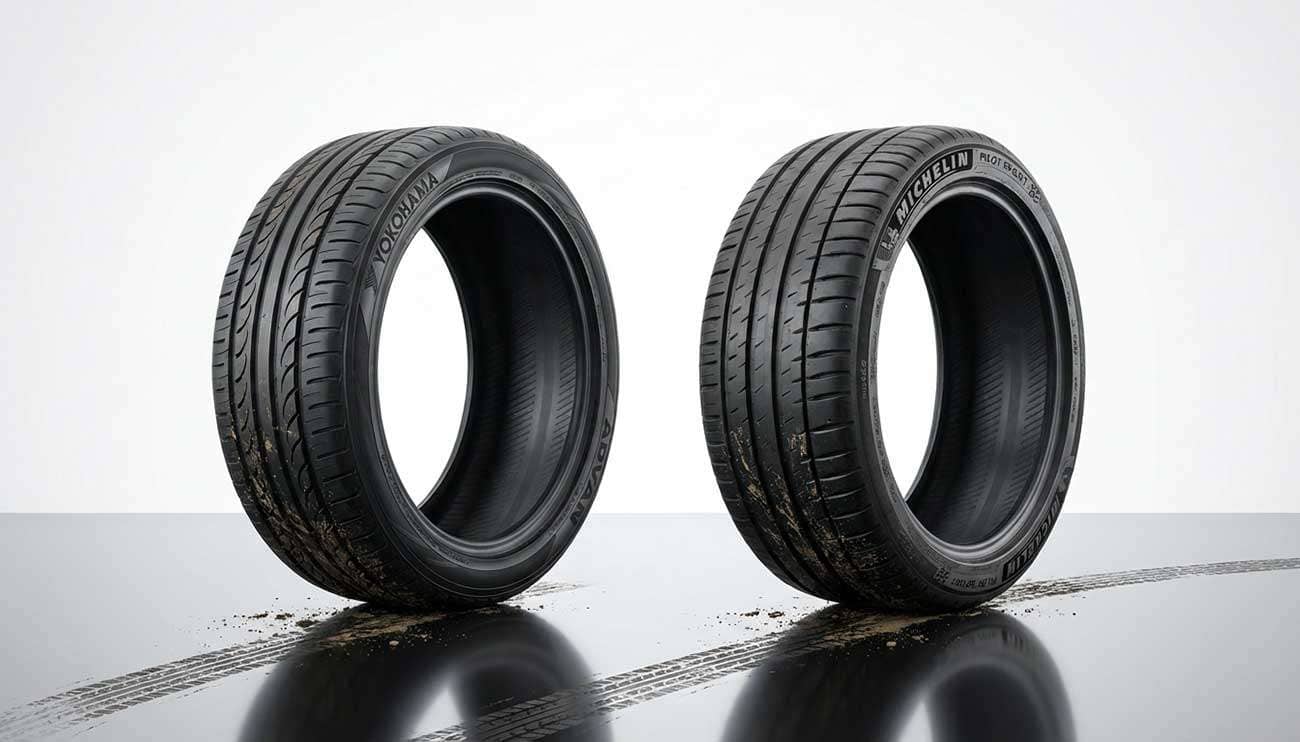
Two tire giants dominate the conversation about quality and value: Michelin and Yokohama. These manufacturers represent vastly different philosophies. Michelin, France's premium tire pioneer since 1889, built its reputation on high-end performance and cutting-edge innovation. Yokohama, Japan's oldest tire maker established in 1917, delivers consistent performance at exceptional value.
The performance numbers tell the real story. Michelin tires reach up to 80,000 miles of tread life, while Yokohama typically delivers 50,000 to 70,000 miles. This gap reflects their market positioning – Michelin commands premium prices for superior longevity, while Yokohama offers mid-range pricing with strong value. Model-specific tests reveal these differences clearly: the Michelin CrossClimate 2 versus Yokohama YK-CTX comparison shows distinct advantages in wet performance, and the Michelin Primacy 4+ outperforms the Yokohama BluEarth XT AE61 in dry handling and efficiency.
Here's what matters to your wallet: Yokohama vs Michelin tires start at $193 versus $203 per tire respectively. That $10 difference might seem minor, but multiply it across four tires and consider replacement cycles. Michelin's higher upfront cost often pays dividends through extended tread life and superior performance retention.
At Performance Plus Tire, we've seen customers struggle with this exact decision. Should you pay more for Michelin's proven durability, or choose Yokohama's impressive value proposition? We'll break down the real costs, performance differences, and help you determine which brand delivers the best return on your tire investment. Your driving needs and budget priorities will determine the winner.
Brand heritage tells the real story behind tire performance and pricing strategies. These manufacturers built their reputations through decades of distinct approaches to engineering and market focus.
Michelin's foundation story started in 1889 when brothers Édouard and André Michelin rescued a failing rubber factory in Clermont-Ferrand, France. Their first breakthrough changed everything: the detachable pneumatic tire in 1891 cut repair time from hours to just 15 minutes. This innovation established Michelin's core philosophy of mobility solutions that actually work.
The company's most significant advance came with the radial tire patent in 1946. The "MICHELIN X" radial design delivered dramatically longer tire life, better safety, and improved fuel efficiency over conventional bias-ply construction. Michelin quickly expanded internationally, opening their first foreign manufacturing plant in New Jersey in 1907.
Today's numbers reflect this long-term commitment to premium engineering. Michelin ranks as the world's most valuable tire brand, with brand value jumping 11% to USD8.8 billion in 2025. Their Brand Strength Index score hits 92.6 out of 100, placing Michelin as the 15th strongest brand globally across all industries.
Yokohama took a different path since 1917, establishing itself as Japan's oldest tire manufacturer through performance engineering and motorsport development. Rather than chasing luxury positioning, Yokohama focused on delivering reliable performance at competitive prices.
Racing remains central to Yokohama's engineering process. The company maintains partnerships with elite competitions including the Porsche Sprint Challenge North America, viewing these events as "the ultimate test of performance, innovation and durability". Track data directly improves their consumer tire development.
Yokohama leads in sustainable tire technology. Their groundbreaking Orange Oil Technology produced the world's first orange oil-infused passenger tire using 80% non-petroleum materials. The BluEarth® technology line extends this eco-focus, delivering fuel efficiency without performance compromises.
The results show in recent growth numbers. Yokohama achieved the fastest expansion among top-10 tire brands in 2025, with brand value surging 23% to USD1.5 billion. Their sustainability commitment continues with specialized products like the ADVAN Sport® EV A/S, engineered specifically for electric vehicle requirements.
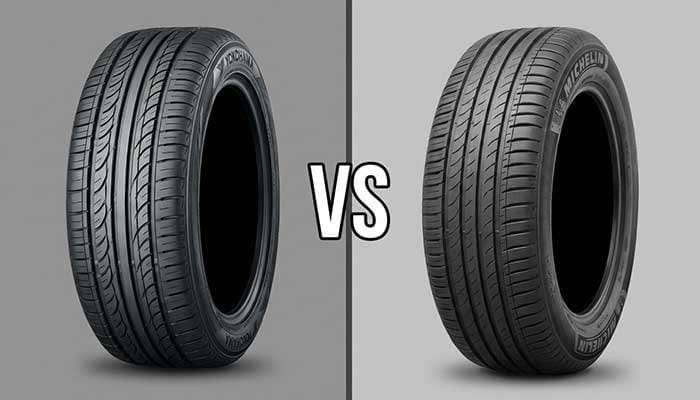
Understanding the technical differences between these tire brands helps explain why customers choose one over the other.
Michelin tires excel at delivering smooth, quiet performance on the road. The company's Comfort Control technology actively reduces road noise for a peaceful driving experience. Yokohama provides solid comfort levels but produces more sporty road noise during operation. When maximum comfort matters most for long-distance driving, Michelin maintains the advantage.
Durability becomes crucial when calculating long-term value. Michelin's exceptional tread life reaches up to 80,000 miles. Yokohama tires generally deliver 50,000–70,000 miles of service. This performance gap directly impacts replacement schedules and explains why Michelin offers stronger mileage warranties despite higher purchase prices.
Eco-conscious drivers have strong options from both manufacturers. Michelin's proven Green X technology leads the industry in fuel economy. Yokohama counters with their BluEarth technology, which provides excellent efficiency in eco-focused tire models. Yokohama's Orange Oil technology adds another efficiency advantage while maintaining traction.
Terrain capability separates these brands clearly. Yokohama's Geolandar series delivers outstanding performance across various terrains. These tires shine particularly on sandy and gravelly surfaces. Michelin provides decent off-road capability mainly through their Defender LTX model, but options remain limited across other product lines.
Looking for superior tire technology? Compare Michelin's advanced solutions at Michelin Tires with Yokohama's innovative approaches at Yokohama Tires.
Michelin's EverGrip technology maintains consistent performance throughout tire wear. Their MaxTouch Construction optimizes road contact for better handling. Yokohama's signature Orange Oil Compound uses natural orange peel extract to improve both grip and environmental friendliness. Their 4D Nano Design and adaptive tread patterns further enhance overall performance.
The flagship models from each brand showcase their engineering priorities and target markets. Performance enthusiasts, daily commuters, and off-road adventurers each find different advantages depending on their specific needs.
Sports car owners demand maximum performance from their ultra-high-performance tires. The Michelin Pilot Sport 4S delivers precise steering control through Dynamic Response Technology at $240.99 per tire. Yokohama counters with the Advan Sport V107, featuring an asymmetrical tread pattern designed for high-speed traction at $293.35 per tire. Need top-tier performance tires? Compare options at Michelin Tires and Yokohama Tires.
All-season versatility meets different budget priorities in this comparison. The CrossClimate 2 utilizes Thermal Adaptive compound and 3D SipeLock technology, priced at $185.99. The Avid Ascend GT provides exceptional value at $111.99, incorporating Yokohama's signature Orange Oil compound for enhanced grip and environmental friendliness.
SUV applications reveal distinct brand strengths. Michelin's LTX series emphasizes comfort and precise steering response for highway-focused driving. Yokohama's Geolandar line excels in sandy and gravelly terrain, with the Geolandar A/T G015 demonstrating superior off-road traction capabilities.
Environmental consciousness drives innovation in both lines. Michelin's Energy Saver prioritizes fuel efficiency through advanced compound technology. Yokohama's BluEarth technology maintains performance while enhancing high-temperature stability, appealing to drivers seeking both eco-friendliness and reliable performance.
The numbers behind Yokohama vs Michelin tires reveal the true story when you calculate long-term ownership costs.
Yokohama delivers on its mid-range positioning with the Avid Ascend GT starting at $111.99 per tire. Compare that to Michelin's premium Pilot Sport 4S at $240.99 per tire – more than double the cost. SUV owners face similar gaps: Yokohama's Geolandar begins at $185.99, while comparable Michelin options start around $293.35.
Michelin's extended warranties change the value equation significantly. Their 80,000-mile limited warranties versus Yokohama's typical 70,000-mile coverage means potentially 10,000 additional miles per tire. However, understand that warranties are prorated – replace a tire at 60,000 miles on an 80,000-mile warranty, and you'll receive only 25% credit toward a new purchase.
Both brands offer accessible financing. Michelin partners with Affirm, Acima, and Synchrony Financial for payment plans with low or no interest. Weekly payment options make the decision clearer: $6.89 per week for a complete Michelin set versus $2.63 weekly for Yokohamas.
Looking for the best tire value for your specific vehicle? Compare our complete selection at Michelin Tires and Yokohama Tires.
Calculate total cost of ownership carefully. Michelin often wins on cost-per-mile despite higher upfront investment. Their superior tread life and performance retention deliver better long-term value for high-mileage drivers and wet weather conditions. Yokohama provides better immediate value for budget-conscious drivers seeking reliable all-season performance.
The decision comes down to your driving patterns and budget timeline. Drive over 15,000 miles annually or frequently encounter wet conditions? Michelin's investment pays off. Need quality tires on a tight budget with moderate annual mileage? Yokohama delivers exceptional value.
At Performance Plus Tire, we know that choosing between tire brands often comes down to the numbers. Here's a side-by-side breakdown of how Michelin and Yokohama stack up across the key factors that matter most to drivers:
Feature |
Michelin |
Yokohama |
|---|---|---|
Founded |
1889 (France) |
1917 (Japan) |
Maximum Tread Life |
Up to 80,000 miles |
50,000-70,000 miles |
Starting Price (per tire) |
$203 |
$193 |
Brand Value (2025) |
$8.8 billion |
$1.5 billion |
Key Technology |
EverGrip Technology, MaxTouch Construction |
Orange Oil Technology, BluEarth Technology |
Comfort & Noise |
Excellent, quiet performance with Comfort Control technology |
Very good comfort, some sporty noise |
Eco-Innovation |
Green X technology |
BluEarth technology, Orange Oil compound |
Off-Road Capability |
Limited options (mainly Defender LTX model) |
Strong performance (Geolandar series) |
Premium Performance Model |
Pilot Sport 4S ($240.99) |
Advan Sport V107 ($293.35) |
Entry Level All-Season |
CrossClimate 2 ($185.99) |
Avid Ascend GT ($111.99) |
Market Positioning |
Premium, high-end performance |
Mid-range, high-value alternative |
Weekly Payment Options |
$6.89/week (set of 4) |
$2.63/week (set of 4) |
The data clearly shows why both brands maintain strong followings. Michelin's premium positioning delivers superior longevity and refinement, while Yokohama provides impressive performance at more accessible price points.
The Yokohama vs Michelin decision boils down to what you value most: premium longevity or exceptional value. We've seen both choices work well for our customers, depending on their driving patterns and budget priorities.
Michelin delivers what you pay for. Their tires last longer, perform better in wet conditions, and provide superior comfort. For drivers who keep vehicles long-term and prioritize peak performance, Michelin's higher upfront cost makes financial sense. The extended warranties and tread life often result in better cost-per-mile over time.
Yokohama shines where value matters most. Their tires offer solid performance at prices that won't strain your budget. For adventure seekers who need strong off-road capability, the Geolandar series outperforms most competitors. The innovative Orange Oil technology provides eco-friendly benefits without sacrificing grip.
Here's our recommendation: Choose Michelin if you drive frequently, prioritize wet-weather safety, or plan to keep your vehicle for many years. Their superior durability justifies the premium pricing for high-mileage drivers.
Select Yokohama if you want quality tires without the premium price tag, need excellent off-road performance, or replace tires based on vehicle age rather than wear. Their weekly payment options starting at $2.63 make quality accessible to more drivers.
Both manufacturers stand behind their products with over a century of experience. You'll get reliable performance from either choice. The question isn't which brand is better – it's which brand better serves your specific needs and budget.
Ready to make your decision? Our tire experts at Performance Plus Tire can help you find the perfect match for your vehicle and driving style. We'll ensure proper fitment and competitive pricing, regardless of which brand you choose.
When choosing between these tire giants, understanding the real cost-performance equation helps you make the smartest investment for your driving needs.
• Michelin offers superior longevity with up to 80,000-mile tread life versus Yokohama's 50,000-70,000 miles, often justifying higher upfront costs
• Yokohama delivers exceptional value at nearly half the price of comparable Michelin models, making quality tires accessible to budget-conscious drivers
• Michelin excels in wet-weather performance and ride comfort with quieter operation, while Yokohama shines in off-road capabilities and eco-friendly innovation
• Despite higher initial investment ($203 vs $193 per tire), Michelin's extended warranties and durability often provide better long-term cost-per-mile value
• Weekly payment options make both brands accessible: Yokohama at $2.63/week versus Michelin at $6.89/week for a complete set
The decision ultimately depends on your priorities: choose Michelin for maximum comfort, longevity, and wet-weather performance, or select Yokohama for strong all-terrain capability and budget-friendly reliability. Both century-old manufacturers deliver proven quality, ensuring you'll get dependable performance regardless of your choice.
Yokohama and Michelin are both high-quality tire brands, but they have different strengths. Michelin tires generally offer superior longevity (up to 80,000 miles) and excel in wet-weather performance and ride comfort. Yokohama tires provide strong value, with good performance at a lower price point, and excel in off-road capabilities. The choice depends on your specific driving needs and budget priorities.
For many drivers, Michelin tires justify their premium price through extended tread life, superior performance retention, and excellent wet-weather handling. While the initial cost is higher, the longer lifespan (up to 80,000 miles compared to Yokohama's 50,000-70,000 miles) can result in better long-term value. However, the worth depends on individual driving habits and priorities.
Both brands offer innovative technologies. Michelin features EverGrip technology for maintained performance as tires wear and Green X technology for fuel efficiency. Yokohama counters with their signature Orange Oil compound for improved grip and eco-friendliness, as well as BluEarth technology for enhanced fuel efficiency and performance.
Yokohama generally has an edge in off-road and all-terrain capabilities, particularly with their Geolandar series. These tires excel in sandy and gravelly conditions. Michelin offers good off-road capability primarily in their Defender LTX model but has more limited options in other lines for extreme off-road use.
Michelin typically offers longer warranties, up to 80,000 miles, compared to Yokohama's usual 70,000-mile warranties. While Michelin tires have a higher upfront cost, their extended tread life can result in a lower cost-per-mile over time. Yokohama provides strong value with lower initial prices, making them attractive for budget-conscious consumers. The best long-term value depends on your driving habits and how long you keep your tires.