
Most people buy tires the wrong way. They wait until something forces the issue — a flat, a failed inspection, tread that's visibly down to nothing — then they walk into a shop or click online, pick the cheapest option in the right size, and hope for the best. It works often enough that nobody questions the process. But there's a better way to buy tires, and it starts well before you need them urgently. The right tire for your vehicle and your driving situation isn't just any tire in your size. It's a specific combination of type, load rating, tread life, construction quality, and age — and getting that combination right means better safety, longer tire life, and money saved over time. This guide covers every factor that actually matters, in the order you should think about them.
Size is non-negotiable. Before anything else — before brand, before price, before type — you need the correct tire size for your vehicle. Get this wrong and nothing else matters, because the tire either won't mount or won't perform safely.
Your tire size is printed on the sidewall of every tire on your car right now, and it looks something like 225/65R17. Break it down: 225 is the section width in millimeters — how wide the tire is across its widest point. 65 is the aspect ratio — the sidewall height as a percentage of the section width, so 65% of 225mm. R means radial construction, which is standard on all modern road tires. 17 is the rim diameter in inches — the size of the wheel the tire mounts to. That last number is the one you absolutely cannot change without also changing your wheels.
Your correct tire size is also printed on the placard inside your driver's door jamb — the sticker that lists recommended tire size, inflation pressure, and sometimes load rating. The door jamb is the authoritative source. If the tires currently on the car don't match what the placard says, someone changed sizes at some point, and you need to decide whether to match the current tires or return to the original spec.
Yes — but within limits, and with consequences to understand. Going to a slightly wider tire gives a larger contact patch and a slightly different look. Going to a larger diameter (plus-sizing) requires a lower-profile tire to maintain the same overall wheel diameter. Change the overall diameter too much and your speedometer reads incorrectly, your transmission shift points shift, and your ADAS systems (if your vehicle has them) may give incorrect readings. The general guideline is to keep overall diameter within 3% of the original. Use the tire size comparison calculator to see exactly how a size change affects overall diameter, speedometer reading, and clearance before you commit to a different size.
If your vehicle is a truck, van, or SUV, the prefix on your tire size matters. P-metric tires (prefix P, like P265/70R17) are designed for passenger vehicles. LT tires (prefix LT, like LT265/70R17) are built for light truck applications with heavier construction and higher load ratings. Trucks that came from the factory with LT tires should always be replaced with LT tires — the load capacity difference is significant and safety-relevant. If you're switching between designations for any reason, understand that P-metric tires are derated for truck use and may not meet your vehicle's load requirements. The complete tire guide covers P-metric vs. LT in full detail.
Once you know your size, the most important decision is tire type. This is where most buyers make the mistake of just replacing like for like without questioning whether the original tire type is still the right choice for how they drive and where they live. Tire technology has evolved significantly, and the options available today are better than what was on many vehicles when they rolled off the lot.
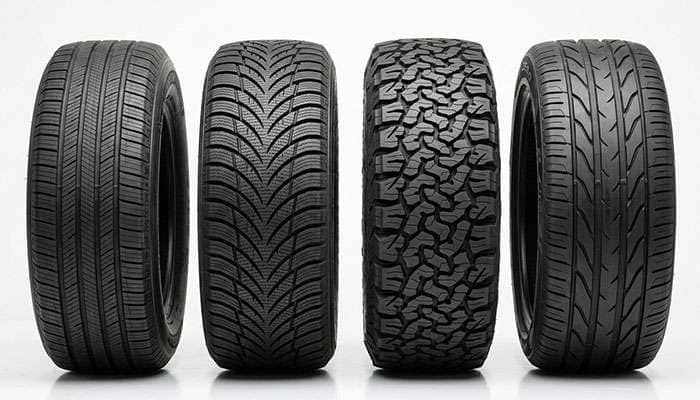
All-season tires are the default for most passenger cars in the US, and for good reason. They handle dry roads competently, manage light rain and moderate cold adequately, and last a long time without requiring any seasonal swaps. If you live in a climate with mild winters — occasional light snow, temperatures that rarely drop below freezing consistently — all-season tires are probably the right choice. They're the compromise option: not the best at anything, but acceptably capable at everything under typical driving conditions.
The key word is "typical." All-season tires are not winter tires. They don't carry the three-peak mountain snowflake symbol that indicates genuine winter performance certification. In sustained cold below 40°F, even all-season tires on dry pavement lose grip compared to dedicated winter tires, because the compound stiffens. In actual snow and ice, all-season tires are acceptable in light conditions but genuinely inadequate in serious winter weather. If you drive in real winter conditions, "all-season" is not the answer.
All-weather tires carry the three-peak mountain snowflake symbol — meaning they're certified for severe snow conditions — while still being suitable for year-round use. They're distinct from all-season tires (which don't have that certification) and from dedicated winter tires (which should be swapped out in warm months). For drivers in moderate-winter climates who want genuine winter capability without managing two sets of tires, all-weather tires represent a compelling middle ground that the best all-season tires can't quite match. They're not as capable as dedicated winters in extreme conditions, but they're meaningfully better than traditional all-season in cold and snow.
If you live where temperatures regularly drop below 40°F for extended periods, where snow accumulates and roads ice over, dedicated winter tires are the single most impactful safety upgrade you can make to your vehicle. It's not close. The compound in a winter tire stays pliable in cold temperatures — it's engineered to grip cold pavement, compressed snow, and ice in ways that all-season tires simply cannot replicate regardless of how good they are in other respects. The stopping distance difference between winter tires and all-season tires at 25°F on packed snow is measured in dozens of feet. At highway speeds, that's the difference between avoiding an accident and being in one.
Winter tires require a seasonal swap — you run them from roughly November through March depending on your climate, then switch back to all-season or summer tires. Many drivers manage this with a dedicated set of winter wheels so the swap is a straightforward bolt-on rather than a remounting. The additional cost is real, but so is the safety advantage.
Summer tires — also called performance tires or ultra-high performance tires — are engineered for maximum dry and wet grip at the expense of cold-weather usability. The compound that makes them grip so well in warm conditions becomes dangerously hard and slippery when temperatures drop below roughly 45°F. Run summer tires year-round in a climate with real winters and you're actively compromising safety in ways that are invisible until you need to stop or turn urgently in cold weather.
For performance vehicle owners and drivers who want the best possible grip for spirited driving, high performance tires are the right choice paired with winter tires for the cold months. For everyday drivers on standard vehicles in moderate climates, the compromise of all-season tires is more practical than the limitations of summer tires year-round.
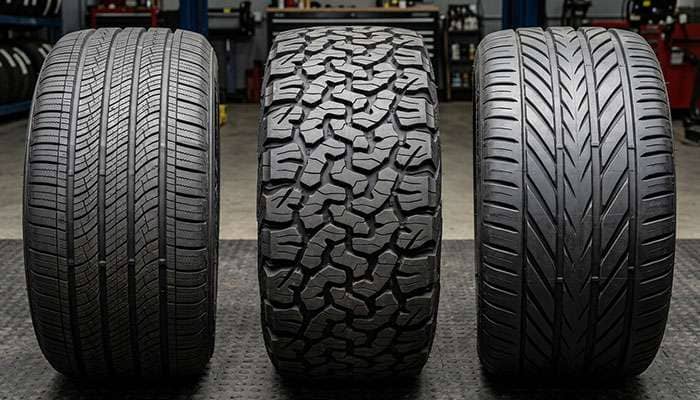
Truck and SUV owners who go off pavement — whether occasionally on dirt roads or regularly on serious trails — need tires designed for it. All-terrain tires balance on-road manners with genuine off-road capability, making them the most popular choice for truck owners who want one tire for everything. Mud-terrain tires sacrifice on-road quiet and comfort for maximum off-road grip in mud, rocks, and extreme terrain. The right choice depends entirely on what percentage of your driving is on pavement versus off it. All-terrain tires are typically the right answer for anyone who splits time between road and trail without going fully extreme.
After size and type, load index and speed rating are the two specs that most buyers overlook — and they're genuinely safety-critical, especially for trucks, SUVs, and anyone who carries real payload or drives at sustained highway speeds.
The load index is a standardized number on the tire sidewall that corresponds to a specific maximum weight capacity per tire. A load index of 100 supports 1,764 lbs per tire. A load index of 110 supports 2,337 lbs. A load index of 120 supports 3,086 lbs. The difference between those numbers is enormous in practical terms, and selecting a tire with an insufficient load index for your vehicle's Gross Vehicle Weight Rating (GVWR) means the tires are operating beyond their design capacity every time the vehicle is loaded.
Never replace tires with a lower load index than the original spec without running the calculation. Your GVWR is on the door jamb sticker. Divide by 4, multiply by 1.05 (the 105% safety buffer), and confirm the load index of any tire you're considering meets or exceeds that result. Use the tire load index calculator to do this check in seconds rather than by hand.
The speed rating is the letter following the load index — H, V, W, Y, and others. It indicates the maximum sustained speed the tire is designed to handle, but it's also an indicator of how the tire is built to manage heat generation at speed. An H-rated tire (130 mph) is engineered differently from a T-rated tire (118 mph), and that difference shows up in heat resistance and handling stability well below the rated maximum speed.
Always match or exceed your OEM speed rating. Replacing an H-rated tire with a T-rated one to save money is a false economy — you're reducing the tire's heat management capability and potentially its handling performance. Going above the OEM rating is fine; going below is a compromise you shouldn't make. Check the speed rating guide if you need to understand exactly what each letter represents and which rating your vehicle requires.
Every tire sold in the United States carries UTQG (Uniform Tire Quality Grading) ratings — three standardized scores that tell you about treadwear, traction, and temperature resistance. Understanding these ratings helps you compare tires across brands on an objective basis rather than relying on marketing claims.
The treadwear number is a comparative index — not a mileage warranty. A tire rated 600 should last approximately twice as long as a tire rated 300 under standardized test conditions. Real-world treadwear depends heavily on driving style, inflation maintenance, alignment, and road conditions — aggressive driving and chronic underinflation accelerate wear significantly regardless of the treadwear rating. But the rating gives you a useful comparison tool when choosing between tires. A treadwear rating of 500–700 is typical for a quality all-season touring tire aimed at longevity. Ultra-high performance summer tires often rate 200–300 because the softer compound that provides superior grip wears faster by design.
Don't optimize purely for high treadwear numbers. A tire with a 700 treadwear rating that achieves it through a harder compound may grip poorly in wet conditions, shortening its effective safe life even if the tread depth lasts longer. Balance treadwear against the traction ratings for the complete picture.
The UTQG traction grade measures straight-line wet braking performance on a standardized government test surface. AA is the best, C is the worst, and most quality tires fall in the A or AA range. This is specifically wet, straight-line braking — it doesn't measure cornering grip, dry traction, or snow performance. But wet braking is one of the most safety-critical performance attributes for everyday driving, and a tire rated AA will genuinely stop shorter on wet pavement than one rated B. Don't settle for a C or B traction rating on a tire you'll drive year-round in rain.
The temperature rating measures how effectively the tire dissipates heat at sustained speed. A is best, C is minimum acceptable. Heat buildup is one of the primary causes of tire failure, particularly at highway speeds with heavy loads. For most everyday driving, A or B is adequate. For towing, sustained high-speed driving, or performance applications, A is the right choice. Never buy a tire with a C temperature rating for a vehicle that will do regular highway driving under load — the margin for error is too thin.
Many tires come with treadwear warranties measured in miles — 50,000 miles, 70,000 miles, 80,000 miles. These warranties look attractive in marketing materials and are worth understanding correctly. A mileage warranty is typically pro-rated — if your 70,000-mile tire wears out at 50,000 miles, you get credit toward a replacement proportional to the remaining warranted mileage, not a free set of tires. The warranty also requires proof of regular rotation and proper inflation — conditions many drivers don't document. The mileage warranty is useful as a rough quality signal (tires with higher mileage warranties generally have more durable compounds) but shouldn't be taken as a literal promise of longevity.
Beyond safety-critical specs, tires have a massive impact on the driving experience — ride quality, interior noise levels, and fuel consumption all shift significantly depending on which tires are on your car. These attributes matter for daily driving comfort and long-term ownership costs.
The aspect ratio of your tire — the middle number in the size code — directly determines sidewall height. A higher aspect ratio means more sidewall, which means more rubber between the wheel and the road to absorb bumps and road imperfections. Tires with an aspect ratio of 65 or 70 ride noticeably more comfortably than tires with an aspect ratio of 45, because there's more sidewall flex to cushion road irregularities. Plus-sizing to larger diameter wheels and lower-profile tires trades ride comfort for appearance and handling precision — a worthwhile trade for some drivers, a bad one for others. Know what you're getting before you go to a lower profile.
Compound softness also affects comfort. A touring tire formulated for comfort has a softer compound than a performance tire optimized for grip — and that softer compound absorbs road vibration more effectively. Touring tires are the right choice for comfort-focused drivers; performance tires are right for dynamics-focused drivers who can accept firmer ride quality.
Tire noise is generated primarily by the tread pattern interacting with the road surface. Tires with aggressive open tread patterns — all-terrain tires especially — are significantly louder at highway speeds than tires with closed, symmetrical patterns optimized for quiet running. If interior noise is a priority for you, look for tires specifically marketed for quietness, check owner reviews for real-world noise assessments, and understand that all-terrain tires will always be louder than highway tires regardless of brand or quality. The UTQG system doesn't include a noise rating, so real-world reviews from other drivers are your best source here.
Tires with low rolling resistance require less energy to move, which translates to improved fuel economy. The difference between a high rolling resistance tire and a low rolling resistance tire can be meaningful — studies have shown fuel economy differences of 4–8% between tire designs in the same size, which adds up significantly over the life of a set of tires. Low rolling resistance tires are particularly valuable on EVs and hybrids, where efficiency is magnified by the battery range implications. Many EV-specific tires are optimized specifically for low rolling resistance while managing the additional weight and instant torque loads that electric powertrains place on tires. If you drive significant annual mileage, the fuel savings from a low rolling resistance tire can partially offset a higher purchase price.
Price is the factor most drivers focus on first. It should probably be the last factor you optimize for — after size, type, load rating, speed rating, and treadwear all check out. That said, understanding what drives price differences helps you make smarter decisions across the quality spectrum.
Michelin, Bridgestone, Continental, Goodyear, Pirelli, and a handful of others sit at the top of the tire industry. These brands invest heavily in research and compound development, manufacture to tight tolerances, and back their products with genuine performance data. Consumer Reports testing consistently finds premium brand tires at the top across key metrics — wet braking, dry handling, and treadwear. The Michelin Defender2 and CrossClimate2, Continental TrueContact Tour, and Goodyear Assurance WeatherReady consistently appear among the best-tested tires in their categories.
Premium tires cost more upfront, but they often deliver better value over the full ownership period because they last longer, perform better throughout their life, and are less likely to wear unevenly or fail prematurely. If your vehicle will see significant annual mileage or demanding conditions, the premium tier is worth the investment. Browse Michelin tires and Continental tires at Performance Plus Tire to compare the full range of premium options in your size.
Mid-range tires from brands like Hankook, Yokohama, Falken, Cooper, Nexen, and others offer substantially better value than budget options while closing much of the performance gap to premium tires. Independent testing consistently shows that good mid-range tires perform within acceptable range of premium tires for most metrics, at meaningfully lower prices. For budget-conscious buyers on vehicles that don't face extreme demands, mid-range tires are often the smart choice — you're getting 85–90% of premium performance for 65–75% of the price.
Budget tires exist, and they're not universally dangerous — but they require the most scrutiny before buying. Some value-tier tires perform acceptably in basic tests and are fine for light-duty use on low-mileage vehicles. Others cut corners on compound quality and construction in ways that show up as poor wet traction, rapid wear, and unpredictable failure modes. The risk-to-reward ratio on budget tires is less favorable than most buyers realize: the upfront savings can easily be erased by faster replacement cycles and higher fuel costs from poor rolling resistance.
If budget is a genuine constraint, focus on mid-range tires rather than bottom-tier options. The performance and longevity difference between a mid-range tire and a budget tire is far more significant than the difference between mid-range and premium. Read independent reviews, check UTQG ratings, and avoid any tire where you can't find meaningful third-party testing data.
In 2026, a single passenger car tire typically runs between $120 and $300 depending on size and quality level. Truck and SUV tires run higher — $150 to $400+ per tire for standard sizes, more for large diameter or specialty applications. A full set of four tires for most passenger vehicles costs between $500 and $1,200 installed, including mounting, balancing, and disposal fees. Performance, winter, and specialty tires at the high end of the market can run significantly more. If a price seems suspiciously low compared to competitive quotes, look carefully at the tire's quality tier and manufacture date before committing.
Here's a consideration that most tire buyers never even think about — and it can mean the difference between a truly new tire and one that's been sitting in a warehouse for three years before you put it on your car.
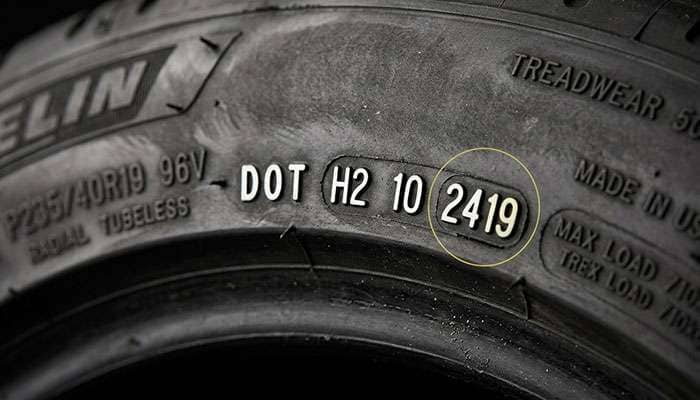
Every tire has a DOT code molded into the sidewall. The last four digits are the date code: the first two digits are the week of manufacture, and the last two are the year. A code reading 0824 means the tire was manufactured in the 8th week of 2024. Tires age from the moment they're manufactured regardless of whether they've been used — rubber oxidizes, compounds harden, and structural integrity declines over time.
When buying new tires, look for tires manufactured within the last 12–18 months. Anything over two years old at the time of purchase is eating into your usable life before you've driven a mile. Online retailers with high inventory turnover sometimes sell tires that have been sitting in warehouses for extended periods. Ask for the DOT date when ordering, or check it yourself when the tires arrive. Use the tire age DOT date checker to verify the age of any tire before you mount it.
The broader replacement guideline: most manufacturers recommend replacing tires at 6 years from manufacture regardless of tread depth, and treating any tire over 10 years old as beyond safe service life. Factor those timelines into your purchase — buying a tire with a two-year-old manufacture date means your 6-year clock started ticking two years ago.
Knowing when your tires actually need replacing is as important as knowing what to buy. Too many drivers wait until a tire is dangerous before replacing — and too many buy new tires before necessary when money is tight. Here's how to read the actual condition of your tires accurately.
The legal minimum tread depth in most US states is 2/32 of an inch — the point at which a tire is considered bald and must be replaced. But 2/32" is not a safe operating threshold; it's a legal minimum. At 2/32", wet braking distances are dramatically longer than on new tires, and hydroplaning risk is high. The practical replacement threshold is 4/32" for drivers in wet climates or anyone doing highway driving. At 4/32", you still have acceptable wet-weather traction, but you're approaching the point where performance degrades rapidly with each additional mile of wear.
Check tread depth with a quarter: insert it head-down into the groove. If Washington's head is covered, you have at least 4/32". If you can see the top of his head, you're at or below 4/32" and replacement is due soon. The penny test (Lincoln's head) checks for the 2/32" legal minimum — if you can see the top of Lincoln's head, the tire is legally at its limit and should be replaced immediately.
How your tires wear tells you as much as how much they've worn. Wear concentrated at both edges of the tread indicates chronic underinflation — the center of the tread isn't making full contact because the sidewalls are bulging. Wear concentrated at the center indicates chronic overinflation — the center of the tread is bearing too much load. One-sided wear indicates an alignment problem. Cupping or scalloping — a wavy, uneven pattern across the tread surface — indicates worn suspension components or wheels that are out of balance. These patterns mean you need to address the underlying cause before or alongside replacing the tires, or the new tires will wear unevenly too. Refer to the tire wear guide for a full breakdown of wear patterns and their causes.
Age matters independently of tread depth. A tire can have adequate tread remaining and still be unsafe due to compound degradation. Look for sidewall cracking — fine surface cracks that indicate rubber oxidation and loss of elasticity. Deep cracking, cracking in the tread grooves, or any sidewall bulge are immediate replacement triggers regardless of tread depth remaining. If you drive a vehicle that sits for extended periods or has been stored, the tires need careful inspection before use even if they look fine at a glance.
When one or two tires are worn or damaged while the others have good tread remaining, the question of whether to replace two or four becomes a real financial and practical decision. The right answer depends on your vehicle's drivetrain and how different the tires are.
If you drive an AWD or 4WD vehicle, replacing fewer than all four tires at once is potentially harmful to your drivetrain. AWD systems rely on all four tires having very similar overall diameters and rolling speeds to distribute torque correctly. Mixing new tires (which are taller by the exact amount of their tread depth) with worn tires creates a diameter mismatch that forces the AWD system to constantly compensate — which accelerates wear on differentials and transfer cases in ways that can lead to expensive repairs. On AWD vehicles, replace all four whenever possible. If only two must be replaced due to budget constraints, mount the new tires on the rear axle.
On FWD and RWD vehicles, replacing two tires is more acceptable if the existing tires on the other axle have meaningful tread remaining (at least 4/32"). Always mount the new tires on the rear axle — rear tire failure is harder to control than front tire failure, and the rear tires handle the most critical stability functions in a skid or emergency maneuver. Mounting the better tires at the rear regardless of which wheels are driven is the standard recommendation from tire engineers and safety organizations.
Tire retail has shifted significantly over the past decade. Online purchasing is now mainstream and often offers lower prices than brick-and-mortar shops — but it comes with considerations that don't apply when you buy locally.
Online tire retailers typically offer lower prices than local shops because they carry more inventory, negotiate better manufacturer pricing, and operate with lower overhead. When buying online, confirm the manufacture date before the tires ship, verify the return policy, and factor in installation costs at your local shop — most independent shops charge $15–$25 per tire for mounting and balancing tires you bring in. The total price including installation is what matters, not the sticker price alone. Performance Plus Tire at performanceplustire.com carries thousands of options across every size and tire type, with fresh inventory and competitive pricing across the full quality spectrum.
Local tire shops offer immediate installation, the ability to physically inspect tires before mounting, and ongoing service relationships that matter for alignment, rotation, and warranty work. A good local shop also knows local road conditions and can make tire type recommendations based on regional experience. The tradeoff is typically higher prices and more limited selection. If price is close and service matters, local is often worth it — especially if the shop offers free rotation, lifetime balancing, and road hazard coverage on purchased tires.
When comparing tire options, check what warranty coverage comes with the purchase. Manufacturer treadwear warranties cover premature wear but typically don't cover road hazard damage (potholes, nails, debris). Road hazard coverage — either from the retailer or as a separate add-on — covers repair or replacement of tires damaged by road conditions during normal use. For drivers in areas with rough roads or heavy pothole exposure, road hazard coverage can easily pay for itself with a single claim. If financing is relevant to your purchase, options are available to spread the cost of a full set across manageable payments.
Buying tires the right way takes more than five minutes of price comparison. It takes understanding what size you actually need, what type fits your climate and driving style, what load rating your vehicle requires, how old the tires you're considering are, and what the tread life and traction ratings tell you about long-term performance. None of this is complicated once you know what to look for — but most buyers walk into the process without this framework and make decisions they later regret, usually when a tire wears out faster than expected or fails to perform when they need it.
The right tires last longer, ride better, handle more capably in adverse conditions, and often cost less over the full ownership period than budget alternatives that compromise on quality. Performance Plus Tire carries thousands of options across every size, type, and price point — from premium Michelin and Continental to capable mid-range options — with the full specs including load index, speed rating, UTQG ratings, and manufacture date available for every tire in the catalog. Take 20 minutes to apply the framework in this guide before your next purchase. You'll drive better, safer, and spend less money over time.
Here's the complete tire buying framework condensed to the essentials.
• Size is the starting point, not the whole decision: Get the size right first — width, aspect ratio, rim diameter — then work through type, load rating, speed rating, and tread life. Matching size alone without checking the other specs leaves critical safety decisions to chance.
• Tire type should match your actual climate: All-season tires are a compromise, not an optimal solution. If you experience real winters, dedicated winter tires provide safety gains that no other modification can match. All-weather tires are a legitimate middle ground for moderate-winter climates.
• Load index and speed rating are safety specs, not optional extras: Never replace tires with a lower load index than the original. Never drop below your OEM speed rating. These specs exist because your vehicle was engineered around them.
• Check the DOT date code on any tire you buy: Tires age from the moment of manufacture. Buying a tire with a two or three year old manufacture date means you're starting with a reduced lifespan. Fresh tires — manufactured within 12–18 months of purchase — are the standard to aim for.
• Replace at 4/32" for wet-climate drivers, not 2/32": The legal minimum of 2/32" is not a safe operating threshold. At 4/32", wet braking performance begins to degrade significantly. Don't wait for Lincoln's head to appear — use Washington's head as your replacement trigger if you drive in rain.
Start with the tire size on your door jamb sticker or current sidewall. Then determine the right type for your climate — all-season, all-weather, winter, summer, or all-terrain. Verify the load index meets or exceeds your vehicle's GVWR requirement and the speed rating matches or exceeds OEM spec. From there, compare tread life (UTQG treadwear rating), traction rating, and price across options in your size. Check the DOT manufacture date on any tire you're considering. Those steps cover the complete purchase decision.
Usually yes, when accounting for the full ownership period. Premium tires from brands like Michelin, Continental, and Goodyear typically last longer, perform better in wet conditions throughout their life, and maintain traction more consistently as they wear. The upfront cost difference is often offset by fewer replacement cycles and lower fuel consumption from better rolling resistance. The most significant gains come from safety-critical metrics like wet braking distance, where premium tires can stop meaningfully shorter than budget alternatives — a difference that matters most in emergency situations.
On AWD and 4WD vehicles, yes — replacing fewer than four creates a diameter mismatch between new and worn tires that stresses the drivetrain and can cause expensive differential damage. On FWD and RWD vehicles, replacing two is acceptable if the other two have adequate tread remaining (at least 4/32). Always mount new tires on the rear axle regardless of which wheels are driven — rear tire failure is significantly harder to control than front, and the best tires belong at the back for stability in emergency situations.
Most quality all-season tires last 40,000 to 70,000 miles depending on compound hardness, driving style, and maintenance. Premium touring tires with high treadwear ratings can reach 80,000+ miles under ideal conditions. Performance and summer tires wear faster by design — often 20,000 to 40,000 miles. Beyond mileage, age is a separate limiting factor: most manufacturers recommend replacing tires at 6 years from manufacture regardless of tread remaining. Regular rotation every 5,000–7,500 miles significantly extends tread life by equalizing wear across all four tires.
Fall is generally the best time for most drivers — ideally October or November before winter weather arrives. Buying before you urgently need tires gives you time to research properly, compare prices without pressure, and schedule installation at your convenience. Retailers often run promotions in spring and fall around seasonal changeovers. Avoid buying in the dead of winter when demand spikes and stock of popular sizes can be limited. If you're on all-season tires and in a winter climate, don't wait for the first snowstorm — buy and install winter tires while you still have good weather for the swap.



