
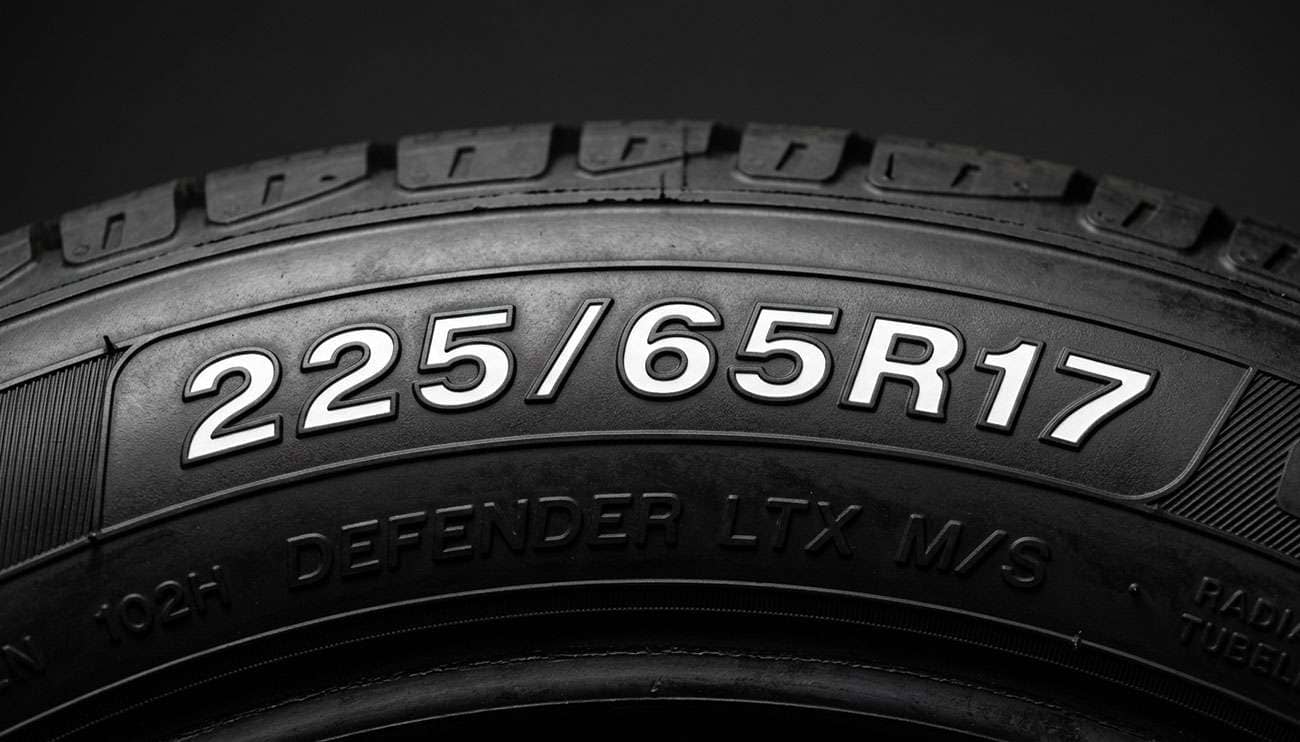
Walk up to any tire and the sidewall hits you with a wall of numbers, letters, and codes. Most people tune most of it out and just focus on getting the right size. That's not wrong — size is critical — but it's not the whole picture. Some of those other numbers matter a lot for safety, longevity, and how the tire actually performs on your specific vehicle. Others are more informational than functional. This guide breaks down every number that actually matters when you're buying tires, what each one tells you, and which ones you should never compromise on.
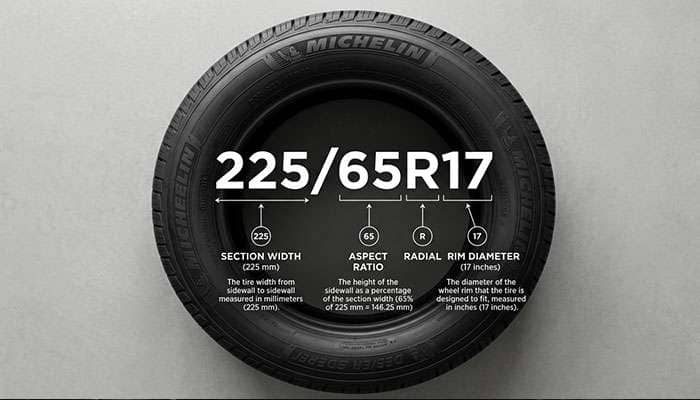
The size code is the big string of numbers and letters you see printed prominently on the sidewall — something like 225/65R17. This is the number that determines whether a tire physically fits your vehicle, and getting it wrong means the tire either won't mount at all or will rub, handle badly, and throw off your speedometer. Let's break it down digit by digit.
The first number in the size code is the section width in millimeters — the measurement across the widest point of the tire from sidewall to sidewall. In 225/65R17, the tire is 225mm wide. This affects how much of the tire contacts the road, how the tire fits in your wheel well, and to some extent how the vehicle handles. Going wider gives you a larger contact patch; going narrower reduces it. Your vehicle has a recommended width range — you can go slightly outside it, but staying within spec keeps handling predictable and prevents rubbing issues.
The two-digit number after the slash is the aspect ratio — the tire's sidewall height expressed as a percentage of the section width. In 225/65R17, the sidewall height is 65% of 225mm, which works out to about 146mm of sidewall. A higher aspect ratio means taller sidewalls, which gives a softer, more comfortable ride and better absorption of road imperfections. A lower aspect ratio — the "low profile" look — means shorter sidewalls, sharper handling, and a firmer ride. The aspect ratio is one of the main levers in the ride vs. handling trade-off.
The number after the R is the rim diameter in inches — the size of the wheel the tire is designed to fit. In 225/65R17, the tire fits a 17-inch wheel. This one is non-negotiable. A tire rated for a 17-inch rim will not fit on a 16-inch or 18-inch wheel. It's the most important number for basic fitment compatibility, and it's the one you should always double-check against your actual wheels before purchasing.
Your vehicle's correct tire size is listed in three places: on the sticker inside the driver's door jamb, in the owner's manual, and often on the existing tires. If you're buying tires for a vehicle with aftermarket wheels, the rim diameter may have changed — always measure or check the wheel specs directly. Use the tire size calculator to confirm the right size for your specific setup, or use the tire size comparison calculator if you're considering a size change and want to see how it affects overall diameter and speedometer accuracy.
Right after the size code you'll see two or three numbers followed by a letter — something like 98H. The numbers are the load index, and they represent the maximum weight each tire can safely support when properly inflated. This number is one of the most frequently overlooked specs when buying tires, and ignoring it is a real safety risk.
The load index is a standardized code that corresponds to a specific weight capacity in kilograms and pounds. A load index of 95 means each tire can support up to 1,521 lbs. An index of 100 supports up to 1,764 lbs. The numbers aren't linear — the scale jumps at different rates — so you need to reference the load index chart rather than trying to estimate from the numbers alone. Your vehicle has a minimum load index requirement based on its weight and the weight it's designed to carry. Always match or exceed the OEM load index — never go lower.
If you drive a truck, SUV, or any vehicle that carries loads or tows regularly, load index becomes especially critical. Standard load (SL) and extra load (XL or reinforced) tires carry different maximum weights at the same inflation pressure. Light truck tires carry load range ratings (C, D, E) instead of or in addition to load index numbers, indicating ply rating and maximum load capacity. Running tires with an insufficient load rating under a heavy truck or trailer is one of the most common causes of tire failure on truck tires — don't cut corners here.
The letter that follows the load index — the H in 98H — is the speed rating. It indicates the maximum speed the tire is designed to sustain under its rated load. An H-rated tire is rated for sustained speeds up to 130 mph. But speed rating is about more than top speed — it's also an indicator of how the tire is built, how it manages heat at high speeds, and how it handles in emergency situations.
Speed Rating | Max Speed | Typical Use |
|---|---|---|
S |
112 mph |
Family sedans, minivans, light trucks |
T |
118 mph |
Sedans, SUVs, family vehicles |
H |
130 mph |
Sport sedans, coupes, performance SUVs |
V |
149 mph |
Performance cars, sporty sedans |
W |
168 mph |
Exotic and high-performance sports cars |
Y |
186 mph |
Ultra-high performance sports cars |
Always match or exceed your vehicle's OEM speed rating. If the manufacturer spec'd an H-rated tire, don't replace it with an S or T. Lower-rated tires can't manage heat as effectively at high speeds, which increases the risk of failure. Going higher than OEM is fine — a V-rated tire on a car that came with H-rated tires is perfectly safe and often means a better-built tire overall.
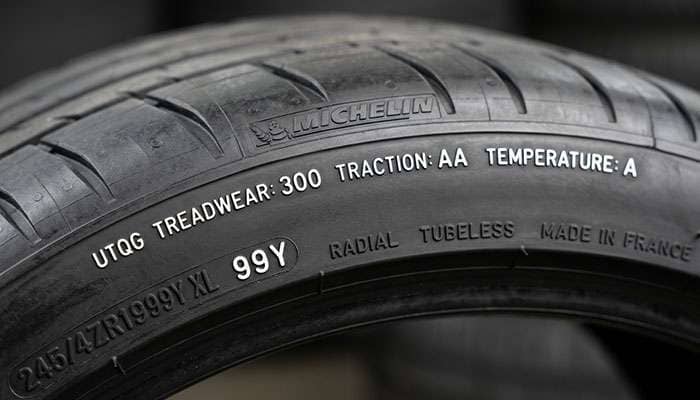
On the sidewall you'll also find a set of three ratings under the heading UTQG — Uniform Tire Quality Grading. These are government-mandated ratings that give you a standardized way to compare tires across brands. They're not perfect, but they're useful when you understand what they actually measure.
The treadwear number is a relative index — not a mileage guarantee. A tire rated 400 should theoretically last twice as long as a tire rated 200 under the same test conditions. In practice, real-world treadwear varies significantly based on driving style, road conditions, alignment, inflation, and load. A treadwear rating of 500–700 is typical for a good all-season touring tire; ultra-high performance summer tires often rate 200–300 because the softer compound grips better but wears faster. Use it as a comparison tool, not an absolute lifespan prediction.
The traction rating — AA, A, B, or C — measures straight-line wet braking performance on a government test track. AA is the highest, C is the lowest. Most quality tires are rated A or AA. This rating specifically measures wet braking in a straight line — it does not measure cornering grip, dry traction, or snow performance. An AA-rated tire is not automatically better in every traction situation, but for wet straight-line stopping, higher is better.
The temperature rating — A, B, or C — measures the tire's ability to dissipate heat at sustained high speeds. An A rating means the tire can handle higher sustained speeds without heat-related degradation; C means it's more susceptible to heat buildup. This rating works hand-in-hand with the speed rating. For most everyday driving, a B or A temperature rating is more than adequate. For performance driving or sustained highway use, A is preferable.
Every tire sold in the US has a DOT code molded into the sidewall. The full code starts with "DOT" and ends with a four-digit number — and those last four digits are the ones you care about. The first two digits are the week of manufacture; the last two are the year. A code ending in 1824 means the tire was made in the 18th week of 2024.
Tires sitting in a warehouse or on a shelf are still aging. Rubber degrades from the moment it's manufactured through oxidation, regardless of whether the tire has been driven on. Buying a "new" tire that's been sitting in a warehouse for four years means you're starting with significantly less usable life than a tire manufactured recently. When buying tires — especially online or from retailers with high inventory turnover — check the DOT date code. Any tire over two years old at the time of purchase is worth questioning; over three years, push back or look elsewhere.
Most manufacturers recommend replacing tires at 6 years from the manufacture date regardless of tread remaining, and consider any tire over 10 years old to be beyond its safe service life no matter how it looks. These aren't arbitrary numbers — they reflect the pace of rubber compound degradation from oxidation, UV exposure, and heat cycling. Keep the manufacture date in mind not just when buying, but throughout the life of your tires. Browse the full selection of tires at Performance Plus Tire with fresh inventory across every size and category.
There's no single number that matters most when buying tires — it depends on what you're buying for. The size code is non-negotiable; get that wrong and nothing else matters. The load index protects you from overloading your tires, which is a real safety risk especially on trucks and SUVs. The speed rating ensures the tire is built for how you drive. The UTQG ratings help you compare tires objectively. And the DOT date code tells you whether that "new" tire is actually fresh off the line or has been sitting in a warehouse for three years.
Understanding these numbers takes the guesswork out of tire shopping and puts you in control of the decision. You'll know what you're buying, why it matters for your specific vehicle and driving style, and whether you're getting real value for your money. When you're ready to shop, Performance Plus Tire carries thousands of options across every size, load rating, speed rating, and performance category — and if you need help finding the right fit, the team is here to help.
Here's what you need to remember the next time you're buying tires.
• Size is non-negotiable: Width, aspect ratio, and rim diameter all have to match your vehicle and wheels. Getting size wrong means the tire won't fit safely or perform correctly.
• Never go below OEM load index: The load index tells you how much weight each tire can carry. Going lower than your vehicle's specification is a genuine safety risk, especially on trucks and loaded vehicles.
• Match or exceed your speed rating: Speed rating isn't just about top speed — it reflects how the tire is built to manage heat. Going lower than OEM spec reduces safety margins at highway speeds.
• UTQG numbers help you compare honestly: Treadwear, traction, and temperature ratings let you compare tires across brands on a standardized scale — use them as a guide, not an absolute guarantee.
• Check the DOT date code before you buy: A tire that's been sitting for three years is already three years into its aging clock. Fresh manufacture dates mean more usable life and better rubber condition from day one.
You can go slightly outside the OEM size — modest changes in width or aspect ratio are common and often work fine — but the rim diameter must match exactly. Significant size changes affect speedometer accuracy, handling, and can cause rubbing in wheel wells. Any size change should be verified for compatibility with your specific vehicle using a tire size calculator before purchasing. When in doubt, stick with the manufacturer's recommended size or consult with a tire specialist.
Running tires with an insufficient load index puts you at real risk of tire failure. An overloaded tire builds excess heat, which accelerates internal breakdown and dramatically increases the risk of a blowout. The danger is greatest when the vehicle is fully loaded — passengers, cargo, and towing all add weight. Always match or exceed the load index your vehicle manufacturer specifies. It's listed in your owner's manual and on the door jamb sticker.
Not necessarily. Higher treadwear ratings indicate a harder compound that lasts longer, but harder compounds typically offer less grip — especially in wet conditions and at performance limits. Ultra-high performance tires intentionally use softer compounds with lower treadwear ratings because the grip trade-off is worth it for their intended use. The right treadwear rating depends on what you're prioritizing: longevity and economy, or maximum grip and performance.
Look on the sidewall for the letters "DOT" followed by a series of letters and numbers. The full DOT code ends with four digits — these are the date code. The first two digits are the week of manufacture and the last two are the year. For example, 2423 means the 24th week of 2023. Note that the complete DOT code including the date is sometimes only on the inner sidewall facing the vehicle, so you may need to look at both sides of the tire to find it.
Yes, for two reasons. First, speed rating reflects how the tire is engineered to manage heat — a higher-rated tire is generally better built overall, not just capable of higher speeds. Second, going below your vehicle's OEM speed rating can affect your insurance coverage in some cases and may void your warranty. You should always match or exceed OEM spec. Going above it — running a V-rated tire where an H was specified — is perfectly fine and often a sign of a better-quality tire.



