
When you're shopping for replacement tires or upgrading your ride, figuring out tire size equivalents can feel overwhelming. The good news is that finding the right metric equivalent for your 31x10.50R15 tire doesn't have to be complicated.
The 265/75R15 stands as the closest metric match to your 31x10.50R15 tire. These sizes are nearly identical, with the 31x10.50R15 measuring 30.98 inches (786.84 mm) in diameter while the 265/75R15 comes in at 30.65 inches (778.5 mm). That's just a 1.1% difference in overall diameter - only 0.33 inches (8.34 mm) separating them. The width difference is even smaller at 0.08 inches (2 mm), representing just a 0.8% variance.
Understanding these size relationships matters more than you might think. The right tire choice affects everything from your truck's ground clearance to fuel economy and speedometer accuracy. We'll walk you through the exact measurements you need to know, explain how tire sizing systems work, and help you choose the best alternative sizes for your specific needs. Plus, we'll cover the real-world performance differences you can expect when switching between these tire sizes.
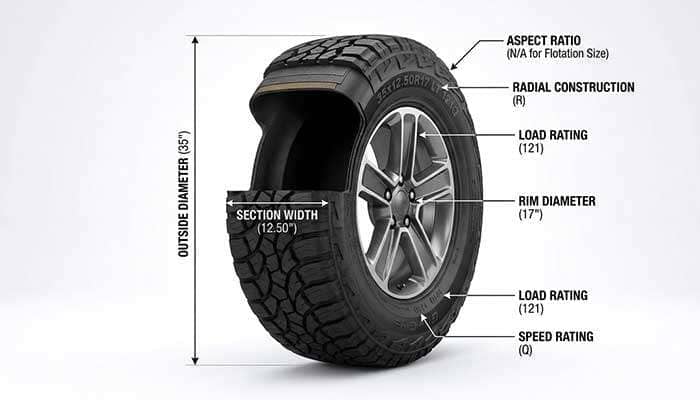
The 31x10.50R15 tire designation uses a simple naming system where each number tells you exactly what you're getting. Each measurement plays a critical role in how your tire performs and fits your vehicle.
The first number represents your tire's overall diameter from the ground to the highest point. While the designation shows 31 inches (approximately 787 millimeters), manufacturers measure the actual diameter at 30.98 inches (786.84 mm). This small 0.02-inch difference happens because tire companies round measurements for easier marketing and identification.
This height measurement directly impacts:
How much ground clearance you gain
Your vehicle's effective gear ratios
Speedometer readings and accuracy
The middle number indicates section width—10.5 inches or roughly 267 mm. This measures the distance from one sidewall to the other when properly mounted on the recommended rim width. The sidewall itself extends 7.99 inches from the rim edge to where the tread begins, creating the tire's distinctive profile.
The number following the "R" (indicating Radial construction) specifies the wheel diameter that fits this tire—15 inches. This measurement determines compatibility with your existing wheels or new wheel purchases.
These tires work best on rim widths between 7 and 9 inches. Seven-inch rims meet the minimum requirements, but 8-inch rims deliver optimal bead seating for off-road and all-terrain driving.
The complete tire measures 97.32 inches around its circumference and rotates 651-671 times per mile. These numbers become important when calculating how tire changes affect your speedometer and odometer accuracy. The sidewall's load-bearing height of 7.99 inches contributes significantly to the tire's ability to handle different terrain conditions and vehicle loads.
Tire manufacturers use two distinct sizing systems that can confuse even experienced drivers. Flotation tire sizes like the 31x10.50R15 operate on completely different principles than their metric counterparts.
The key difference lies in measurement approach. Flotation sizing uses imperial measurements (inches) throughout their designation, while metric tires use millimeters for width and a percentage for aspect ratio. Here's how each system presents dimensions:
Flotation format: Overall height × Width × Rim diameter (all in inches)
Metric format: Width (mm) / Aspect ratio × Rim diameter (inches)
This means a 31x10.50R15 immediately tells you the tire stands 31 inches tall. A metric tire like 265/75R15 requires calculation to determine its overall diameter.
Flotation tires originated for off-road and heavy-duty applications where overall diameter and ground clearance are critical considerations. When you need maximum ground clearance for rock crawling or muddy terrain, knowing the exact height becomes essential for vehicle setup.
These tires typically require wider wheel widths than their metric counterparts. Most flotation-sized tires feature more aggressive tread patterns and stronger sidewalls designed for demanding terrain conditions.
Close, but not identical. The 31x10.50R15 measures 30.98 inches in diameter while the 265/75R15 stands at 30.65 inches—a 1.1% difference. Width varies slightly too: 10.51 inches versus 10.43 inches respectively.
Performance-wise, the difference becomes negligible. The 31x10.50R15 completes 651 revolutions per mile compared to 658 for the 265/75R15. Most tire manufacturers consider these close equivalents for practical purposes.
Absolutely not. The 235/75R15 is considerably smaller in every dimension. Weight alone tells the story—a 235/75R15 tire typically weighs about 36 pounds compared to the 42 pounds of a 31x10.50R15. This six-pound difference per tire affects handling, fuel economy, and acceleration performance significantly.
While the smaller 235/75R15 delivers better fuel efficiency, it provides less ground clearance and reduced off-road capability compared to the more robust 31x10.50R15 tire.
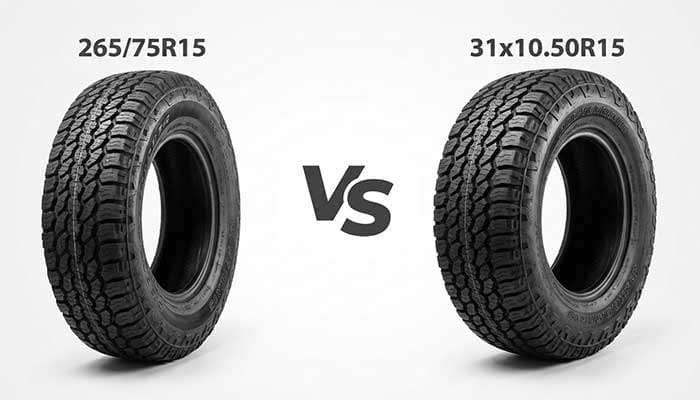
Finding the right metric equivalent for your 31x10.50R15 tire starts with understanding the closest dimensional matches. Here are the best options that maintain similar performance characteristics.
The 265/75R15 represents the most accurate metric replacement for the 31x10.50R15. These sizes deliver nearly identical performance with just a 1.1% difference in overall diameter. The measurements speak for themselves: 31x10.50R15 at 30.98 inches versus 265/75R15 at 30.65 inches—only 0.33 inches separating them. Width variance is even more minimal at 0.08 inches (10.51 vs 10.43 inches), creating just a 0.8% difference.
The 255/75R15 provides another solid choice, though with a larger 3.1% diameter difference. At 30.06 inches tall compared to the 31x10.50R15's 30.98 inches, it runs slightly smaller. The 275/70R15 offers yet another viable alternative that fits within acceptable performance parameters.
Several other sizes work effectively for specific applications:
235/75R15 (significantly smaller but more fuel efficient)
255/80R15 (hard to find but dimensionally accurate)
Specification |
31x10.50R15 |
265/75R15 |
Difference |
|---|---|---|---|
Diameter (in) |
30.98 |
30.65 |
1.1% |
Width (in) |
10.51 |
10.43 |
0.8% |
651 |
658 |
1.1% |
The right tire size makes all the difference in performance and compatibility. Get the best deal on 31x10.50R15 tires from Performance Plus Tire https://www.performanceplustire.com/LT31x1050R15_Tires for optimal vehicle fitment and performance.
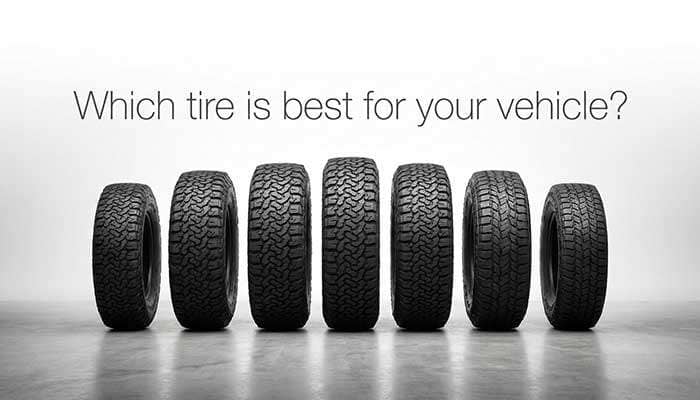
Ready to make the switch to 31x10.50R15 tires? Here's what you need to know about fitment and performance in real-world conditions.
Absolutely. The 31x10.50R15 fits perfectly on 15x7 rims since this falls within the manufacturer's recommended rim width range of 7.00-9.00 inches. You might notice slight rubbing when turning the wheel completely to one side on some vehicles. While 8-inch rims provide the best bead seating, 7-inch rims work great for most applications.
Your speedometer will read slightly low with 31x10.50R15 tires. When your gauge shows 60 mph, you're actually traveling 60.64 mph. At 100 mph on the speedometer, your real speed hits 101.07 mph. Engine RPMs drop too - expect about 8 fewer RPMs at 65 mph with a 3.73 gear ratio compared to stock tires.
Bigger tires mean lower fuel economy due to extra weight and rolling resistance. These tires tip the scales at 42 pounds versus 36 pounds for 235/75R15 tires. The taller profile helps offset some fuel economy loss by effectively raising your gear ratios.
Where 31x10.50R15 tires really shine is off-road. Their aggressive tread patterns and reinforced sidewalls handle tough terrain like champions. Highway driving tells a different story - expect more road noise and reduced fuel efficiency.
Get the best deal on 31x10.50R15 tires from Performance Plus Tire LT31x1050R15 Tires for optimal vehicle performance.
Choosing the right tire size comes down to understanding your specific needs and vehicle requirements. We've shown you that the 265/75R15 offers the best metric alternative to the 31x10.50R15, with just a 1.1% diameter difference and 0.8% width variance. This makes it a solid choice when you need metric sizing or when 31x10.50R15 tires aren't readily available.
The key difference between flotation and metric sizing systems is straightforward - flotation gives you immediate tire height information, while metric requires calculations. Both systems work well, but flotation sizing became popular with off-road enthusiasts because it clearly shows ground clearance potential.
Performance differences between these sizes are minimal in daily driving. Your speedometer will read slightly different, and fuel economy may vary by a small margin, but most drivers won't notice significant changes. Off-road drivers often stick with 31x10.50R15 for that extra ground clearance, while those focused on fuel efficiency might choose smaller alternatives.
Fitment works well with 31x10.50R15 tires on 15x7 rims, though 8-inch rims provide better bead seating for demanding conditions. Consider your vehicle's specifications, typical driving conditions, and performance priorities when making your selection.
At Performance Plus Tire, we carry the best selection of 31x10.50R15 tires at competitive prices. Our expert team can help you find the perfect tire size for your vehicle, ensuring proper fitment and optimal performance for your specific driving needs.
Understanding tire size equivalents helps you make informed decisions when replacing or upgrading your vehicle's tires, ensuring optimal performance and safety.
• 265/75R15 is the closest metric equivalent to 31x10.50R15 with only 1.1% diameter difference (0.33 inches)
• Flotation sizing uses inches throughout while metric uses millimeters for width and percentages for aspect ratio
• 31x10.50R15 fits 15x7 rims safely though 8-inch rims provide optimal bead seating for off-road use
• Speedometer reads slightly low - at 60 mph display, actual speed is 60.64 mph with larger tires
• Larger tires reduce fuel economy due to increased weight (42 vs 36 pounds) and rolling resistance
When switching between these tire sizes, expect minimal performance differences in daily driving, but consider the trade-offs between off-road capability and fuel efficiency based on your specific needs.
The 265/75R15 is the closest metric equivalent, with only a 1.1% difference in overall diameter. It measures 30.65 inches in diameter compared to the 31x10.50R15's 30.98 inches.
Yes, 31x10.50R15 tires can fit on 15x7 rims, as this width falls within the manufacturer's recommended rim width range of 7.00-9.00 inches. However, 8-inch rims provide optimal bead seating for off-road use.
Installing 31x10.50R15 tires slightly affects speedometer readings. For example, when the speedometer shows 60 mph, your actual speed would be approximately 60.64 mph. This variance increases at higher speeds.
Flotation sizing (like 31x10.50R15) uses inches throughout, directly showing the tire's height, width, and rim diameter. Metric sizing uses millimeters for width and percentages for aspect ratio, requiring calculations to determine overall height.
Larger tires like 31x10.50R15 typically reduce fuel efficiency due to increased rolling resistance and weight. They weigh about 42 pounds compared to 36 pounds for 235/75R15 tires. However, their taller profile can slightly offset this by raising effective gearing.



