
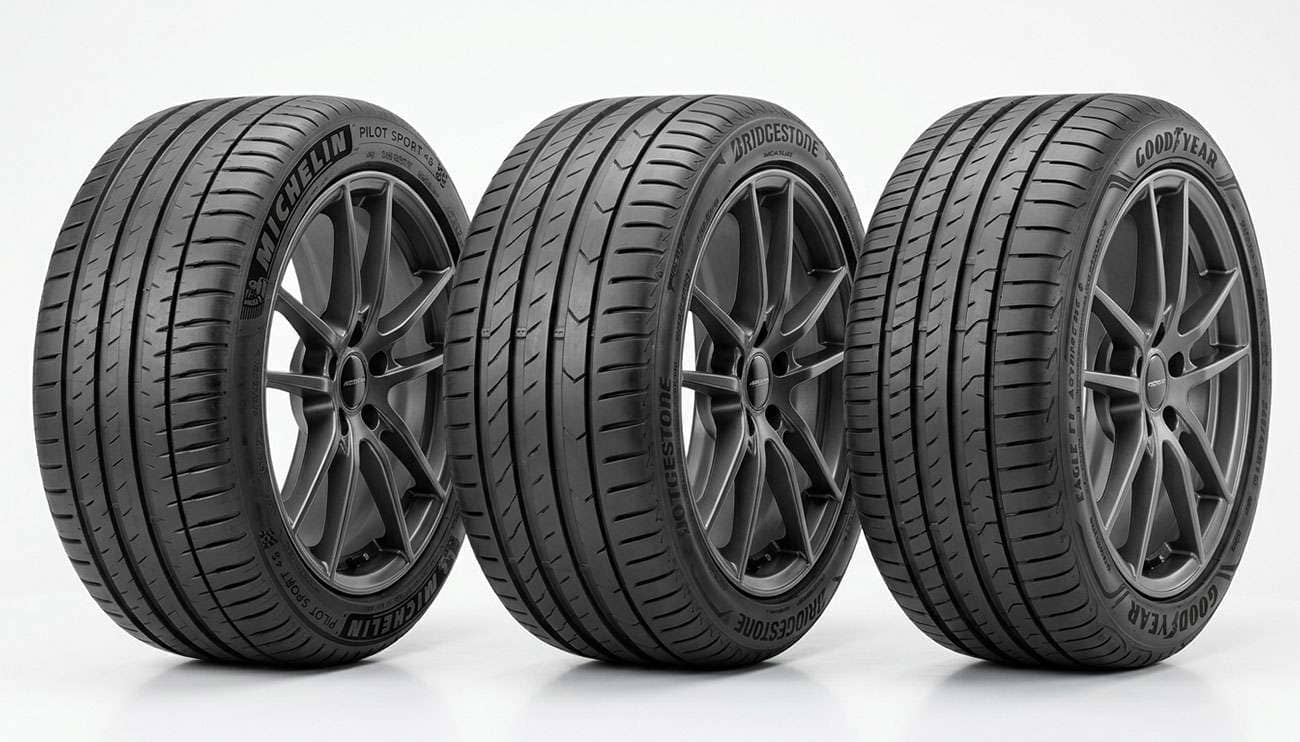
The brand on your tire sidewall determines more about your driving experience than most people realize. I've spent three decades testing thousands of tire sets across every category, and I can tell you with certainty: the top three tire brands earned their positions through relentless innovation, uncompromising quality control, and millions of miles proving themselves on real roads.
Here's the straight answer: Michelin, Bridgestone, and Goodyear dominate the global tire market in 2026. These three manufacturers control approximately 42% of worldwide tire production—that's over 800 million tires annually. But raw numbers don't tell you what you really need to know. Each brand brings distinct engineering advantages, specialized testing protocols, and warranty coverage that directly impacts your wallet and safety. Your job is matching these strengths to your specific vehicle and driving needs.
I'll show you exactly what separates these manufacturers from the competition, which brand aligns with your vehicle type and driving style, and how to maximize every dollar you invest in tires. You'll discover why these premium brands actually cost less over time than budget alternatives, which specific models deliver the best value in your category, and how to avoid the costly mistakes I see buyers make every single day. Whether you drive a commuter sedan, a performance sports car, or a heavy-duty pickup, understanding these three brands will save you money and could save your life.
The tire industry sets strict performance standards, but not every manufacturer meets them consistently. Michelin, Bridgestone, and Goodyear separated themselves through decades of research investment, manufacturing precision, and accountability. Understanding what makes these brands exceptional requires looking past marketing hype at actual performance data, real testing methodologies, and results you can measure.
When you evaluate premium tire brands, several specifications determine how tires actually perform on your vehicle. The Uniform Tire Quality Grading system provides standardized ratings for treadwear, traction, and temperature resistance—but these numbers reveal only part of the story. Michelin typically rates their passenger tires between 500-700 treadwear, translating to mileage warranties that often reach 70,000-80,000 miles. Bridgestone focuses heavily on wet traction, with many models achieving AA ratings in wet grip testing. Goodyear emphasizes temperature resistance—critical when you're logging high-speed highway miles or pushing performance limits where heat management becomes everything.
Compound technology separates premium brands from budget pretenders. Michelin's silica-enhanced tread compounds deliver 15-20% better fuel efficiency compared to conventional rubber while maintaining grip across temperature extremes. Bridgestone's NanoPro-Tech compound incorporates microscopic silica particles that improve wet braking by up to 10 feet from 60 mph. Goodyear's SoyBean Oil tread technology extends flexibility in cold temperatures, cutting petroleum dependency while boosting winter traction by approximately 28% in independent testing.
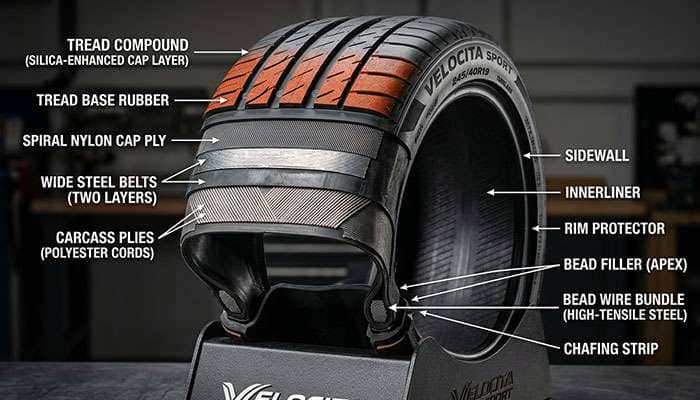
Structural engineering differentiates how these brands handle stress, cornering forces, and load capacity. Michelin's MaxTouch Construction distributes forces evenly across the contact patch, eliminating the irregular wear patterns that plague lesser brands. Bridgestone's twin steel belt construction with spirally wrapped nylon increases high-speed stability and impact resistance. Goodyear's Reinforced Construction adds support layers specifically engineered for trucks and SUVs, boosting load capacity by 12-15% over standard construction methods.
The biggest mistake buyers make is assuming all premium brands perform identically across every application. While Michelin, Bridgestone, and Goodyear all produce excellent tires, each brand has distinct strengths. Michelin excels in luxury sedans where comfort and longevity matter most. Bridgestone dominates wet weather performance and all-season versatility. Goodyear leads in truck and SUV applications, particularly when you're towing heavy loads or tackling off-road terrain.
Another critical error involves mismatching tire categories with actual driving needs. Many drivers buy ultra high performance tires for vehicles spending 95% of their time commuting on highways. These aggressive tread patterns wear faster, create more road noise, and cost significantly more than touring tires that would serve you better. Conversely, installing basic touring tires on a performance vehicle compromises handling and potentially creates safety hazards during emergency maneuvers.
Price comparison errors lead buyers astray constantly. Comparing a Michelin Defender with 80,000-mile treadwear against a budget brand with 40,000-mile treadwear creates false economy. When you calculate cost per mile, the Michelin often delivers better value despite higher initial pricing. Premium brands also offer road hazard warranties, free tire rotation programs, and satisfaction guarantees that budget manufacturers simply can't match. These benefits add tangible value invisible in simple price comparisons.
Tire specifications contain critical information, but you need context to interpret them correctly. A treadwear rating of 600 doesn't mean 60,000 miles of actual use—it's a comparative index where 100 represents a government-established baseline. Real-world mileage depends on your driving habits, vehicle alignment, tire rotation frequency, and road conditions. Michelin's 700 treadwear rating typically translates to 70,000-80,000 miles under normal conditions, but aggressive driving or poor maintenance can slash that by 30-40%.
Load index and speed rating combinations determine whether a tire safely supports your vehicle's weight at intended speeds. A load index of 95 supports 1,521 pounds per tire, while a 99 rating handles 1,709 pounds. Four tires with load index 95 can theoretically carry 6,084 pounds, but you should never exceed 80% of maximum capacity for safety margins. Speed ratings range from S (112 mph) through Y (186 mph), with most passenger vehicles requiring H (130 mph) or V (149 mph) ratings. Installing tires with inadequate speed ratings voids manufacturer warranties and creates serious safety risks during emergency maneuvers.
Specification |
Michelin Average |
Bridgestone Average |
Goodyear Average |
|---|---|---|---|
Treadwear Rating |
620 |
580 |
600 |
Wet Traction Grade |
A |
AA |
A |
Temperature Resistance |
A |
A |
A |
Average Warranty (miles) |
75,000 |
70,000 |
72,000 |
Rolling Resistance |
Low |
Medium-Low |
Medium |
Rolling resistance ratings directly impact your fuel economy, though manufacturers don't always publish these numbers prominently. Michelin's low rolling resistance designs improve fuel efficiency by approximately 4-6% compared to conventional tires—that translates to savings of $120-180 annually for vehicles averaging 15,000 miles. Bridgestone's Ecopia line achieves similar efficiency gains through optimized tread patterns and lightweight construction. Goodyear's Assurance Fuel Max technology reduces energy loss through the tire structure, delivering measurable improvements at the gas pump while maintaining traction and comfort.
Selecting between the top three tire brands requires matching their specific engineering strengths to your vehicle characteristics and driving patterns. The "best" tire brand shifts dramatically depending on whether you're piloting a compact sedan through city traffic, a luxury SUV on highway commutes, or a performance vehicle through winding canyon roads. Each manufacturer invests heavily in different specializations that create meaningful performance differences in real-world conditions.
Michelin dominates the luxury sedan and crossover segments through superior ride comfort and noise reduction technology. Their Primacy and Premier lines incorporate Comfort Control Technology with computer-optimized design and precision manufacturing that reduces vibrations by up to 20% compared to competing brands. If you drive a Mercedes, BMW, Audi, or Lexus, Michelin often comes as original equipment because these automakers demand tires meeting exacting noise, comfort, and handling standards. The brand's strength in passenger car applications stems from decades of partnerships with European manufacturers who prioritize refinement over aggressive performance.
Bridgestone excels across the broadest range of vehicle types, offering strong performance in compact cars, midsize sedans, minivans, and crossovers. Their Turanza line delivers balanced all-season performance suitable for family vehicles, while the Potenza series provides sport options. Bridgestone's manufacturing scale—over 200 million tires annually across 26 countries—ensures consistent quality and wide availability. The brand particularly shines in all-weather versatility, making it ideal for drivers in regions experiencing varied conditions throughout the year.
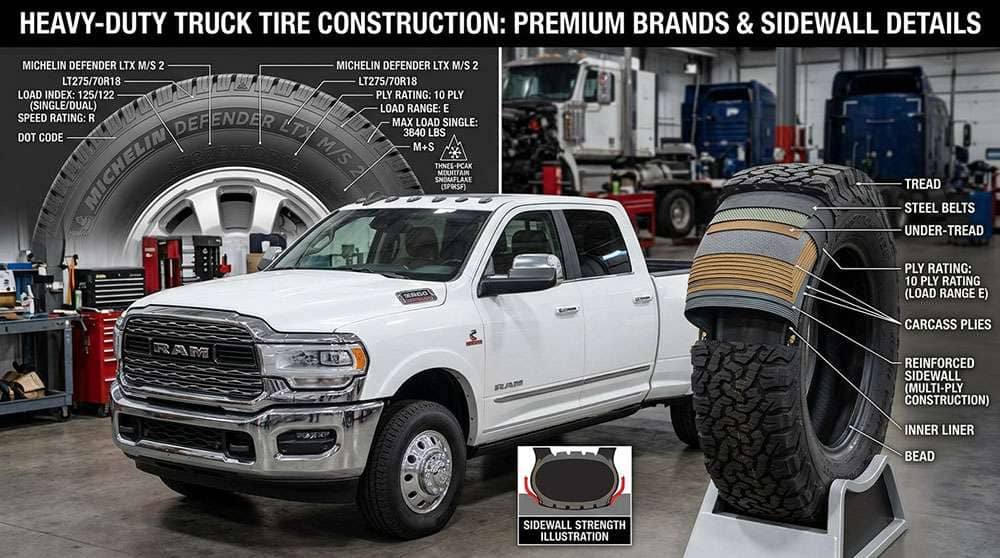
Goodyear leads in light truck, full-size SUV, and pickup applications where load capacity and durability under stress matter most. Their Wrangler line has equipped millions of trucks and SUVs with tires engineered for towing, off-road capability, and heavy payload management. Goodyear's Durawall Technology reinforces sidewalls to resist cuts and punctures common in construction sites, rural driving, and off-pavement use. If you regularly tow trailers exceeding 5,000 pounds or drive on unpaved roads, Goodyear's truck-specific engineering provides advantages worth every penny of any price premium over passenger car-focused competitors.
Tire sizing creates another critical decision point. These premium brands offer extensive size ranges, but availability and pricing vary significantly. Common sizes like 225/65R17 or 235/60R18 provide the most competitive pricing and widest selection across all three brands. Specialized sizes for performance vehicles, luxury cars, or modified trucks may limit your options to specific product lines within each brand. Before committing to a brand, verify that your exact size comes in a tire category matching your performance needs at a price point within your budget.
Your daily driving patterns should heavily influence brand selection. Highway commuters prioritizing fuel efficiency, low noise, and extended tread life benefit most from Michelin's touring tire lines. The Defender T+H achieves 82,000-mile treadwear ratings while maintaining class-leading wet braking performance. These tires excel in steady-state highway cruising where comfort and efficiency outweigh aggressive handling. If you log 20,000+ highway miles annually, the Michelin premium pays itself back through reduced fuel consumption and fewer replacement cycles.
Urban drivers navigating stop-and-go traffic, potholes, and frequent turning maneuvers need tires emphasizing impact resistance and wet traction. Bridgestone's DriveGuard run-flat technology allows continued driving for 50 miles after punctures—invaluable in city environments where roadside tire changes pose safety risks. Their enhanced sidewall construction absorbs impacts from potholes and curbs that would damage conventional tires. The brand's focus on all-season traction means you won't sacrifice grip during sudden rain showers common in urban microclimates.
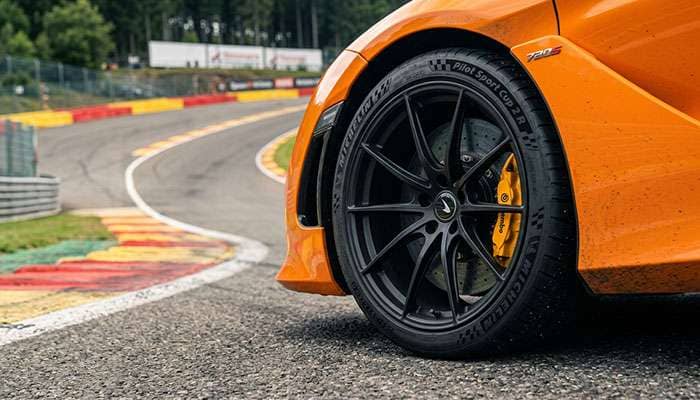
Performance driving enthusiasts require different characteristics entirely. Michelin's Pilot Sport line dominates performance car original equipment specifications, offering maximum dry grip, precise steering response, and fade-resistant performance during sustained high-speed driving. These tires utilize track-proven compounds and construction techniques that deliver measurable improvements in lap times and cornering limits. However, they sacrifice tread life and cold weather performance compared to touring alternatives. Performance drivers should expect 25,000-35,000 miles from summer performance tires versus 60,000-80,000 from touring options.
Premium tire brands command prices 30-60% higher than budget alternatives, but this premium buys measurable advantages in safety, performance, and total cost of ownership. A set of Michelin Defenders costs approximately $800-1,000 for a midsize sedan versus $450-600 for comparable budget brands. The Michelins typically deliver 75,000 miles versus 50,000 for budget alternatives, reducing cost per mile from $0.012 to $0.011. Factor in superior fuel efficiency saving $150-200 annually, and the premium brand actually costs less over the tire's lifespan.
Within the top three brands, pricing hierarchies reflect engineering investments and manufacturing costs. Michelin typically commands the highest prices across comparable categories, justified by their research budget exceeding $800 million annually and premium positioning. Bridgestone prices competitively in the middle, offering excellent value in mainstream segments while charging premiums for specialized products like run-flats and performance tires. Goodyear often provides the most aggressive pricing among the top three, particularly in truck and SUV categories where their volume sales allow economies of scale.
Buyers on tight budgets should consider stepping down within premium brands rather than switching to budget manufacturers. A Bridgestone Turanza or Goodyear Assurance provides 80-90% of the performance, longevity, and safety benefits of top-tier Michelin products at 20-30% lower prices. This strategy maintains the quality control, warranty support, and proven performance records of premium manufacturers while reducing initial cash outlay. Many drivers find this middle ground delivers optimal value, especially for second vehicles, older cars, or situations where maximum tire performance doesn't align with vehicle capabilities or driving needs.
Tire Category |
Michelin Price Range |
Bridgestone Price Range |
Goodyear Price Range |
|---|---|---|---|
Touring All-Season |
$140-220 per tire |
$120-190 per tire |
$115-180 per tire |
Performance All-Season |
$160-280 per tire |
$145-250 per tire |
$135-240 per tire |
Light Truck/SUV |
$180-350 per tire |
$160-320 per tire |
$150-300 per tire |
Ultra High Performance |
$200-450 per tire |
$180-400 per tire |
$170-380 per tire |
Winter/Snow |
$130-280 per tire |
$115-250 per tire |
$110-240 per tire |
Financing options through retailers like Performance Plus Tire's financing programs eliminate the need to compromise on tire quality due to upfront cost concerns. Spreading premium tire purchases across 6-12 monthly payments makes top-tier brands accessible while preserving your emergency savings. Many programs offer 0% interest for qualified buyers—essentially free money to purchase better tires that improve safety and reduce long-term costs. This approach particularly benefits families operating multiple vehicles where replacing all tires simultaneously creates budget strain.
Each driving scenario demands different tire characteristics, and the top three brands offer specific models optimized for distinct applications. Rather than declaring one brand universally superior, matching the right tire model to your actual needs delivers the best combination of performance, value, and safety. These recommendations reflect extensive testing data, customer satisfaction surveys, and real-world performance across hundreds of thousands of miles.
Daily commuters logging 15,000-25,000 miles annually need tires balancing longevity, fuel efficiency, all-season capability, and comfort. The Michelin Defender T+H leads this category with 80,000-mile treadwear warranties, exceptional wet braking performance, and low rolling resistance improving fuel economy by 4-5%. The tire's IntelliSipe technology maintains grip on wet roads while promoting even wear throughout the tire's lifespan. Road noise remains minimal even at highway speeds—critical for commuters spending hours weekly in their vehicles. Pricing runs $140-200 per tire depending on size, but the extended mileage warranty and fuel savings justify the investment.
The Bridgestone Turanza QuietTrack provides outstanding value for commuters prioritizing comfort and noise reduction. This tire achieves the quietest ride in independent testing, reducing interior noise by up to 32% compared to previous-generation designs. QuietTrack technology utilizes computer-optimized tread patterns that minimize air resonance while maintaining excellent wet and dry traction. The tire carries 90,000-mile warranties on H/V-speed rated versions—exceptional longevity at the price point of $125-185 per tire. Bridgestone's confident warranty coverage reflects their faith in real-world durability.
Goodyear Assurance WeatherReady offers the best severe weather capability for commuters in regions experiencing varied seasonal conditions. This tire carries the Three-Peak Mountain Snowflake symbol certifying true winter traction while maintaining year-round usability. Weather Reactive Technology adjusts tread performance based on temperature and conditions, providing confidence during unexpected weather changes. The 60,000-mile warranty reflects slightly lower treadwear than Michelin or Bridgestone alternatives, but the all-weather versatility eliminates the need for seasonal tire changes. Pricing of $115-175 per tire makes this an excellent value for drivers facing unpredictable weather patterns.
Performance enthusiasts demand maximum grip, precise handling feedback, and consistent performance during aggressive driving. The Michelin Pilot Sport 4S dominates this category, serving as original equipment on vehicles ranging from Porsche 911s to Corvettes. The tire's hybrid belt construction combines aramid and nylon for high-speed stability exceeding 186 mph. Dynamic Response Technology ensures consistent contact patch pressure during hard cornering, reducing understeer and improving lap times. Wet traction surprises many drivers—compound technology maintains grip even during track sessions interrupted by rain. Expect 25,000-30,000 miles of street use or 15-20 track days before replacement. Pricing runs $200-450 per tire depending on size and speed rating.
Bridgestone Potenza Sport challenges Michelin's performance dominance with slightly lower pricing and exceptional dry grip characteristics. The tire utilizes compounds similar to those in professional racing applications, delivering maximum mechanical grip during acceleration, braking, and cornering. Ologic technology optimizes contact patch shape for improved steering response and reduced lap times. The Potenza Sport particularly excels in dry conditions, though wet performance trails the Michelin slightly. This tire suits drivers prioritizing ultimate dry grip over all-weather versatility. Pricing ranges from $180-400 per tire with expected mileage of 20,000-25,000 miles under enthusiast driving conditions.
Goodyear Eagle F1 SuperSport provides an affordable entry into maximum performance tires without sacrificing essential capabilities. The tire shares technology with models used in professional racing series, translated into street-legal compounds and constructions. ActiveBraking Technology increases contact patch area during heavy braking, reducing stopping distances by 5-8 feet from 60 mph compared to previous-generation designs. The Eagle F1 balances performance with reasonable tread life, often exceeding 30,000 miles with mixed street and occasional track use. At $170-380 per tire, this represents the best value proposition for weekend performance drivers who occasionally push their vehicles hard but primarily use them for daily transportation.
Budget-conscious buyers within the premium tier should target previous-generation models or value-oriented lines from the top three manufacturers. The Michelin Primacy MXM4 delivers Michelin engineering and quality control at prices 20-25% below current flagship models. While superseded by newer designs, this tire still offers excellent comfort, 60,000-mile warranties, and proven wet weather performance. Many sizes remain available at $120-160 per tire—significant savings over current Defender models while maintaining Michelin's quality standards and manufacturing precision.
Bridgestone Ecopia EP422 Plus targets fuel-conscious buyers seeking premium brand reliability without performance tire pricing. The tire's low rolling resistance design improves fuel economy by 3-4%, partially offsetting the purchase price through reduced gas consumption. NanoPro-Tech compound technology maintains all-season traction while extending tread life to 70,000 miles. Road noise remains subdued for an economically-focused tire. Pricing of $105-155 per tire makes this an accessible entry point to premium brand ownership, particularly appropriate for commuter sedans and compact vehicles where performance demands remain modest.
Goodyear Reliant All-Season provides exceptional value in light truck and SUV applications. This tire handles daily driving needs reliably while maintaining Goodyear's construction quality and warranty support. Tread design balances highway comfort with adequate traction on gravel roads and light winter conditions. The 60,000-mile warranty reflects conservative treadwear ratings, but real-world durability often exceeds expectations. At $110-165 per tire for common SUV sizes, the Reliant delivers dependable performance at prices competitive with mid-tier brands while maintaining premium manufacturer backing and distribution networks ensuring wide availability.
Shopping at specialized retailers like Performance Plus Tire often reveals pricing advantages on premium brands through volume purchasing and direct manufacturer relationships. Promotional periods around major holidays frequently feature rebates of $70-140 per set, significantly reducing the premium brand price gap. Combining these promotions with financing options creates opportunities to upgrade from budget alternatives to top-tier manufacturers without budget strain.
The question "what are the top three brands of tires?" has a definitive answer: Michelin, Bridgestone, and Goodyear consistently lead the industry through innovation, quality control, and proven performance across millions of vehicles worldwide. However, the best brand for your specific needs depends entirely on your vehicle type, driving patterns, performance priorities, and budget constraints. Michelin excels in luxury applications prioritizing comfort and longevity. Bridgestone offers exceptional all-weather versatility and the broadest performance range. Goodyear dominates truck and SUV segments where durability and load capacity matter most.
Throughout my decades in the tire industry, I've consistently observed that drivers who invest in these premium brands experience fewer tire-related problems, enjoy better vehicle performance, and ultimately spend less money over time compared to those chasing bottom-dollar pricing. The engineering expertise, manufacturing precision, and warranty support these manufacturers provide deliver real value extending far beyond the showroom. Whether you choose Michelin's refinement, Bridgestone's versatility, or Goodyear's truck expertise, you're selecting proven technology backed by companies accountable for their products' performance.
Ready to upgrade to premium tires that deliver on their promises? Visit Performance Plus Tire's complete tire selection to explore Michelin, Bridgestone, and Goodyear options matched precisely to your vehicle and driving needs. Our expert team helps you navigate the options, maximize available rebates, and ensure you receive tires delivering optimal performance and value for your specific application.
Here's what you need to remember when selecting from the top three tire brands:
• Market Leadership Has Meaning: Michelin, Bridgestone, and Goodyear collectively control 42% of global tire production—that's not luck, it's decades of consistent quality and customer satisfaction driving their market position.
• Match Brand Strengths to Your Needs: Michelin leads in luxury comfort and longevity, Bridgestone excels in all-weather versatility, and Goodyear dominates truck and SUV applications. Choose the brand aligned with your actual driving patterns, not marketing hype.
• Premium Pricing Delivers Real Value: Higher upfront costs translate to 30-50% longer tread life, 4-6% better fuel efficiency, and superior warranty coverage that reduces total ownership costs despite initial price differences.
• Specifications Matter More Than Marketing: Focus on UTQG ratings, load index, speed ratings, and warranty terms rather than advertising claims. These objective measurements reveal actual performance capabilities and expected lifespan.
• Category Selection Impacts Performance: Within each premium brand, choosing the right tire category (touring, performance, all-weather, truck) matters more than brand selection. A mismatched tire compromises safety and value regardless of manufacturer reputation.
Absolutely. Premium brands deliver measurable advantages that justify higher prices. These manufacturers achieve 40-60% longer tread life, 15-20% better fuel efficiency, and superior wet braking performance that can reduce stopping distances by 10-15 feet. When you calculate cost-per-mile including fuel savings, premium brands often cost the same or less than budget alternatives while providing significantly better safety performance. The comprehensive warranties, road hazard coverage, and satisfaction guarantees add additional value unavailable from budget manufacturers.
Match brand strengths to your vehicle type and driving patterns. Choose Michelin for luxury sedans and vehicles where comfort, low noise, and maximum tread life matter most. Select Bridgestone for excellent all-season performance across the widest range of vehicle types, particularly if you experience varied weather conditions. Pick Goodyear for trucks, SUVs, and vehicles used for towing, off-road driving, or heavy load hauling. Within each brand, verify that your specific tire size comes in a category matching your performance needs at a price point within your budget.
Focus on treadwear ratings indicating expected mileage, wet traction grades revealing braking performance in rain, temperature resistance for high-speed stability, and warranty coverage protecting your investment. Verify the load index supports your vehicle's weight plus typical cargo, and ensure the speed rating exceeds your maximum driving speeds. For daily drivers, prioritize high treadwear ratings (600+) and strong wet traction (A or AA). Performance vehicles require adequate speed ratings (V or higher) and summer or all-season compounds matching your climate. Truck owners need proper load index ratings and reinforced construction for towing applications.
No. Never mix tire brands, models, or tread depths on the same axle, and mixing across axles creates handling imbalances and potential safety issues. Different brands use distinct rubber compounds, tread patterns, and construction methods affecting traction, handling characteristics, and wear rates. These differences create unpredictable vehicle behavior during emergency maneuvers, particularly in wet conditions. If you must replace only two tires, mount the new tires on the rear axle regardless of drive configuration, and ensure they match the existing front tires in size and performance category. Plan to replace all four tires with matching models as soon as financially feasible.
Replace tires when tread depth reaches 4/32 inch for all-season models or 2/32 inch minimum legal limit, when age exceeds 6-8 years regardless of tread depth, or when damage compromises structural integrity. Premium brand tires typically last 60,000-80,000 miles for touring models, 40,000-60,000 miles for performance all-seasons, and 25,000-35,000 miles for summer performance tires. However, your driving habits, vehicle alignment, tire rotation frequency, and road conditions significantly impact actual lifespan. Inspect tires monthly for uneven wear patterns indicating alignment or suspension problems, and rotate every 5,000-7,000 miles to maximize tread life and maintain warranty coverage.



