
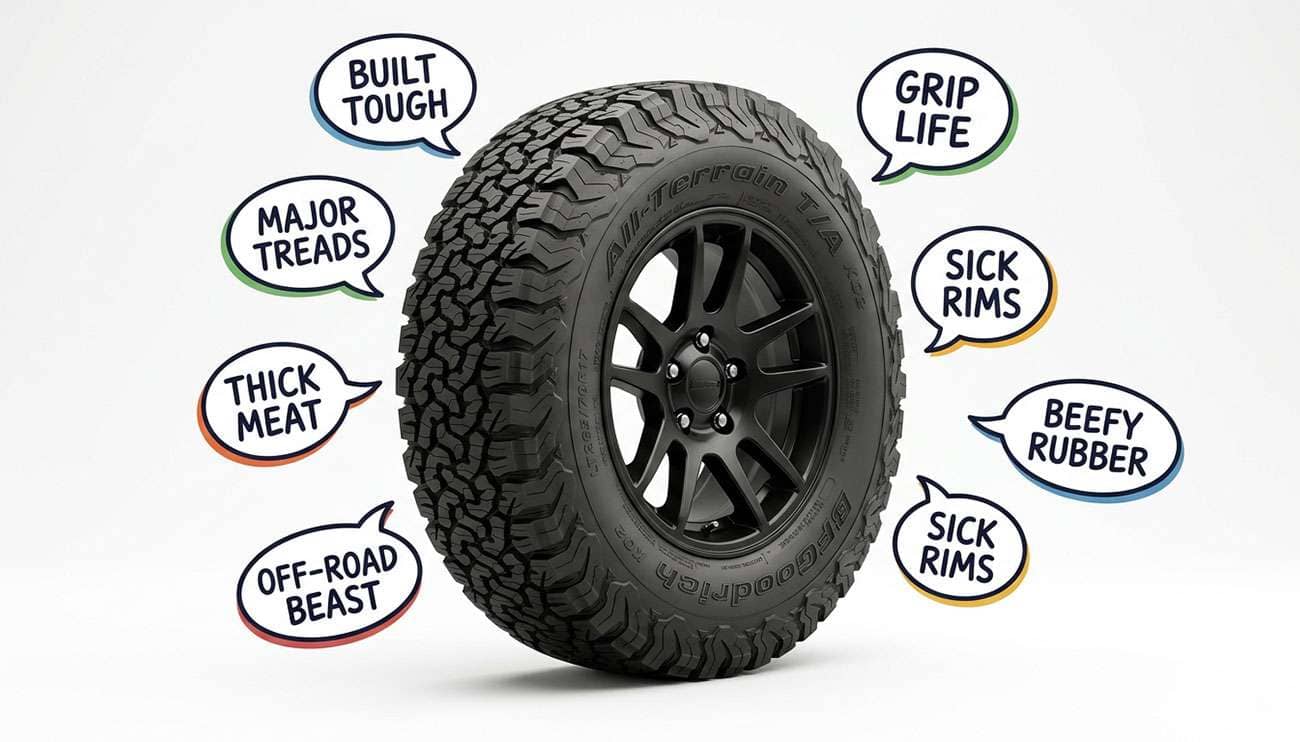
Tire as slang operates with several distinct meanings that vary dramatically based on who's using it and where. The term carries different weight in different circles, and understanding these variations helps you navigate conversations more effectively.
When people reference "tire" in physical contexts, they're typically talking about body parts or appearance. The term describes someone's anus, based on the visual similarity of being black and round. You'll also hear it used for protruding belly fat, especially when clothes stretch tight around the stomach area to create that telltale bulge. This connects directly to the common "spare tire" reference - that excess abdominal fat that resembles an actual automobile tire in shape.
The slang gets more cutting when describing personality traits. Someone called a "tire" consistently acts like an asshole while thinking they're being impressive or cool. Think of it as an upgraded version of calling someone a "tool" - it indicates serious levels of obnoxious, self-important behavior. People use this term to call out individuals who display persistent negative attitudes while remaining completely oblivious to how they come across.
Within marijuana culture, "tire" has a specific measurement meaning: one-fourth of an ounce. The logic comes from the four-tire analogy - just like a car has four tires, each "tire" represents one quarter of the whole ounce. Users rely on this terminology when discussing quantities and pricing during transactions.
"The Tire" also appears in entertainment contexts, notably as the sole citizen of Strong Badia, a fictional location. This shows how slang terminology extends beyond everyday usage into media and entertainment references.
The traditional meaning remains the rubber component of a wheel, spelled "tire" in American English. While this literal definition contrasts with slang interpretations, the physical characteristics of actual tires inform several metaphorical uses.
Each meaning serves specific purposes within its community. Whether someone's describing physical attributes, critiquing personality traits, measuring substances, or referencing pop culture, context clues help listeners determine the intended definition. The key lies in understanding which communities use which meanings - and when.
Understanding tire-related slang goes beyond the basic meanings. Several specialized expressions have developed across different communities, each serving specific purposes in sales environments and everyday conversations.
Tire kicker identifies a prospect who shows interest in buying something but never follows through with a purchase. The term comes directly from car dealerships, where people would literally kick vehicle tires to appear knowledgeable, then leave without buying.
These prospects create real problems in sales operations. They consume valuable time by asking detailed questions and raising objections at every step, only to walk away when it's time to commit. Sales teams recognize tire kickers as resource drains who distract from genuine buyers, skew performance metrics, and waste company time at every stage of the sales process.
The original practice of kicking tires actually served a practical purpose - checking vehicle condition - before the term took on its negative sales meaning.
Flat tire describes a boring or dull person, particularly in older slang usage. This definition first appeared between 1920-1925, classifying someone as uninteresting company.
The phrase also refers to a common prank: stepping on the back of someone's shoe to make it slip off their foot. This happens when one person steps on another's footwear while walking, forcing the shoe to detach.
Tire rotation refers to the standard maintenance practice of moving tires to different positions on a vehicle. The process usually involves moving front tires to the back and rear tires to the front, though the exact pattern depends on tire type and vehicle drivetrain. This procedure promotes even wear across all four tires, extending their useful life.
Tire iron describes the specialized tool used for tire work. The implement features a short steel shaft with a flattened end that works like a crowbar for removing tires from rims. Historically, "taking a tire iron to someone" meant using this tool as a weapon.
The word "tire" has a fascinating history that goes back much further than you might expect. Around 1300, the term started as "tir," which was actually a shortened version of "attire". Knights used this word to describe their equipment and military gear. The original "attire" meant equipment, dress, covering, trappings, and accouterments.
Medieval craftsmen soon discovered the versatility of this shortened term. They began using "tire" to describe various types of coverings and protective layers across different trades. This evolution made perfect sense - the concept connected different applications through the idea of "dressing" an object with a protective or decorative covering.
The late 1400s brought the first documented use of "tire" for wheel components. Historical records show iron plates forming the rim of carriage wheels, marking the earliest application to wheeled vehicles. These metal bands served two critical purposes: they held wooden wheels together under stress and prevented excessive wear from road contact.
During the same period, craftsmen applied "tire" to other contexts beyond transportation. They used the term to describe decorative metal edging on bells, showing how the word covered both protective and ornamental metal coverings. The underlying concept remained consistent - the tire served as the "dressing" of an object, keeping that original connection to attire.
Spelling variations developed over the centuries. The original "tire" spelling shifted to "tyre" during the 17th and 18th centuries. Early 1800s Britain saw a return to the "tyre" spelling, which became standard British English, while American English kept "tire".
Understanding this history helps explain why tire slang feels so natural - the word always carried meanings related to covering, protection, and equipment. Modern slang simply extends these original concepts into new contexts.
Understanding when and how to use tire expressions can help you communicate more effectively across different social and professional situations. These terms work best when you match the expression to the right context and audience.
"Pump (up) (one's) tires" works as an informal way to give someone praise, compliments, or encouragement. You'll want to use this phrase when someone needs a confidence boost or emotional support. Blake's been down, so I hung out with him and tried to pump his tires a bit serves as a typical application. When someone uses this expression about you, you can respond modestly with phrases like there's no need to pump up my tires.
"Tire fire" describes a complete disaster or chaotic situation. The phrase comes from how difficult it is to put out actual tire fires - they spread fast and get out of control quickly. You can apply this slang to both situations and people. A 17-1 loss qualifies as a total tire fire in sports contexts. When talking about people, it describes someone who creates constant problems, like an intern who spilled coffee on himself yesterday and accidentally laminated his tie today.
"Spare tire" has two main applications beyond its car-related meaning. You can use it to describe extra belly fat or a roll around someone's midsection. It also refers to an unneeded or unproductive person in a group or workplace. The conversation context will make it clear whether you're talking about physical appearance or someone's usefulness in a situation.
These expressions work best in casual conversations with people who understand the references. Use them carefully in professional settings, and always consider your audience before dropping tire slang into the discussion.
Understanding tire slang helps you navigate diverse conversations from sales environments to casual social interactions, where context determines the intended meaning.
• "Tire kicker" identifies prospects who waste sales time by showing interest but never buying - originally from car dealerships where people literally kicked tires
• Multiple meanings exist - "tire" can refer to body parts, personality traits (calling someone an asshole), drug quantities (1/4 ounce marijuana), or boring people
• Etymology matters - the term evolved from medieval "attire" meaning equipment/covering, first applied to wheel rims in the late 1400s
• Context is crucial - phrases like "tire fire" (disaster), "pump your tires" (give praise), and "spare tire" (belly fat/useless person) require situational awareness
• Regional variations persist - American English uses "tire" while British English prefers "tire," reflecting centuries of linguistic evolution
These slang terms demonstrate how automotive terminology has expanded into everyday language, creating colorful expressions that convey specific meanings across different social groups and professional contexts.
Q1. What does "tire kicker" mean in sales? A tire kicker is someone who shows interest in buying a product or service but never actually makes a purchase. The term comes from car dealerships where people would literally kick vehicle tires to appear interested, then leave without buying. These prospects waste valuable sales time by asking questions and raising objections throughout the entire process.
Q2. Where did the word "tire" originally come from? The word "tire" originated from the medieval term "attire," which meant equipment or covering. Around 1300, it was shortened to "tir" to describe a knight's military gear. By the late 1400s, the term was first applied to wheel components, specifically iron plates that formed the rim of carriage wheels, serving as a protective "dressing" for the wheel.
Q3. What does "tire fire" mean in slang? A tire fire refers to a complete disaster or chaotic situation. The expression comes from the fact that actual tire fires are extremely difficult to extinguish and quickly become uncontrollable. It can describe both catastrophic situations (like a devastating sports loss) and people who consistently create problems.
Q4. What does it mean to "pump someone's tires"? To pump someone's tires means to give them praise, compliments, or encouragement. It's an informal expression used when trying to boost another person's morale or confidence, particularly when they're feeling down or need emotional support.
Q5. What is a "spare tire" in slang terms? A spare tire has two slang meanings: it can refer to excess belly fat or a roll around someone's midsection, resembling the shape of an automobile tire. It can also describe an unneeded or unproductive person within a group or organization. The intended meaning depends on the conversational context.



