

That $100 tire price tag sits right in the sweet spot for many drivers, but the real value depends entirely on what you're driving. A typical 15-inch tire for your sedan runs about half the cost of a 20-inch SUV tire. Smart tire shopping means understanding these differences before you walk into any shop.
Tire pricing follows clear patterns based on size and application. Small passenger tires (12" - 15") typically range from $80 to $150 each, while medium sizes (16" - 20") jump to $100 - $250 per tire. Large truck and SUV tires (18" - 26") generally cost $140 - $170 each. Most drivers should budget $460 to $1,280 for a complete four-tire set.
Budget options start around $50 per tire, but remember this crucial fact: your tires provide the only contact between your vehicle and the road. Performance differences matter more than you might think. Recent testing showed the worst-performing tire required 30 additional feet to stop compared to the best performer.
We'll break down the real story behind tire shop pricing, show you exactly what separates cheap tires from expensive ones, and help you decide when that $100 tire delivers genuine value for your specific needs.
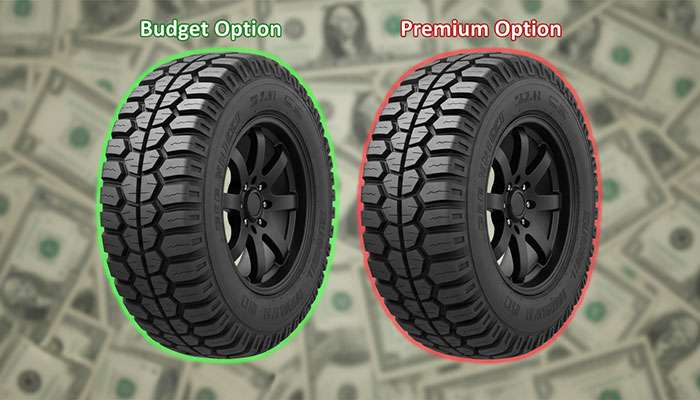
The $100 price point creates an interesting position in today's tire market. This amount puts you squarely in the middle ground - well above the cheapest options but nowhere near premium territory.
At the $100 mark, you're looking at solid all-season tires from manufacturers you can trust. These tires typically deliver 40,000 to 60,000 miles of tread life, handle wet conditions reasonably well, and keep road noise at acceptable levels. Standard defect warranties come included, and some offer basic treadwear protection.
You'll find excellent options from reliable secondary brands like Cooper, General, and Uniroyal. Entry-level models from major players - Goodyear, Bridgestone, Continental - also fall into this range. These tires handle daily driving demands without the advanced features that drive up costs in premium lines.
Performance tires command $100 to $300 each, with pricing tied directly to capabilities and brand reputation. All-terrain options for trucks and SUVs typically run $150 to $400 per tire, reflecting their robust construction and specialized tread designs.
Brand positioning creates significant price gaps. Economy names like Douglas or Primewell start around $60 to $90 each. Premium brands like Michelin or Pirelli can hit $200 to $300 per tire for the same physical size.
Seasonal specialization affects pricing too. Winter tires average $120 to $200 each due to their specialized compounds and tread patterns. Summer performance tires often exceed $150 per tire.
Your vehicle determines more than just tire size - it shapes your entire price range. Passenger cars need less from their tires compared to SUVs or trucks, which require higher load ratings and more demanding performance specifications.
Luxury and performance vehicles demand specialized capabilities regardless of size. Speed ratings, handling characteristics, and run-flat technology all increase costs. A Porsche might need a $300 tire where a Toyota Corolla uses a $100 tire of identical dimensions.
Commercial applications change everything. Trucks, farm equipment, and heavy machinery use tires that look similar to passenger sizes but cost substantially more due to reinforced construction and heavy-duty load capacities.
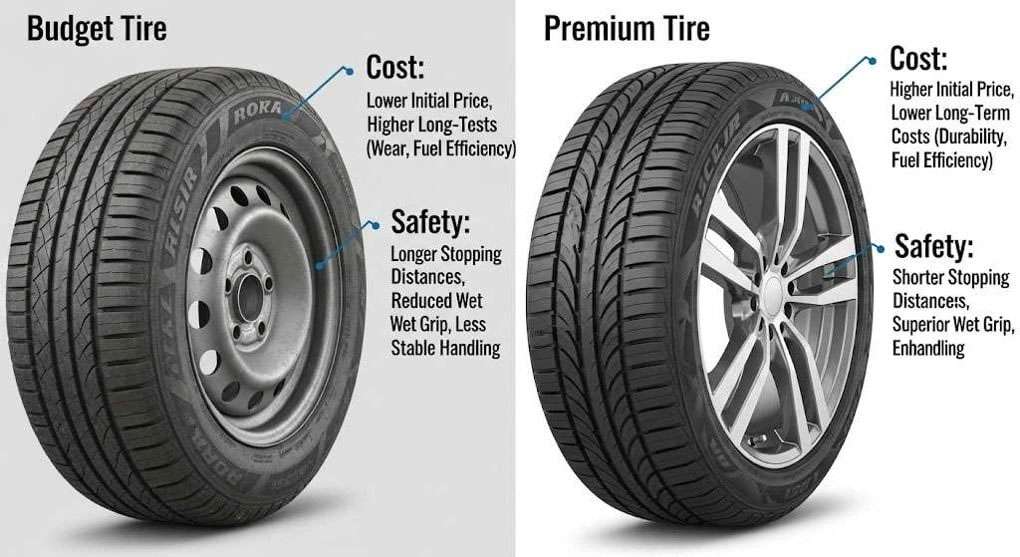
Manufacturing quality creates real performance gaps between budget and premium tires. These differences affect your daily driving experience in ways that extend far beyond the initial purchase price.
Premium tires deliver 20,000 to 40,000 additional miles compared to budget alternatives. This extended lifespan comes from advanced rubber compounds and engineered tread designs that resist wear more effectively. A $100 tire typically provides 40,000 to 50,000 miles of service, while premium options often exceed 70,000 miles before replacement becomes necessary. The higher upfront investment frequently pays for itself through extended service life.
The performance gap becomes critical during emergency situations. Premium tires consistently outperform budget options in wet braking tests, stopping 15 to 20 feet shorter from highway speeds. This stopping distance difference can prevent accidents and save lives. High-quality tires also maintain superior cornering grip and stability during sudden maneuvers, especially important as the tires age and accumulate miles.
Premium construction delivers noticeable improvements in ride refinement. Quality tires produce 2 to 4 decibels less road noise and provide smoother handling through advanced manufacturing techniques. Additionally, sophisticated tread patterns and rubber formulations can improve fuel economy by 1 to 3 percent over budget alternatives. This efficiency gain adds up significantly across thousands of driving miles.
Your driving patterns determine the best value equation. High-mileage drivers often find premium tires more economical despite higher initial costs. If you frequently encounter challenging weather conditions or prioritize maximum safety performance, the premium investment makes clear sense. For lower-mileage urban driving in mild climates, mid-range $100 tires typically deliver adequate performance at better initial value.

The advertised tire price tells only part of the story. Most shops add service charges and fees that significantly increase your final cost, and they rarely volunteer this information upfront.
Installation fees typically add $15-$40 per tire to your bill. This includes removing your old tires, mounting new ones, and basic balancing. Many shops charge separately for valve stems at $2-$5 each. Disposal fees run another $2-$10 per tire, covering the environmental costs of recycling your old rubber.
TPMS sensors complicate the picture further. Sensor service can add $5-$15 per wheel when needed. Direct TPMS systems may require complete sensor replacement at $50-$100 per wheel if sensors have failed or reached the end of their battery life.
Road hazard warranties sound like smart protection for $10-15 per tire, but read the fine print carefully. Many exclude common damage types or require specific conditions for claims. Nitrogen fills cost $5-10 per tire while providing minimal benefits for regular drivers. TPMS service kits add $5-15 per wheel, though you only need them when sensors require maintenance.
Manufacturer rebates offer $50-100 back on four-tire purchases, yet shops rarely emphasize these savings opportunities. Seasonal promotions can reduce your total cost by 10-15%. Most major retailers match competitors' prices—just ask directly.
Online tire retailers often ship free to local installers, giving you leverage to negotiate better deals at traditional shops. We recommend getting quotes from multiple sources before making your final decision.
Smart tire buying comes down to matching your specific driving needs with the right performance level. The key is knowing when to save money and when those extra dollars actually improve your daily driving experience.
City drivers who cover shorter distances will find $100 tires perfectly adequate for their needs. If your daily routine involves mostly urban streets with occasional highway trips, mid-range options deliver solid performance without premium features you'll rarely use. Planning to trade in your vehicle within the next couple of years? Those extra tire dollars won't pay off in extended longevity.
Heavy hauling demands higher load ratings to prevent early tread wear. Frequent highway drivers or those racking up serious annual mileage get better value from premium tires because the cost difference shrinks to pennies per mile. Extreme weather conditions and rough terrain justify the specialized compounds and tread designs found in expensive tires.
Major holiday weekends offer the best tire sales opportunities—Memorial Day, Labor Day, and Black Friday deliver the deepest discounts. Don't be shy about asking for price matching. Studies show 63% of customers who negotiate save an average of $37 per tire. Manufacturer rebates typically offer $50-$100 back on four-tire purchases, but you need to complete the paperwork.
At Performance Plus Tire, our expert team helps you find the perfect balance between performance and budget. We'll guide you through the selection process to ensure you get exactly what your vehicle needs.
Tire shopping comes down to matching the right product to your specific driving needs and budget. That $100 price point works well for many drivers, delivering solid performance for everyday conditions without premium features you may not need.
Your driving habits determine the best value. City drivers covering moderate mileage will find $100 tires perfectly adequate, while those hauling heavy loads or driving in harsh weather conditions should invest in higher-performance options. Keep in mind that advertised prices rarely include mounting, balancing, and disposal fees—expect to add $75-220 to your total cost.
Smart buyers use seasonal sales, manufacturer rebates, and price matching to reduce costs. The key question isn't whether $100 represents a good deal, but whether that specific tire delivers the performance your vehicle needs at the best available price.
Remember this fundamental truth: your tires provide the only contact between your vehicle and the road. Safety must guide your decision alongside budget considerations. The right choice balances upfront cost against long-term durability, performance, and peace of mind.
At Performance Plus Tire, we help customers find the perfect balance of quality, performance, and value for their specific needs. Our expert team can guide you through the selection process to ensure you get the best tires for your vehicle and driving style.
Understanding tire pricing helps you make smarter purchasing decisions that balance safety, performance, and budget considerations.
• $100 tires offer decent mid-range performance for everyday driving, typically lasting 40,000-60,000 miles with acceptable wet traction and moderate noise levels.
• Hidden costs add $75-220 to advertised prices through mounting, balancing, disposal fees, and optional warranties that shops don't prominently disclose upfront.
• Premium tires stop 15-20 feet shorter in wet conditions and last 20,000-40,000 miles longer, making them worthwhile for high-mileage or safety-conscious drivers.
• Shop during major holidays, ask about price matching (63% who negotiate save $37+ per tire), and utilize manufacturer rebates of $50-100 per set.
• Choose $100 tires for low-mileage city driving, but invest more for heavy loads, extreme weather, or high annual mileage where performance differences justify costs.
Remember that tires are your vehicle's only connection to the road—prioritize safety over savings when making this critical purchase decision.
$100 for a tire is generally considered a mid-range price point. It can get you a decent quality tire for everyday driving, typically offering 40,000-60,000 miles of tread life, acceptable wet traction, and moderate noise levels. However, the value depends on your specific vehicle and driving needs.
On average, you can expect to pay between $460 to $1,280 for a complete set of four new tires. However, this price can vary widely based on tire size, vehicle type, and brand quality. Remember to factor in additional costs like mounting, balancing, and disposal fees.
Expensive tires typically offer better durability, handling, and braking performance. They often last 20,000-40,000 miles longer than budget options and can stop 15-20 feet shorter in wet conditions. Premium tires also tend to provide improved comfort, reduced noise, and better fuel efficiency.
Yes, there are often additional costs beyond the advertised tire price. These can include installation fees ($15-40 per tire), balancing charges, valve stems ($2-5 each), and disposal fees ($2-10 per tire). Optional warranties and add-ons can also increase the final price significantly.
To get the best deal, shop during major holidays when tire sales are common, ask about price matching policies, and look for manufacturer rebates. Consider comparing prices online and at multiple shops. Don't forget to factor in the long-term value, especially if you drive frequently or in challenging conditions.



