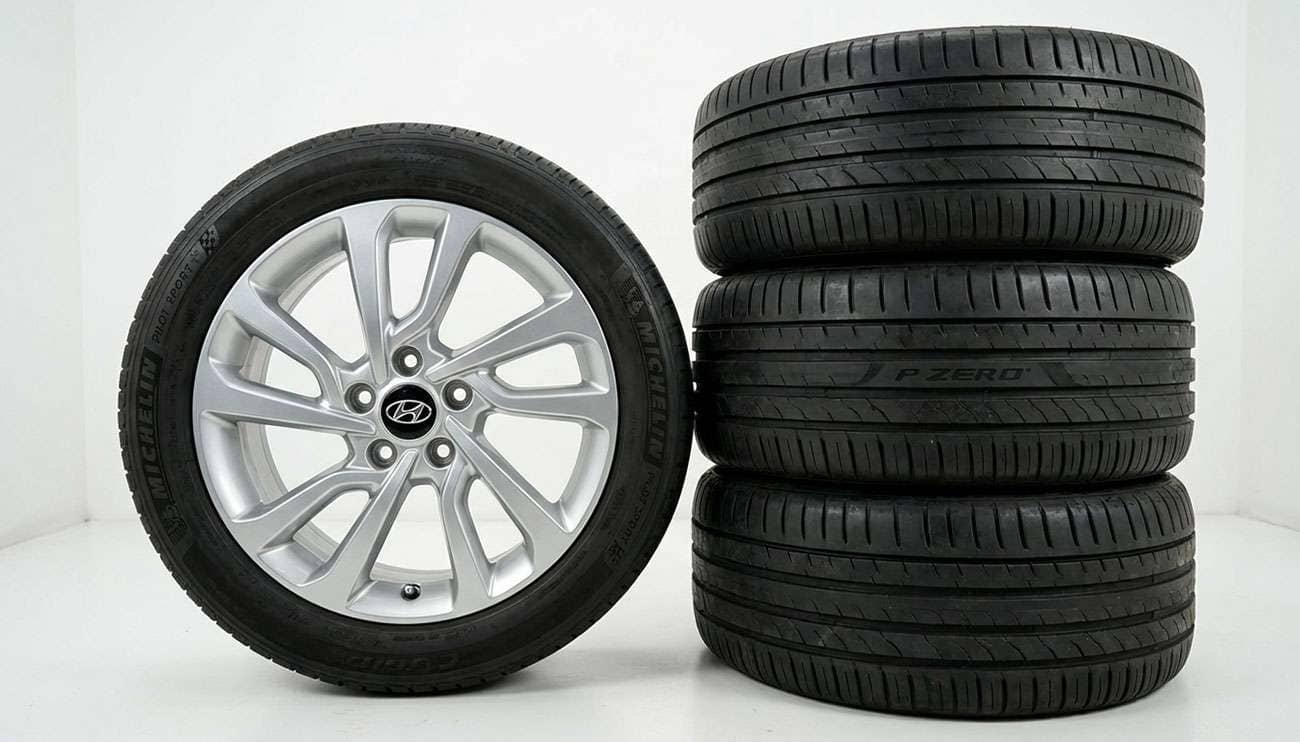
The Hyundai Tucson delivers impressive performance with a maximum towing capacity of 1900kg and a spacious 539-liter cargo area. These capabilities demand the right aftermarket tires to support optimal performance and safety. Selecting Hyundai Tucson aftermarket tires requires understanding several critical factors that directly impact your vehicle's handling and reliability.
Modern Tucson models offer excellent cabin space while maintaining responsive handling and acceleration. The powerful 1.6 T-GDi engine delivers up to 236 hp, making proper hyundai tucson tire size and hyundai tucson wheels essential for preserving the vehicle's intended ride quality. These performance specifications highlight why choosing the correct tire fitment matters significantly.
Standard Tucson models, hybrid variants, and plug-in hybrid options each present unique considerations for tire selection. City driving efficiency improvements in hybrid models require specific attention to tucson tire size compatibility. The right hyundai tucson wheel size and hyundai tucson aftermarket wheels must match your exact model year and driving conditions for safe, reliable performance.
We'll guide you through the essential steps to select the perfect aftermarket tires for your Tucson. Understanding specifications, comparing top brands, and balancing performance with comfort and value - our expertise helps you make the right decision. Ready to find the ideal tires for your Tucson?
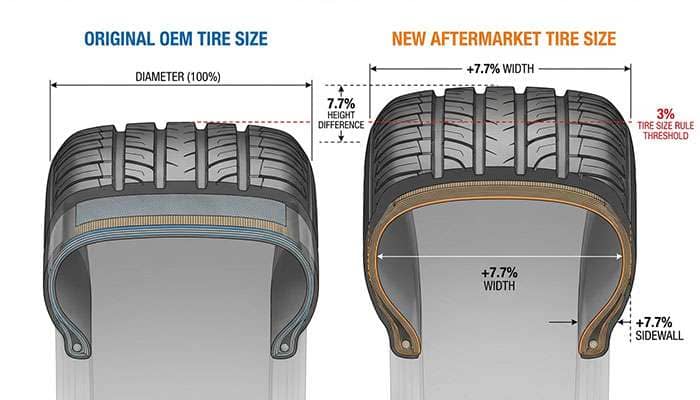
Understanding your vehicle's specific tire specifications is essential before purchasing Hyundai Tucson aftermarket tires. These specifications vary significantly based on model year, trim level, and powertrain variant - whether you have a standard, hybrid, or plug-in hybrid Tucson.
Finding your Hyundai Tucson tire size is straightforward when you know where to look. The driver's side door jamb contains a certification label with the factory tire size and recommended pressure. You can also check the sidewall of your current tires for the complete size designation.
Tire size follows a standard format like "235/55R19" where:
235 represents the width in millimeters
55 is the aspect ratio (percentage of width to height)
R indicates radial construction
19 is the wheel diameter in inches
Your vehicle's VIN helps parts advisors determine the exact OEM specification for your specific Tucson if you're still uncertain.
Hyundai Tucson wheel sizes vary considerably across generations and trim levels. Recent models (2022-2026) use these common tire sizes:
SE and base models: 235/65R17
SEL and mid-range trims: 235/60R18 (2025-2026) or 225/55R18 (earlier models)
Limited, N Line, and premium trims: 235/55R19
XRT trim (rugged variant): 235/55R19 (2022-2024) or 235/60R18 (2025-2026)
Hybrid and plug-in hybrid models generally follow similar sizing patterns. Blue Hybrid models use 235/65R17 while higher trims use 235/55R19. Maintaining the correct hyundai tucson tire size preserves proper functioning of safety systems like ABS and traction control.
Three critical specifications are essential when considering hyundai tucson aftermarket wheels:
Bolt pattern: All modern Tucson models use a 5x114.3 mm (also written as 5x4.5") bolt pattern. This measurement describes the number of lug nuts (5) and the diameter of the circle they form (114.3 mm).
Center bore: The Tucson features a 67.1 mm center bore. This is the hole in the center of the wheel that centers it on the hub. Most aftermarket wheels have larger bores and use hub-centric rings to ensure proper fitment.
Offset: Wheel offset for Hyundai Tucson ranges from approximately 41.5 mm to 53 mm, depending on wheel size. Most aftermarket wheels in the +35 mm to +45 mm range work well across all trims. This measurement indicates where the mounting surface sits relative to the wheel centerline and affects handling, clearance, and appearance.
Optimal performance with hyundai tucson aftermarket wheels comes from fitments like 17x8 or 18x8.5 that match well with 225/65R17 or 235/55R18 tires respectively. The thread size for all wheel fasteners is M12 x 1.5, with a recommended tightening torque of 107-127 Nm (79-94 lb-ft).
These specifications ensure your hyundai tucson wheels provide safe, reliable performance while allowing customization of your vehicle's appearance and handling characteristics.
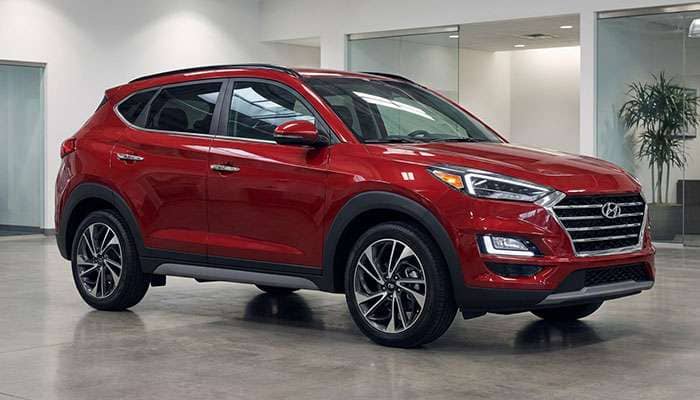
Selecting the correct Hyundai Tucson aftermarket tires starts with precise size matching for your specific model. Each Tucson variant requires unique tire specifications that directly influence performance and safety characteristics.
Matching your hyundai tucson tire size to your exact trim level and model year ensures optimal vehicle performance. Different trim packages within the same production year often require completely different tire specifications. The 2022-2024 Tucson demonstrates this clearly: SE/Blue Hybrid models use 235/65R17, while Limited and N Line trims require 235/55R19.
Generational changes create even more dramatic specification differences. Current generation Tucsons (2022-2026) have substantially different requirements than their 2015-2021 predecessors. Earlier models typically required smaller tire profiles - like 225/60R17 instead of 235/65R17 - affecting speedometer accuracy and handling response.
Model year variations matter beyond simple sizing. The 2025 Tucson SEL shifted from 225/55R18 to 235/60R18 tires, indicating wheel geometry changes that affect compatibility with older tire selections. This half-inch increase in both width and height represents significant dimensional variation.
Recent Tucson models use these primary configurations:
2022-2024:
SE / Blue Hybrid: 235/65R17
SEL: 225/55R18
N Line / Limited: 235/55R19
XRT: 235/55R19
2025-2026:
SE / Blue Hybrid: 235/65R17
SEL: 235/60R18 (wider profile vs. 2022-2024)
N Line / Limited: 235/55R19
XRT: 235/60R18 (changed from previous R19)
Plug-in Hybrid variants follow similar patterns:
Blue Plug-in Hybrid: 235/65R17
Limited Plug-in Hybrid: 235/55R19
Each specification balances ride comfort, handling precision, and fuel efficiency. Smaller diameter wheels (17") typically offer smoother rides over rough surfaces, while larger wheels (19") provide sharper handling response.
Three verification methods guarantee correct fitment:
Check the door jamb sticker: This certification label shows manufacturer specifications including exact tire size, load capacity, and recommended pressure for your specific vehicle. This represents the most reliable source since it's tied directly to your VIN.
Read current tire sidewalls: Your existing tires display complete size information. Look for the alphanumeric sequence like "235/55R19 101V" molded into the sidewall. This works perfectly if your vehicle still has factory-installed tires.
Consult your owner's manual: The maintenance section lists approved tire specifications for each trim level. This becomes essential when shopping for replacement sets because it documents both standard and optional sizes.
Performance Plus Tire's fitment tools simplify this verification process. When selecting Hyundai Tucson aftermarket tires through our website, our system automatically filters appropriate sizes based on your model year, trim level, and current configuration. This eliminates guesswork from compatibility determination.
Never use tire sizes outside manufacturer specifications unless you've consulted a professional fitment expert. Improper sizing affects speedometer accuracy, electronic safety system calibration, and insurance coverage validity.
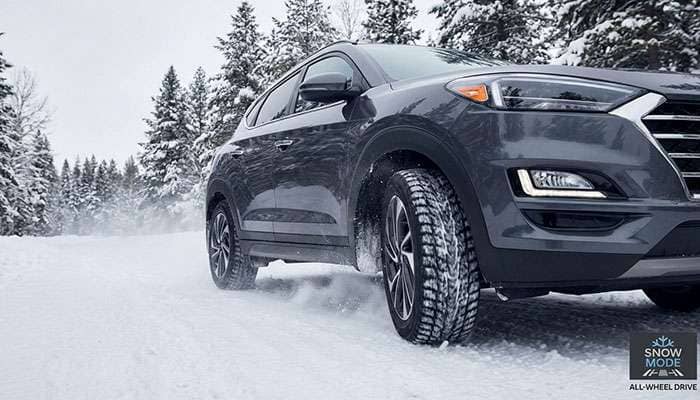
Climate conditions and driving patterns determine which tire category serves your Hyundai Tucson best. Each type offers distinct advantages that match specific weather conditions and road surfaces.
All-season tires deliver adequate performance in moderate climates but lose significant grip below 7°C (45°F). These tires use harder rubber compounds that maintain flexibility across temperature ranges but compromise cold-weather traction. All-season options work well for regions with mild winters and occasional light snow.
Winter tires provide approximately 30% shorter stopping distances on snow and ice compared to all-seasons. Their specialized rubber compound remains pliable in freezing temperatures, while deeper tread patterns with thousands of tiny sipes bite into packed snow and ice. The three-peak mountain snowflake (3PMSF) symbol certifies a tire meets specific winter traction standards.
Temperature serves as the deciding factor: if your area regularly drops below 7°C during winter months, winter tires become essential safety equipment. Above this temperature, winter tire rubber wears quickly and handles poorly.
All-terrain tires suit the Tucson XRT trim and owners who regularly encounter unpaved surfaces. These tires feature aggressive tread patterns with larger blocks and wider grooves that excel in mud, gravel, and light off-road conditions. The trade-off comes in increased road noise and slightly reduced fuel efficiency on highways.
Consider all-terrain options if you:
Drive unpaved roads more than twice weekly
Need enhanced traction for boat launches or camping trips
Live in areas where snow removal isn't immediate
Prefer the rugged aesthetic of aggressive tread patterns
Most all-terrain tires carry the 3PMSF rating, making them viable year-round choices in regions with moderate winters. They're less refined than highway tires but more capable when pavement ends.
Performance-oriented tires sharpen steering response and reduce body roll during spirited driving. These typically feature stiffer sidewalls, asymmetric tread designs, and compounds that prioritize grip over longevity. The N Line trim benefits most from performance tires that complement its sport-tuned suspension.
Comfort-focused tires emphasize quiet operation and smooth rides. They use softer rubber compounds, incorporate noise-canceling tread designs, and feature additional cushioning layers. These suit daily commuters prioritizing refinement over aggressive handling.
Your driving style determines the appropriate balance:
Highway commuters: Prioritize comfort tires with low rolling resistance for better fuel economy and quiet cabins
Enthusiast drivers: Select performance tires for sharper turn-in and confident cornering
Mixed use: Choose grand touring tires that balance both characteristics effectively
Tucson plug-in hybrid and Blue Hybrid owners benefit from EV-specific tire technology. These tires address unique demands: heavier vehicle weight from battery packs, instant torque delivery, and the importance of maximizing electric range.
EV-optimized tires feature:
Reinforced construction supporting additional weight
Specialized rubber compounds resisting accelerated wear from instant torque
Aerodynamic tread patterns reducing rolling resistance by 15-20%
Noise-dampening technology offsetting the absence of engine sound
Popular EV-ready options include Michelin e.Primacy and Continental EcoContact 6. These maintain the full load capacity rating while delivering measurably better efficiency than conventional tires. Range improvements of 5-8% are typical compared to standard all-season tires.
The additional cost (roughly 15-25% more than comparable conventional tires) pays back through extended range and potentially longer tread life due to advanced wear-resistant compounds. For plug-in hybrid owners maximizing electric-only operation, this investment directly supports their efficiency goals.
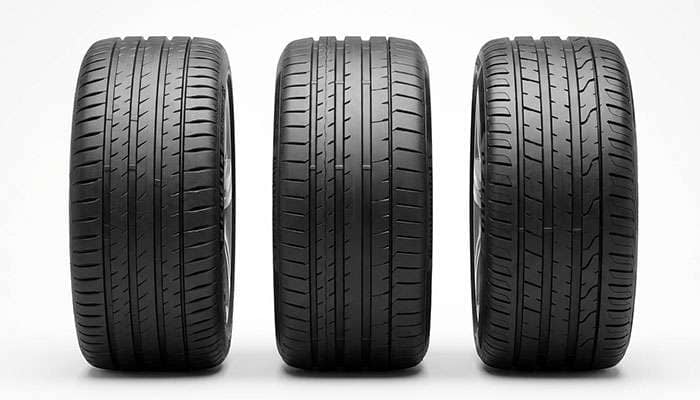
Selecting between premium, mid-range, and budget tire brands requires understanding performance differences and value propositions for your Hyundai Tucson.
Michelin delivers industry-leading longevity with their CrossClimate 2 all-season tire rated for up to 100,000 kilometers. This tire excels in both dry and wet conditions while maintaining respectable snow performance. The 3PMSF certification makes it viable for mild winter climates. Typical pricing ranges from $200-300 per tire for Tucson sizes.
Continental focuses on balanced performance across categories. The PureContact LS with EcoPlus technology reduces rolling resistance by 18% compared to previous generations, benefiting hybrid models significantly. Their DWS06 Plus offers excellent wet traction with internal noise-dampening technology. Prices range from $180-280 per tire.
Pirelli emphasizes handling precision with the Scorpion lineup specifically engineered for crossovers. The Scorpion Verde All Season Plus provides sharp steering response while maintaining comfortable ride quality. Pirelli's run-flat options suit drivers prioritizing security over weight savings. Expect $190-300 per tire depending on specifications.
Bridgestone occupies the sweet spot between performance and value. The Turanza EV specifically targets hybrid and electric vehicles with reinforced construction and low rolling resistance. Their Weather Peak tires carry severe snow ratings while maintaining reasonable warm-weather performance. Pricing typically runs $160-240 per tire.
Goodyear offers compelling warranties backing their products. The Assurance WeatherReady provides year-round capability with excellent hydroplaning resistance. Goodyear's road hazard protection and roadside assistance add value beyond the tire itself. Prices range from $170-250 per tire for common Tucson sizes.
Several value-oriented brands maintain important safety certifications while reducing costs:
Kumho delivers solid all-season performance through their Crugen line. These tires meet basic performance requirements at approximately 30-40% below premium pricing. Expect $125-175 per tire with reasonable 80,000km tread warranties.
Hankook offers the Kinergy GT that balances comfort and handling at mid-market pricing. Their tires frequently appear as OEM fitments on various manufacturers, indicating acceptable quality standards. Prices range from $140-200 per tire.
Budget options sacrifice ultimate performance capabilities and longevity compared to premium brands. However, they maintain essential safety standards through UTQG ratings and relevant certifications. Consider these if:
Your annual mileage stays below 15,000 kilometers
You plan to trade or sell the vehicle within 2-3 years
Budget constraints significantly limit spending
Tread life warranties vary dramatically between brands and models:
Premium tier: 80,000-100,000km warranties with comprehensive road hazard protection
Mid-range: 65,000-80,000km warranties with limited road hazard coverage
Budget tier: 60,000-70,000km warranties with minimal additional coverage
Actual tread life depends heavily on driving habits, alignment maintenance, and rotation frequency. Premium tires often exceed their warranties, while budget options may barely reach rated mileage under aggressive driving.
Road hazard warranties matter significantly. Premium brands typically cover punctures, impact damage, and premature wear under normal use. This coverage can offset higher initial costs if you encounter common road debris. Mid-range brands offer limited coverage, while budget tiers rarely include meaningful protection beyond manufacturing defects.
Goodyear stands out with included roadside assistance that provides emergency services including tire changes. This adds real value for drivers concerned about unexpected breakdowns.
Independent testing reveals measurable performance differences:
Tire Rack's testing shows Michelin CrossClimate 2 achieving 53 meters wet braking distance from 100 km/h - among the shortest in its category. Continental PureContact LS delivered 49% better snow traction than the category average. These metrics translate to real safety advantages in emergency situations.
Owner feedback consistently rates premium brands higher for:
Quiet operation at highway speeds
Resistance to irregular wear patterns
Predictable handling characteristics throughout the tire's life
Mid-range options receive mixed reviews depending on specific models. Bridgestone Turanza and Goodyear Assurance lines generally match premium competitors in wet traction while falling slightly behind in longevity.
Budget tires frequently disappoint in tread life, often wearing 20-30% faster than rated warranties suggest. Road noise increases noticeably after 30,000 kilometers as tread blocks wear unevenly. However, basic wet and dry traction remains acceptable for normal driving conditions.
For Tucson owners prioritizing value, mid-range brands offer the best compromise. They deliver 80-90% of premium performance at 60-70% of the cost. Only choose budget tires when immediate replacement necessity conflicts with available budget.
Purchasing tires online requires verification of proper sizing and specification matching. At Performance Plus Tire, our vehicle-specific search tool automatically filters compatible options for your exact Tucson model. This eliminates sizing errors that can occur with generic tire retailers.
We stock major brands including Michelin, Continental, Bridgestone, and Goodyear in all common Tucson specifications. Our product pages display complete specifications, warranty information, and relevant performance ratings. Customer reviews help gauge real-world performance for your specific use case.
Installation service availability varies by location. We partner with certified installers nationwide to provide professional mounting and balancing. Many locations offer same-day or next-day installation appointments, minimizing vehicle downtime.
Price matching policies and seasonal promotions can significantly reduce costs compared to traditional tire retailers. We frequently offer rebates on sets of four tires, particularly during spring and fall changeover periods.
Based on testing data and owner feedback, these recommendations serve different priorities:
Best All-Around: Michelin CrossClimate 2 (235/55R19)
Superior wet traction, excellent tread life (100,000km warranty), 3PMSF winter certification. Price: ~$250 per tire. Suits owners seeking maximum versatility and longevity.
Best Value: Bridgestone Turanza EV (235/65R17)
Optimized for hybrid efficiency, solid all-season performance, 80,000km warranty. Price: ~$180 per tire. Perfect for Blue Hybrid owners balancing cost and capability.
Best Winter Performance: Continental VikingContact 7 (235/55R19)
Industry-leading snow and ice traction, comfortable ride quality, advanced siping technology. Price: ~$210 per tire. Essential for regions with harsh winters.
Best for N Line: Pirelli Scorpion Verde All Season Plus (235/55R19)
Sharp handling response, minimal body roll, maintains comfort on rough surfaces. Price: ~$220 per tire. Complements sport-tuned suspension perfectly.
Best All-Terrain: Goodyear Wrangler TrailRunner AT (235/60R18)
Capable off-road, 3PMSF certified, reasonable on-road manners. Price: ~$195 per tire. Ideal for XRT trim and adventure-focused drivers.
Each recommendation balances specific performance priorities with appropriate pricing for the target use case. Consider your climate, driving style, and budget when making final selections.
Our experts frequently recommend these proven performers for Tucson owners:
For daily drivers in moderate climates: Continental PureContact LS with EcoPlus. This tire delivers 60,000-mile treadwear warranties while reducing fuel consumption through low rolling resistance. The comfortable ride quality suits long commutes, and wet weather performance exceeds category averages.
For hybrid and plug-in hybrid models: Michelin e.Primacy. Specifically engineered for electric and hybrid vehicles, this tire supports additional vehicle weight while maximizing efficiency. Range improvements of 5-7% are common compared to standard all-season tires. The reinforced construction prevents accelerated wear from instant torque delivery.
For winter-dominant regions: Bridgestone Blizzak DM-V2. This dedicated winter tire transforms Tucson handling in snow and ice. The Multi-Cell compound removes water film from ice surfaces while maintaining flexibility in sub-zero temperatures. Stopping distances improve dramatically compared to all-season alternatives.
For performance-oriented N Line owners: Pirelli Scorpion Zero All Season Plus. Enhanced handling precision complements the sport-tuned suspension. Asymmetric tread design provides confident cornering while maintaining acceptable comfort levels. The run-flat option adds security without compromising performance.
For adventure-focused XRT owners: BFGoodrich Trail-Terrain T/A. This all-terrain tire balances off-road capability with on-road refinement. The tread pattern handles mud and gravel competently while remaining relatively quiet on highways. 3PMSF certification provides winter capability most all-terrains lack.
Each recommendation comes with comprehensive warranty coverage including road hazard protection and roadside assistance. Enhanced handling and responsiveness on wet and dry roads make this a top performer.
Hyundai Tucson tires range from $125.00 to $300+ depending on your model year and performance requirements. At Performance Plus Tire, we offer the best selection of aftermarket tires specifically sized for your Hyundai Tucson. Our fitment experts ensure you get the perfect match for your vehicle specifications.
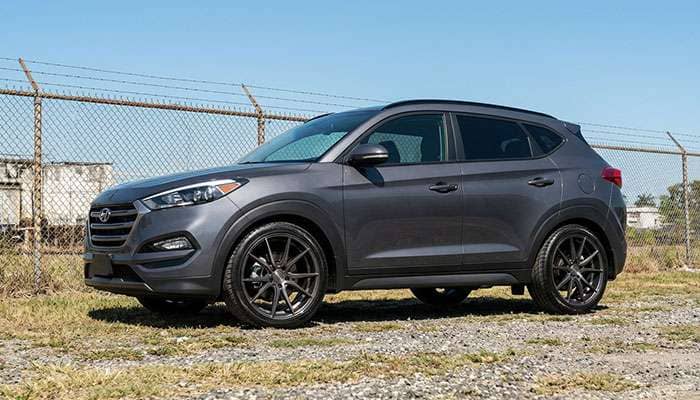
Upgrading to aftermarket wheels transforms both appearance and performance of your Hyundai Tucson. Proper compatibility ensures safe, reliable fitment that enhances your vehicle's capabilities.
Start by confirming the critical specifications for your model. All modern Tucsons require a 5x114.3mm bolt pattern (also called 5x4.5"). The center bore measurement is 67.1mm - wider than many other vehicle brands. Most aftermarket wheels feature larger center bores and include hub-centric rings for proper fitment.
Wheel offset varies from +40mm to +53mm depending on your model year and trim level. Models from 2020 and newer typically use +40mm offset, while earlier generations may require up to +47mm. We recommend staying within ±5mm of your original offset unless you're planning suspension modifications.
Width options between 7-9 inches work well for most applications. The 7.5x19 configuration is common for 2026 models. Wider wheels accommodate larger tires but place additional stress on wheel hubs.
Follow these essential steps to prevent problems:
Confirm your exact model year and trim using your VIN
Verify the bolt pattern matches exactly 5x114.3mm - this is non-negotiable for safety
Check tire and wheel clearance to prevent rubbing during turns
Improper fitment leads to poor handling, vibration, uneven tire wear, or wheel detachment. Our experts can help verify compatibility before purchase to ensure your new wheels perform safely and reliably.
The right aftermarket tires make all the difference for your Hyundai Tucson's safety and performance. We've covered the essential factors - from exact vehicle specifications to tire types that match your driving conditions. Proper tire selection ensures your Tucson's handling characteristics remain optimal while maintaining critical safety system functionality.
Quality tires balance performance, comfort, and durability based on your specific needs. All-season tires work well in moderate climates. Winter tires provide essential traction when temperatures drop and snow arrives. Hybrid and plug-in hybrid owners benefit significantly from EV-specific tires that maximize efficiency and extend range.
Budget matters, but the lowest price isn't always the best value. Premium brands offer superior longevity and performance warranties that justify their higher upfront investment. When you're considering aftermarket wheels with new tires, proper compatibility prevents costly mistakes and safety hazards.
At Performance Plus Tire, we make finding your perfect tire match simple. Search by your exact vehicle specifications at Performance Plus Tire to browse options specifically sized for your Hyundai Tucson model. Our fitment expertise ensures you get exactly what your vehicle needs.
Quality tires deliver improved handling, enhanced comfort, and better safety. Take time to research thoroughly and compare warranties before making your final decision. Your Tucson deserves tires that complement its capabilities - whether you prioritize smooth daily commuting, spirited weekend drives, or occasional off-road adventures.
Selecting the right aftermarket tires for your Hyundai Tucson requires understanding specific vehicle requirements and matching them to your driving needs for optimal safety and performance.
• Match tire size to your exact model: Tucson tire sizes vary significantly by year and trim level, from 235/65R17 on base models to 235/55R19 on premium trims.
• Choose tire type based on climate: All-season tires work for mild conditions, winter tires provide 30% shorter stopping distances in cold weather, and all-terrain options excel off-road.
• Verify wheel compatibility specifications: All modern Tucsons use 5x114.3mm bolt pattern, 67.1mm center bore, and +40mm to +53mm offset for safe aftermarket wheel installation.
• Balance budget with long-term value: Premium brands like Michelin and Continental offer superior warranties (up to 100,000km) that often justify higher upfront costs through extended durability.
• Consider hybrid-specific requirements: Hybrid and plug-in hybrid models benefit from EV-ready tires that support additional battery weight while maximizing fuel efficiency and electric range.
When upgrading your Tucson's tires, prioritize safety by matching OEM specifications first, then optimize for your specific driving conditions and performance preferences.
Top-rated tire brands for the Hyundai Tucson include Pirelli, Continental, and Michelin. Pirelli's Scorpion series offers excellent handling and traction, while Michelin's CrossClimate 2 provides year-round versatility with impressive longevity.
To choose the correct tire size, check your vehicle's door jamb or owner's manual for the manufacturer-recommended size. Tire sizes vary by model year and trim level, ranging from 235/65R17 for base models to 235/55R19 for premium trims.
Yes, hybrid and plug-in hybrid Tucsons benefit from EV-ready tires that support the additional battery weight while maximizing fuel efficiency and electric range. Look for tires specifically designed for hybrid vehicles from brands like Michelin or Continental.
When selecting aftermarket wheels, ensure they match your Tucson's 5x114.3mm bolt pattern and 67.1mm center bore. The wheel offset should be within ±5mm of the original (typically +40mm to +53mm), and width between 7-9 inches works well for most models.
All-season tires perform adequately in mild conditions but become less effective below 7°C. Winter tires provide superior traction in cold weather, with approximately 30% shorter stopping distances on snow and ice. Choose based on your local climate and driving conditions.