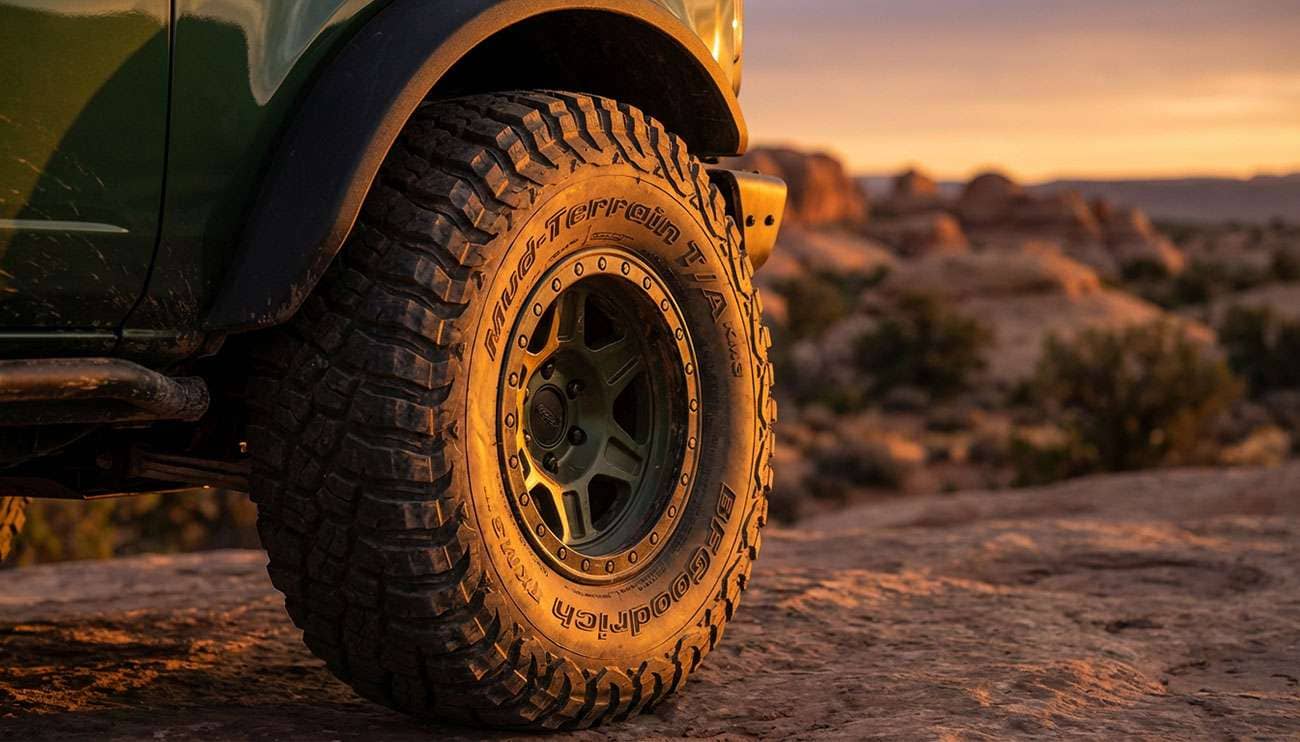
The sixth-generation Ford Bronco accepts tire sizes ranging from 30 inches up to 35 inches straight from the factory, depending on your specific trim level.
Finding the right Ford Bronco aftermarket tires requires more than simply choosing the biggest option available. The key lies in matching tire specifications to your particular model and how you actually use your vehicle. Ford's return to the off-road scene in 2021 sparked tremendous interest among enthusiasts eager to customize their Broncos for both style and performance.
Your stock tire size provides the foundation for any upgrade decision. Base models roll on 30-inch tires from the dealership, while Big Bend, Black Diamond, and Outer Banks trims feature 32-inch rubber as standard equipment. Sasquatch package buyers already enjoy aggressive 35-inch tires paired with locking differentials front and rear.
Bigger tires deliver improved ground clearance and traction while creating that commanding presence Bronco owners desire. They also impact speedometer accuracy, fuel consumption, and handling characteristics across different driving conditions.
We'll guide you through selecting the ideal aftermarket tires for your Ford Bronco, covering everything from size limitations to performance matching. Whether you tackle weekend trails or navigate daily commutes, our expert recommendations help you make the right choice for your specific needs.
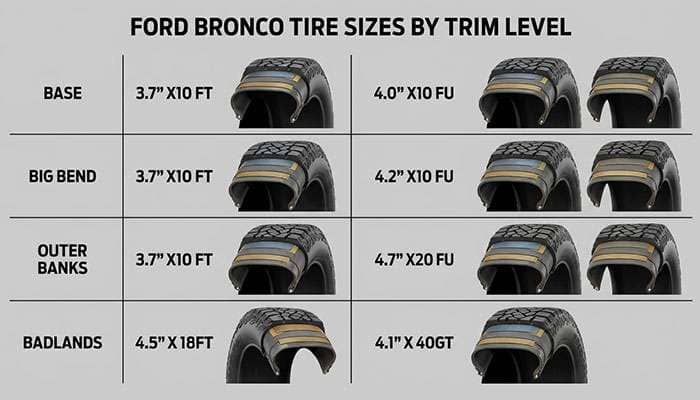
Every Ford Bronco trim features carefully selected tire dimensions that balance on-road performance, fuel efficiency, and off-road capability. Knowing these factory specifications becomes essential before considering any aftermarket upgrades.
Each Bronco trim comes equipped with different tire dimensions:
Base: 255/70R16 (approximately 30 inches in diameter)
Big Bend: 255/75R17 (approximately 32 inches)
Black Diamond: 265/70R17 (approximately 32 inches)
Outer Banks: 255/70R18 (approximately 32 inches)
Badlands: 285/70R17 (approximately 33 inches)
Wildtrak/Heritage/Heritage Limited/Everglades: 315/70R17 (approximately 35 inches)
Sasquatch Package: 315/70R17 (approximately 35 inches)
Raptor: True 37-inch tires (37x12.50R17LT)
Higher trim levels receive larger tires directly from Ford, providing enhanced ground clearance and superior off-road performance right off the lot.
Your tire's sidewall contains critical sizing information in a standardized format. The common designation "255/70R16" breaks down as follows:
First number (255): Tire width measured in millimeters
Second number (70): Aspect ratio representing sidewall height as a percentage of width
Letter R: Radial construction, which is standard on modern tires
Final number (16): Wheel diameter in inches
Some aftermarket options use flotation sizing like "35x12.50x17," indicating overall diameter, width, and wheel size in inches.
Your factory tire dimensions serve as the baseline for any upgrade considerations. These measurements directly impact several key factors:
Speedometer accuracy: Diameter changes without recalibration affect speedometer readings
Fuel economy: Larger tires typically decrease miles per gallon
Modification requirements: Your starting dimensions determine whether you need lift kits or other modifications
Component stress: Tires significantly beyond factory specifications can strain drivetrain components
When shopping for Ford Bronco aftermarket tires, these stock dimensions provide the safe parameters for upgrades without compromising vehicle performance or requiring extensive modifications.
Your Ford Bronco's tire type determines its personality on every drive. The right choice balances your specific driving habits with the performance you need most.
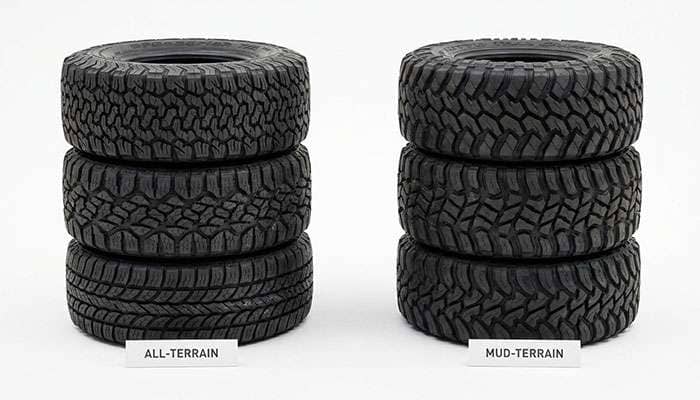
Bronco owners have three primary tire categories to consider:
All-terrain (A/T) tires deliver the best of both worlds for mixed-use driving. They provide solid off-road grip while maintaining highway comfort and longevity. The BFGoodrich All-Terrain T/A KO2 stands out as a favorite among Bronco enthusiasts, offering exceptional durability and a 3PMSF snow rating. These tires handle moderate trail work effectively while staying quiet on pavement.
Mud-terrain (M/T) tires feature aggressive tread designs with deep, widely-spaced lugs built for serious off-road challenges. The General Grabber X3 excels in sandy conditions thanks to its deep voids and bold tread pattern. M/T tires dominate in mud and rock but create more noise and shorter tread life on highways.
Highway tires focus on road comfort, quiet operation, and maximum tread life. The Michelin Defender LTX M/S offers refined performance for Bronco drivers who prioritize smooth highway travel, delivering reduced noise and superior ride quality.
Tread design directly affects how your Bronco handles different surfaces. Large, spaced-out lugs self-clean effectively in mud but can feel less stable on wet roads. Tighter patterns with silica compounds improve wet weather grip and highway stability.
Asymmetrical treads feature different inner and outer patterns, balancing wet grip with dry cornering performance. Hybrid designs combine multiple tread elements for versatility across terrain types.
Daily commuters who enjoy occasional trail adventures should consider all-terrain options like the Falken Wildpeak AT3W. This tire combines aggressive tread with innovative 3D sipes for excellent snow traction while handling mud and gravel confidently. Performance Plus Tire carries extensive tire selections specifically matched to Bronco models.
Serious off-road enthusiasts benefit from mud-terrain choices, especially when tackling rocky trails or deep mud regularly. Keep in mind that M/T tires typically reduce fuel economy by 1-2 MPG compared to all-terrain alternatives due to higher rolling resistance.
Your ideal tire depends on your driving split between pavement and trails. Highway-focused drivers might prefer all-terrain or highway tires, while weekend adventurers often accept some road compromise for superior off-road capability.
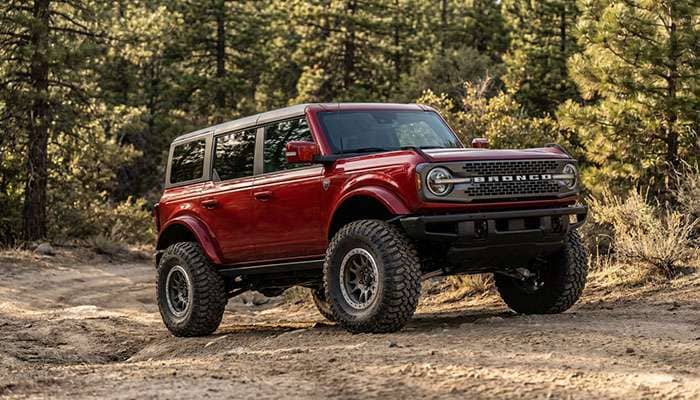
Understanding tire fitment determines whether your upgrade requires additional modifications or fits perfectly with your current setup. The relationship between tire diameter, vehicle clearance, and suspension height directly affects both performance and your wallet.
Your Bronco trim determines what fits without suspension changes. Non-Sasquatch models typically handle 33-inch tires with no issues since most come with similar sizing from the factory. 35-inch tires present different challenges depending on your specific model. Base trims usually need at least a 2-inch lift to accommodate 35s properly, while Big Bend, Black Diamond, and Outer Banks versions might clear them without suspension modifications. Sasquatch packages already include 35-inch rubber as standard equipment. The larger contact patch from 35-inch tires provides significantly better traction when aired down for off-road conditions.
Lift kits increase the gap between your Bronco's body and axles, creating room for larger tires. Most enthusiasts find that 2-inch lifts provide sufficient clearance for 35-inch tires on non-Sasquatch models. Height selection affects more than just clearance—it impacts daily drivability and handling characteristics. Extreme setups like 6-inch lifts with 35-inch tires require serious commitment to off-road priorities, while moderate configurations maintain practical everyday use.
Stock crash bars on non-Sasquatch Broncos create clearance restrictions for 35-inch tires. Many owners must remove these safety components to achieve proper fit. High-clearance aftermarket crash bars solve this problem while maintaining protection. Companies like Barnes 4WD and ICON manufacture notched designs specifically engineered to clear 35-inch tires without compromising safety. For tire options compatible with your specific Bronco configuration, visit Performance Plus Tire.
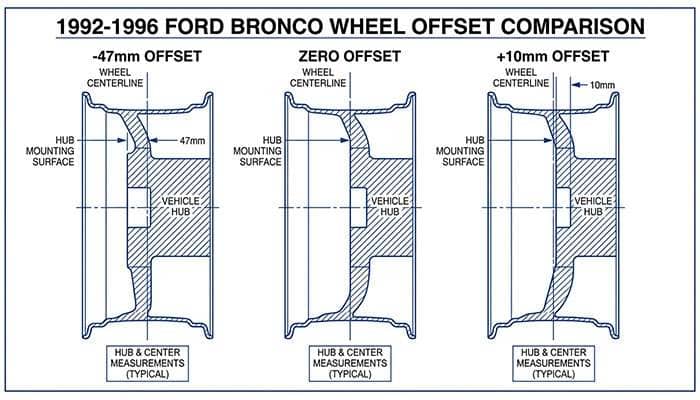
Proper wheel selection plays an equally critical role as choosing the right Ford Bronco aftermarket tires. These components work as a matched system to deliver optimal performance whether you're conquering trails or cruising highways.
Offset represents the distance between your wheel's mounting surface and centerline, measured in millimeters. Positive offset moves the mounting surface toward the wheel's face, while negative offset positions it inward. The sixth-generation Bronco performs best with offset ranging from -6mm to 0mm. Backspacing measures the distance from the mounting surface to the wheel's inner edge, expressed in inches. These specifications determine how your tires position relative to the vehicle body and suspension components. Reduced backspacing pushes tires outward, creating a wider stance and more aggressive appearance.
The relationship between wheel width and tire performance requires careful consideration. Your tire's bead must properly seat on the wheel rim—oversized tires on narrow wheels create sidewall bulging, while undersized tires on wide wheels cause dangerous stretching. Most Bronco owners find 9-inch wheel width provides the sweet spot between enhanced off-road stability and maintaining proper clearances. Wheel width changes also affect handling characteristics, with wider wheels improving cornering stability while potentially altering scrub radius and steering response.
Forged wheels use aircraft-grade aluminum shaped under 12,000 tons of pressure, delivering 20-25% weight savings compared to cast wheels while maintaining superior strength. True beadlock wheels feature a clamping ring that secures the tire bead, preventing separation during low-pressure off-road situations. Factory Sasquatch "beadlock-capable" wheels include decorative beauty rings rather than functional beadlock hardware. Serious trail riders benefit from authentic beadlock wheels, especially when airing down tires for maximum traction on challenging terrain.
Selecting the right Ford Bronco aftermarket tires comes down to matching your specific vehicle capabilities with your actual driving needs. Your stock tire specifications determine your starting point, while your driving habits guide your tire type selection. All-terrain options work best for mixed-use drivers, while dedicated off-roaders benefit from mud-terrain designs.
Tire size, lift requirements, and clearance work together as a system. Base models need modifications for 35-inch tires, while higher trims offer more flexibility. Your Bronco's trim level determines what fits without extensive alterations to suspension or crash bars.
Wheel specifications matter just as much as tire selection. Proper offset between -6mm and 0mm ensures optimal performance, while 9-inch width provides the best balance for most applications. Serious trail riders should consider true beadlock wheels when running lower pressures for maximum traction.
The right tire and wheel combination transforms your Bronco's entire performance profile. Whether you tackle weekend adventures or navigate daily driving, proper selection makes the difference between good and exceptional capability. At Performance Plus Tire, we carry the best selection of Ford Bronco tires at competitive prices, with expert guidance to ensure perfect fitment for your specific model.
Your ideal aftermarket tire balances driving requirements, vehicle capabilities, and budget considerations rather than simply maximizing size. The guidance we've provided gives you the knowledge to make a tire choice that actually works for your Bronco's intended use. For a comprehensive selection of tires specifically designed for your Ford Bronco model, check out Performance Plus Tire where you can explore options tailored to your exact specifications.
We're confident we can provide you with the perfect tire solution for your Ford Bronco at a price you can afford.
Understanding your Ford Bronco's stock tire size and trim specifications is essential before upgrading to ensure proper fitment and avoid costly modifications.
Know your Bronco's factory tire size - Base models start with 30" tires while Sasquatch packages come with 35" tires from the factory
Match tire type to driving style - All-terrain tires balance on-road comfort with off-road capability, while mud-terrain excels off-road but sacrifices highway performance
Consider clearance requirements - 35" tires typically need 2-inch lifts on non-Sasquatch models and may require crash bar modifications
Pair tires with proper wheels - Offset between -6mm to 0mm works best for Broncos, with 9-inch wheel width providing optimal balance
Choose based on actual needs - The best aftermarket tire balances your driving habits, vehicle capabilities, and budget rather than simply going bigger
The key to successful Bronco tire upgrades lies in understanding the relationship between size, clearance, and your specific driving requirements rather than simply choosing the largest tire possible.
Most non-Sasquatch Broncos can accommodate 33-inch tires without modifications. For 35-inch tires, Base models typically require at least a 2-inch lift, while some higher trims might fit them without suspension changes. Sasquatch-equipped Broncos come with 35-inch tires from the factory.
Popular all-terrain tire choices for the Ford Bronco include the BFGoodrich All-Terrain T/A KO2 and the Falken Wildpeak AT3W. These tires offer a good balance of off-road capability and on-road comfort, making them suitable for both daily driving and weekend adventures.
All-terrain tires provide a balance of on-road comfort and off-road capability. Mud-terrain tires excel in challenging off-road conditions but may produce more road noise and wear faster on pavement. Highway tires prioritize on-road comfort and longevity but offer less off-road traction.
When selecting wheels, consider factors such as offset (recommended range is -6mm to 0mm for Broncos), backspacing, and width. Most enthusiasts prefer 9-inch wide wheels for a good balance of off-road stability and clearance. Wheel size can affect handling, with larger wheels generally enhancing stability but potentially altering steering feel.
Larger tires can improve ground clearance and off-road traction but may also affect speedometer accuracy, fuel economy, and overall vehicle handling. Tires larger than 35 inches may require additional modifications and can impact the vehicle's gearing. It's important to balance your desired look and performance with practical considerations for daily driving.