

The Dodge Challenger SRT Demon delivers over 1,000 hp straight from the factory, but that incredible power means nothing without the right tires to put it to the ground.
Dodge Challenger aftermarket tires represent the most critical upgrade you can make to your muscle car. When you're running a Hellcat, SRT model, or Demon, factory rubber simply won't deliver the grip and performance these machines demand. The difference between adequate tires and the right tires can mean the difference between spinning wheels and launching hard.
Standard Challengers max out at 295/40R20 on the rear and 275/40R20 on the front without modifications, but selecting the perfect set goes far beyond just fitting the biggest tire possible. Sidewall construction, tread compounds, and overall tire design determine how your Challenger performs in real-world conditions. New tires start with approximately 11/32" of tread depth, which helps you evaluate both performance potential and remaining tire life.
At Performance Plus Tire, we understand that choosing Dodge Challenger aftermarket tires requires expert guidance. Whether you're working with a 2015 Dodge Challenger tire size or upgrading the latest model with new Dodge Challenger tires and rims, the selection process demands careful consideration of your specific needs. Our extensive selection includes options for every Challenger variant, from daily drivers to track-focused builds.
The right Dodge Challenger aftermarket wheels and tire combination transforms how your vehicle handles, stops, and accelerates. We'll walk you through each decision point to ensure you select tires that deliver the performance and reliability your Challenger deserves.
Selecting the right Dodge Challenger aftermarket tires starts with understanding your specific vehicle and matching performance needs to tire capabilities.
• Start with your current setup: Check sidewall markings for existing tire size (such as P245/45R20) and consult your owner's manual to understand factory specifications before selecting aftermarket options.
• Stay within fitment boundaries: Standard Challengers handle up to 295/40R20 rear and 275/40R20 front safely, while widebody models accommodate 315/45R20 without modification requirements.
• Select based on driving priorities: Daily commuters benefit from all-season tires with comfort and longevity, while performance drivers need summer compounds or DOT-competition rubber for track capabilities.
• Focus on key performance factors: Tread pattern affects grip characteristics, sidewall height impacts ride quality, speed ratings (Y or W-rated) ensure safety margins, and tire compounds determine the balance between performance and tread life.
The best Challenger tire setup matches your specific model's capabilities with your actual driving habits. Simply choosing the largest tire that fits rarely delivers optimal results for your particular needs.
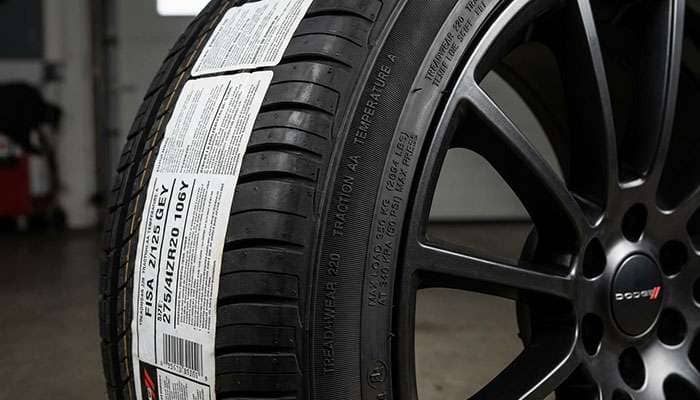
Understanding your current tire setup forms the foundation for any successful upgrade. You can't select better tires without knowing exactly what your Challenger runs right now.
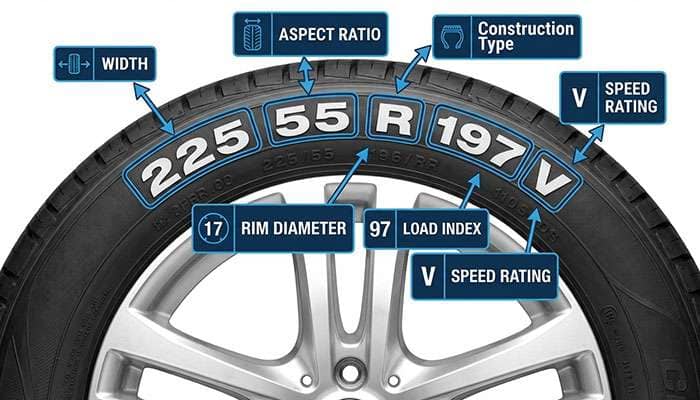
Your tire sidewall contains all the information you need to get started. Look for the series of numbers and letters that typically reads something like "P245/45R20." Each part of this code tells you something important:
"P" means passenger vehicle tire
"245" shows the tire width in millimeters
"45" represents the aspect ratio (sidewall height as a percentage of width)
"R" indicates radial construction
"20" gives you the wheel diameter in inches
You'll also find the load index and speed rating, usually displayed as something like "94W." The load index tells you how much weight each tire can safely carry, while the speed rating indicates the maximum safe operating speed.
Your owner's manual lists the manufacturer's recommended tire specifications based on your specific trim level and options package. This information proves essential because different Challenger variants require different tire specifications.
If you don't have your manual handy, take your VIN to any Dodge dealership or tire shop. They can pull up your exact factory specifications and tell you which optional packages came with your particular Challenger.
Dodge Challenger tire sizes vary dramatically depending on which model and year you're driving. A 2015 Challenger SXT typically came with 235/55R18 tires, while the R/T and SRT models often featured 245/45R20 or wider configurations.
Here's how Challenger tire sizes break down by trim level:
Base SXT models: 18-inch wheels with 235/55R18 tires
R/T models: 20-inch wheels with 245/45R20 tires
Scat Pack and Hellcat: 275/40ZR20 front and rear
Widebody variants: 305/35ZR20 tires
Knowing your starting point makes the rest of the selection process much clearer. Once you understand what you currently have, you can make informed decisions about where to go next with your aftermarket dodge challenger tires and rims upgrade.

Tire fitment determines everything about how your Challenger performs. Get the sizing right, and you unlock improved handling and grip. Get it wrong, and you're looking at damaged components and poor performance.
Standard Challenger models accommodate up to 295/40R20 tires on the rear and 275/40R20 on the front without requiring any modifications. Going beyond these dimensions risks rubbing against fender wells during cornering or compression.
Widebody Challengers—which includes certain Hellcat and Demon variants—come with significantly more wheel well clearance. These models typically handle 315/45R20 or even 325/30x20 tires on stock 11-inch-wide wheels without issues. The extra 3.5 inches of body width on each side provides the clearance needed for these massive contact patches.
Staggered setups run wider tires on the rear axle compared to the front. This configuration serves a specific purpose on rear-wheel-drive muscle cars like the Challenger. The wider rear tires help put down power more effectively during acceleration while narrower fronts reduce understeer and improve turn-in response.
Common stagger combinations include:
275/40R20 front with 295/40R20 rear
285/35R20 front with 305/35R20 rear
315/35R20 front with 335/30R20 rear (widebody only)
Some Challenger owners prefer square setups—running identical tire sizes all around—for improved tire rotation flexibility and more neutral handling characteristics. However, square setups typically require compromising either front or rear grip potential.
Installing larger wheels or lowering your Challenger affects tire fitment dramatically. A two-inch drop typically requires moving to lower-profile tires to maintain adequate wheel well clearance. Lowered suspensions reduce compression travel, which means tires that previously cleared the fenders might rub during hard cornering or over bumps.
Wheel offset plays an equally important role. Aggressive offsets push wheels outward, potentially causing the tires to contact fender lips or suspension components. Conservative offsets tuck wheels inward, which can lead to interference with brake calipers or suspension arms.
Aftermarket wheel spacers effectively change your wheel offset by pushing the entire assembly outward. While spacers can help achieve the perfect flush fitment, they also alter suspension geometry and increase bearing loads. Always ensure spacers are hubcentric and properly torqued to factory specifications.
Before committing to larger tire sizes, perform test fitting at full steering lock and with the suspension compressed to ensure clearance remains adequate under all operating conditions.

Your Challenger's tire selection should match how you actually drive it. The perfect tire for daily commuting differs dramatically from what you need at the drag strip or road course.
Daily drivers benefit most from tires that balance multiple capabilities. You need reasonable wet-weather grip, comfortable ride quality, and acceptable tread life since you'll be putting serious miles on them. All-season touring tires excel in this role, offering predictable handling without the harsh ride or limited temperature range of pure performance rubber.
Performance-focused driving demands different priorities. Track days require maximum dry grip, precise steering response, and heat resistance under sustained high loads. Here, summer performance tires or even DOT-approved competition tires make sense despite their compromises in comfort and longevity.
Most Challenger owners fall somewhere between these extremes. If you split your driving between commuting and occasional spirited runs, consider high-performance all-season tires. These deliver more grip than standard all-seasons while maintaining year-round usability.
Temperature affects tire performance more than most people realize. Summer tires use compounds optimized for warm weather that become dangerously hard in cold conditions. Their reduced flexibility below 45°F dramatically increases stopping distances and reduces grip.
If you experience regular freezing temperatures, true winter tires transform your Challenger's cold-weather capabilities. Specialized rubber compounds remain flexible in the cold, while aggressive tread patterns bite through snow and slush.
All-season tires attempt to bridge the gap between summer and winter performance. Modern all-season compounds handle light snow reasonably well while providing adequate grip in warmer conditions. However, they compromise maximum performance in both temperature extremes compared to dedicated seasonal tires.
Tire costs vary wildly based on size and performance level. A set of 305-width ultra-high-performance summer tires can easily cost double what comparable all-season tires run. Factor in that high-performance tires typically wear faster—sometimes 30-40% quicker than touring options—and the total cost of ownership increases significantly.
Treadwear ratings provide rough longevity estimates. All-season tires commonly carry ratings around 500-560, suggesting moderate wear rates. High-performance summer tires might rate as low as 200-300, indicating they'll need replacement much sooner.
Consider your annual mileage when evaluating tire costs. Low-mileage Challengers that see mostly weekend use can justify expensive, short-lived performance tires since they'll last multiple seasons. Daily drivers racking up 15,000+ miles annually benefit more from durable compounds that extend replacement intervals.
At Performance Plus Tire, we help you balance these factors to find tires that deliver the performance you need at a price point that makes sense for your specific situation.
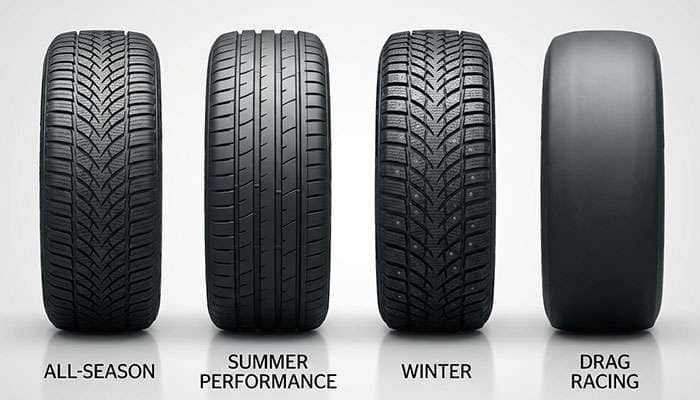
Different tire categories serve distinct purposes. Matching your Challenger's intended use to the right tire type ensures you get the performance characteristics that matter most for your driving style.
All-season tires prioritize versatility over maximum performance in any single condition. They handle wet roads competently, provide acceptable winter traction in moderate climates, and deliver comfortable rides for daily driving. Tread life typically exceeds 50,000 miles with proper maintenance and rotation.
The Continental ExtremeContact DWS06 PLUS represents the high-performance end of all-season capability. These tires maintain grip across temperature ranges while offering more spirited handling than standard touring options. Reviews consistently highlight their balanced performance across different weather conditions.
Standard all-season touring tires sacrifice some performance for improved comfort and longer tread life. They work well for Challenger SXT or R/T models used primarily for transportation rather than performance driving.
Summer tires deliver maximum dry-road grip through specialized rubber compounds and aggressive tread designs. They excel in warm weather but become hard and dangerous when cold. With shallower treads and fewer grooves, they maximize contact patch for superior dry and wet grip but become unsafe below 45°F.
The Pirelli P Zero stands out for Challenger applications, offering excellent grip characteristics and precise steering response. Performance enthusiasts appreciate how these tires transform handling dynamics compared to all-season rubber.
Michelin Pilot Sport series tires provide similar performance with reputation for longevity unusual among summer performance options. Their advanced compounds maintain grip while resisting wear better than many competitors.
Winter conditions require specialized tires like the Nokian Hakkapeliitta 10, which offers impressive traction ratings (9.9/10) when temperatures drop.
Winter tire compounds remain flexible in freezing temperatures, maintaining grip when summer tires become rigid and lose traction. Deep, aggressive tread patterns bite through snow and slush, while thousands of small sipes create additional biting edges on ice.
Dedicated winter tires transform how your Challenger handles cold-weather driving. However, their soft compounds wear rapidly on warm, dry pavement. Most owners mount winter tires on separate wheels for easy seasonal swapping.
Drag racing enthusiasts face a choice between convenience and maximum performance. Drag radials like Mickey Thompson ET Street or Nitto 555R deliver excellent traction while remaining street-legal. You can drive to and from the track, though they perform poorly in wet conditions.
True slicks provide maximum launch performance with their grooveless design, but they're track-only. Their sidewalls flex under torque, creating softer launches that protect drivetrain components.
Drag radials work well for street/strip Challengers that see occasional track use. Full slicks make sense only for dedicated race cars trailered to events.
At Performance Plus Tire, we carry the complete range of Dodge Challenger aftermarket tires to match your specific driving style and performance requirements. Our expert team helps you select tires that deliver the exact performance characteristics your Challenger needs.
Tire design details determine how effectively your Challenger transfers power to the pavement. Each design element—from tread pattern to compound formulation—affects grip, handling, and overall performance.
Tread design directly impacts your Challenger's traction capabilities. Directional treads feature V-shaped patterns that channel water away from the contact patch, reducing hydroplaning risk. Asymmetric designs combine different tread elements on inner and outer portions, optimizing both wet weather performance and dry cornering grip. Symmetric patterns provide balanced performance across conditions while offering longer tread life. Performance tires maximize the contact patch between tread blocks to increase rubber-to-road contact.
Sidewall construction significantly influences your driving experience. Lower profile tires reduce sidewall flex and improve handling precision, which is essential when pushing your Challenger through corners at speed. Higher sidewalls provide better impact absorption over rough pavement. Many Challenger owners notice increased road feedback after switching to lower profile options. Extremely low profile tires can become too rigid for optimal grip during hard acceleration.
Speed ratings indicate the maximum safe operating velocity for your tires. Challenger applications typically require Y-rated tires (186 mph capability) or W-rated options (168 mph). The load index—usually around 106 for Challenger fitments—indicates each tire can support approximately 2,094 pounds. During hard braking, front tires may carry up to 72% of the vehicle's weight. Always match or exceed factory speed ratings for safe operation.
Compound formulation balances grip against longevity. Softer compounds deliver superior traction but wear faster. Performance-focused Challenger owners often see accelerated wear patterns—some report 30% tread loss after 15,000 miles. All-season tires typically carry treadwear ratings between 500-560, indicating moderate wear rates. High-performance tires with maximum grip characteristics generally sacrifice tread life for enhanced handling capabilities.
Selecting the right aftermarket tires for your Dodge Challenger ultimately determines how effectively you harness your muscle car's potential. Throughout this guide, we've seen how proper tire selection starts with understanding your vehicle's factory specifications before considering fitment limitations. Additionally, matching tire type to your driving style ensures you get the performance characteristics you need whether for daily commuting or track days.
Above all, the details matter when upgrading your Challenger's footwear. Tread patterns, sidewall height, speed ratings, and tire compounds all significantly impact your driving experience. Therefore, taking time to evaluate these design elements pays dividends in handling, grip, and overall satisfaction.
Remember that bigger isn't always better when it comes to tire selection. Instead, the right balance between size, design, and intended use creates the optimal setup for your specific Challenger model. For many owners, finding this perfect balance means exploring options at Performance Plus Tire's Dodge Challenger collection where you can filter choices based on your exact specifications.
Finally, your Challenger deserves tires that complement its impressive capabilities. By following this step-by-step approach, you'll confidently select aftermarket tires that enhance stability, improve traction, and deliver the driving experience you've always wanted from your Dodge Challenger. The right tires transform not just how your car performs, but how it feels beneath you with every mile.
For standard Challengers, you can fit up to 295/40R20 tires on the rear and 275/40R20 on the front without modifications. Widebody models can accommodate even larger sizes, up to 315/45/20 or 325/30x20 on stock 11" wheels.
Wider tires generally provide better lateral grip and stability during cornering, but may result in heavier steering. Narrower tires offer improved straight-line traction and more responsive steering, though they may have less cornering grip.
For daily driving, all-season tires like the Continental ExtremeContact DWS06 PLUS offer a good balance of performance and longevity. Performance enthusiasts might prefer summer tires like the Pirelli P Zero for maximum grip. For winter conditions, specialized winter tires such as the Nokian Hakkapeliitta 10 are recommended.
Tread patterns significantly affect grip and handling. Directional treads excel at water evacuation, asymmetric patterns balance wet and dry performance, and symmetric patterns offer a good mix of performance and longevity. Performance tires typically have wider contact patches for maximum road contact.
Softer compounds provide superior grip but wear faster, while harder compounds offer longer tread life but less grip. Performance-oriented Challengers often experience faster tire wear. Consider your driving style and priorities when selecting between grip and longevity in tire compounds.



