

Wheel alignment with new tires costs between $50 and $168, but skipping this service can cost you significantly more down the road. Most drivers ask us this question when they're investing in new tires, and the answer is straightforward.
Wheel alignment isn't about the tires themselves. The service adjusts your vehicle's suspension system and how it positions the wheels. Proper alignment ensures your new tires perform at their best, last their full expected lifespan, and keep you safe on every drive.
Skipping alignment to save a few dollars upfront often backfires. This decision can cut tire life short and create handling problems that affect your daily driving. The alignment process takes just 30-60 minutes, but this simple service can dramatically improve both your driving experience and tire longevity.
We'll walk you through exactly why tire professionals recommend alignment after new tire installation, how to identify when your vehicle needs this service, and the specific situations where alignment becomes essential for safe, smooth driving.
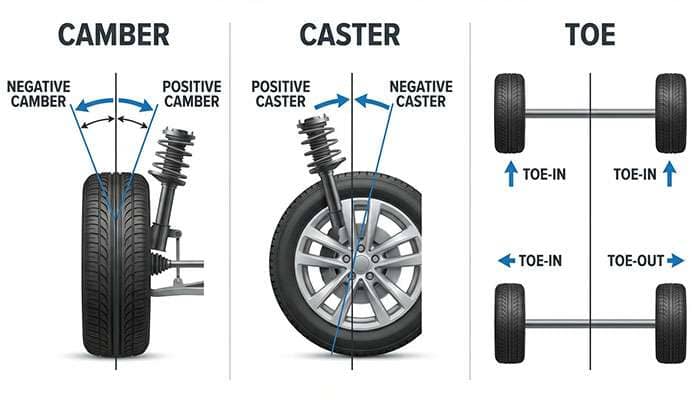
Wheel alignment adjusts your vehicle's wheel angles to match manufacturer specifications. This service differs from wheel balancing, which distributes weight evenly around the wheel. Alignment ensures your wheels sit perpendicular to the ground and parallel to each other. The process targets your suspension system rather than the tires themselves.
Professional alignment involves adjusting three critical angles:
Camber: How much your tire tilts inward or outward when viewed from the front, directly affecting cornering performance and tire wear patterns
Caster: The forward or backward angle of your steering axis, controlling steering stability and the wheel's ability to return to center
Toe: The direction your tires point when viewed from above, impacting wear patterns and straight-line stability
Correct alignment maintains optimal contact between your tires and the road surface. The alignment determines exactly how much of each tire actually touches the pavement.
Misaligned wheels create uneven contact, causing premature and irregular wear because your tires can't maintain consistent road contact. Poor alignment also increases rolling resistance, forcing your engine to work harder and burn more fuel.
Proper alignment improves vehicle handling significantly. Your car responds more precisely to steering inputs, providing better control during turns and enhanced safety in all driving conditions. Even minor misalignment can compromise both your tire investment and overall vehicle performance.
Your suspension system handles three essential jobs: absorbing road impacts, maintaining tire contact with the pavement, and controlling vehicle stability. This system includes springs, shock absorbers, control arms, and connecting components that link your wheels to the vehicle frame.
The suspension determines how your tires interact with the road. When alignment is off, components like control arms, ball joints, and bushings work harder to compensate, leading to premature component wear.
Worn suspension parts can also cause alignment problems. During alignment service, our technicians check for worn components that could affect adjustment accuracy or cause alignment issues to return quickly.
This relationship explains why we recommend alignment after installing new tires. Proper alignment ensures your suspension positions those new tires correctly for maximum performance and lifespan.
New tires represent a major investment in your vehicle's performance and safety. Getting an alignment with new tires isn't just another service option—it's smart protection for your purchase that delivers multiple benefits every time you drive.
Proper wheel alignment directly extends the life of your new tires. Misaligned wheels create uneven wear patterns that can cut tire life significantly short. This premature wear means you'll be shopping for replacements much sooner than expected. Correct alignment distributes wear evenly across all tires, helping you get every mile of value from your investment. When you consider what quality tires cost today, protecting them with proper alignment simply makes financial sense.
Misaligned wheels create extra rolling resistance that forces your engine to work harder. This extra effort shows up directly at the gas pump through higher fuel consumption. Studies demonstrate that reducing rolling resistance by 10% can improve fuel economy by 1-2%. Over thousands of miles, these savings help offset the alignment service cost.
Proper alignment directly impacts your safety on the road. Misaligned wheels can increase stopping distance by up to 20%, especially on wet or icy surfaces. Alignment issues also affect vehicle stability and handling, making it harder to respond quickly in emergency situations. Correctly aligned wheels provide optimal road contact, improving traction and control in all driving conditions.
Proper alignment eliminates common driving problems like pulling to one side or steering wheel vibrations. The result is a more comfortable driving experience with less stress on your vehicle's suspension components.
Many tire manufacturers require proper alignment documentation for warranty coverage. Without alignment records, you might find warranty claims denied if premature wear occurs.
We believe in providing top-notch tires at prices that won't break the bank. Before purchasing your next set of tires, check out wholesale prices on new tires at Performance Plus Tire to ensure you're getting the best value for your investment.
Early detection of alignment problems saves you money and prevents more serious issues. Here are the key warning signs that indicate your vehicle needs professional alignment service.
Your car should track straight down the road without constant steering corrections. When you're driving on level pavement with a centered steering wheel, the vehicle should maintain its course. Persistent pulling to the left or right signals misaligned wheels.
This pulling occurs when improper camber or toe angles create uneven road contact. Test this on an empty, straight road: momentarily release the steering wheel. If the car immediately drifts, alignment correction is needed.
Proper alignment keeps your steering wheel centered when driving straight. If you're holding the wheel at an angle to maintain straight-line travel, your alignment is off. Look for steering wheel positions like 11:57 instead of the normal 12 o'clock position. This misalignment means your wheels point in a different direction than your steering input indicates.
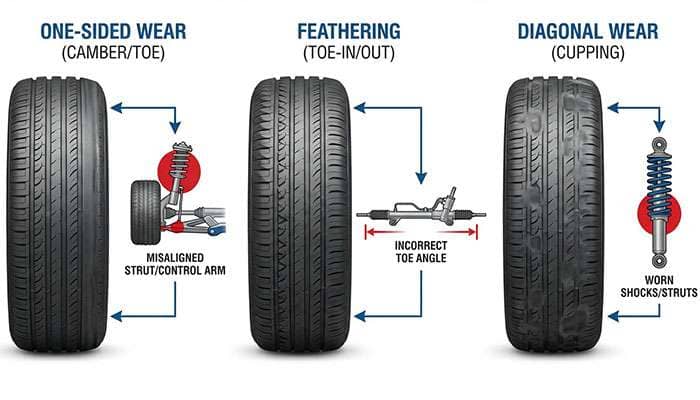
Regular tire inspection reveals alignment problems through specific wear patterns:
One-sided wear: Progressive wear from inner to outer edge indicates camber or toe problems
Feathering: Smooth wear on one tread edge with sharp edges on the other suggests excessive toe angles
Diagonal wear: Angled wear patches across the tread point to misalignment or worn suspension parts
While experts sometimes debate the connection, many link steering wheel vibration with alignment issues. Alignment-related vibrations typically remain steady whether you're accelerating, coasting, or braking. These vibrations usually occur alongside other alignment symptoms.
Timing your alignment service correctly makes all the difference. Smart scheduling protects your tire investment and keeps your vehicle performing at its best.
Getting an alignment immediately after new tire installation is the smartest move you can make. This ensures your vehicle drives straight from day one and prevents uneven wear patterns before they start. The tire installation process itself can disturb alignment settings, so this becomes the perfect opportunity to verify proper wheel positioning. Many tire manufacturers actually require post-installation alignment documentation to honor warranty claims.
A single significant pothole or curb strike can knock your alignment completely off. These impacts change the angles at which your wheels contact the road, creating both safety concerns and expensive repair bills down the line. Even when everything feels normal after the impact, hidden damage often exists that won't show up until it's too expensive to ignore.
Any time suspension components get replaced—shocks, struts, control arms—alignment needs to be checked. I-CAR guidance states that alignments should always follow any repairs that could alter steering or suspension geometry. This includes side collision repairs or situations where crash energy travels through the frame.
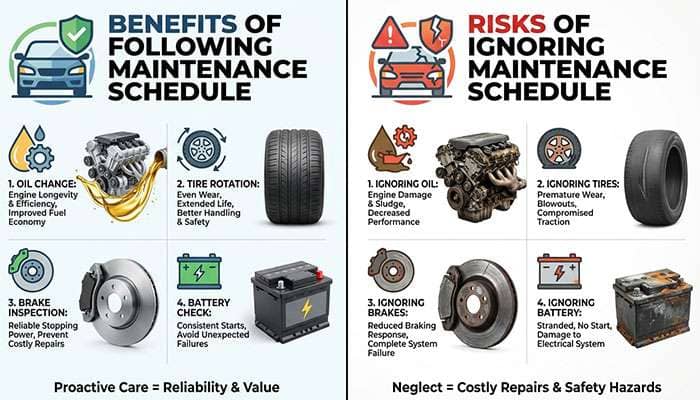
Most experts recommend alignment checks every 10,000-15,000 miles or once yearly. However, rough road conditions call for more frequent checks—every 6,000 miles if you regularly deal with construction zones or unpaved surfaces. Regular alignments protect both your tires and suspension components.
Need new tires first? Check out wholesale prices on new tires at Performance Plus Tire to get the best value on your tire investment.
Wheel alignment protects your new tire investment while improving your vehicle's safety and performance. We've covered how proper alignment extends tire life, improves fuel economy, and ensures optimal handling in all driving conditions.
The warning signs are clear: vehicle pulling, off-center steering wheel, or uneven tire wear patterns all signal immediate alignment needs. Don't wait for visible damage after hitting potholes or curbs - alignment issues can develop instantly from these impacts.
Alignment service represents smart financial planning. The upfront cost prevents expensive premature tire replacement while delivering better fuel economy over time. More importantly, properly aligned wheels provide the safe, predictable handling you need in emergency situations.
Alignment optimizes your entire suspension system, not just the tires themselves. This ensures every component works together to deliver the smooth, controlled driving experience your vehicle was designed to provide. Your tires are the only connection between your vehicle and the road, making their optimal performance essential for every trip you take.
Schedule alignment immediately after new tire installation. This simple step protects your investment and ensures you get maximum value from both your new tires and your vehicle's performance capabilities.
Getting a wheel alignment with new tires is a smart investment that protects your purchase and enhances your driving experience in multiple ways.
• Always align after new tire installation - Proper alignment protects your tire investment and may be required for warranty coverage.
• Watch for warning signs - Vehicle pulling to one side, off-center steering wheel, or uneven tire wear indicate immediate alignment needs.
• Alignment saves money long-term - The $50-$168 alignment cost prevents premature tire replacement and improves fuel efficiency by reducing rolling resistance.
• Schedule alignments strategically - Get aligned after hitting potholes, suspension repairs, or annually every 10,000-15,000 miles for preventive care.
• Safety comes first - Misaligned wheels can increase stopping distance by up to 20% and compromise vehicle stability in emergency situations.
Proper alignment isn't just about tire longevity—it's about optimizing your vehicle's suspension system for maximum safety, performance, and cost-effectiveness. This simple 30-60 minute service ensures your new tires perform optimally and provides the smooth, safe driving experience you deserve.
While not always mandatory, getting an alignment with new tires is highly recommended. It ensures optimal tire performance, extends tire life, improves fuel efficiency, and enhances overall vehicle safety. Many tire manufacturers even require alignment for warranty coverage.
Wheel alignment costs generally range from $50 to $168. Although this may seem like an additional expense, it's a small investment compared to the potential costs of premature tire wear and reduced fuel efficiency caused by misalignment.
Key indicators include your vehicle pulling to one side while driving straight, an off-center steering wheel, uneven tire wear patterns, and sometimes vibration at higher speeds. If you notice any of these signs, it's advisable to have your alignment checked.
Most experts recommend getting an alignment check every 10,000-15,000 miles or at least once a year. However, you should also get an alignment after installing new tires, hitting significant potholes or curbs, or following suspension repairs or upgrades.
Even if your old tires showed even wear, it's still beneficial to get an alignment with new tires. The tire installation process itself can affect alignment settings, and ensuring proper alignment from the start will help protect your new tire investment and optimize vehicle performance.



