
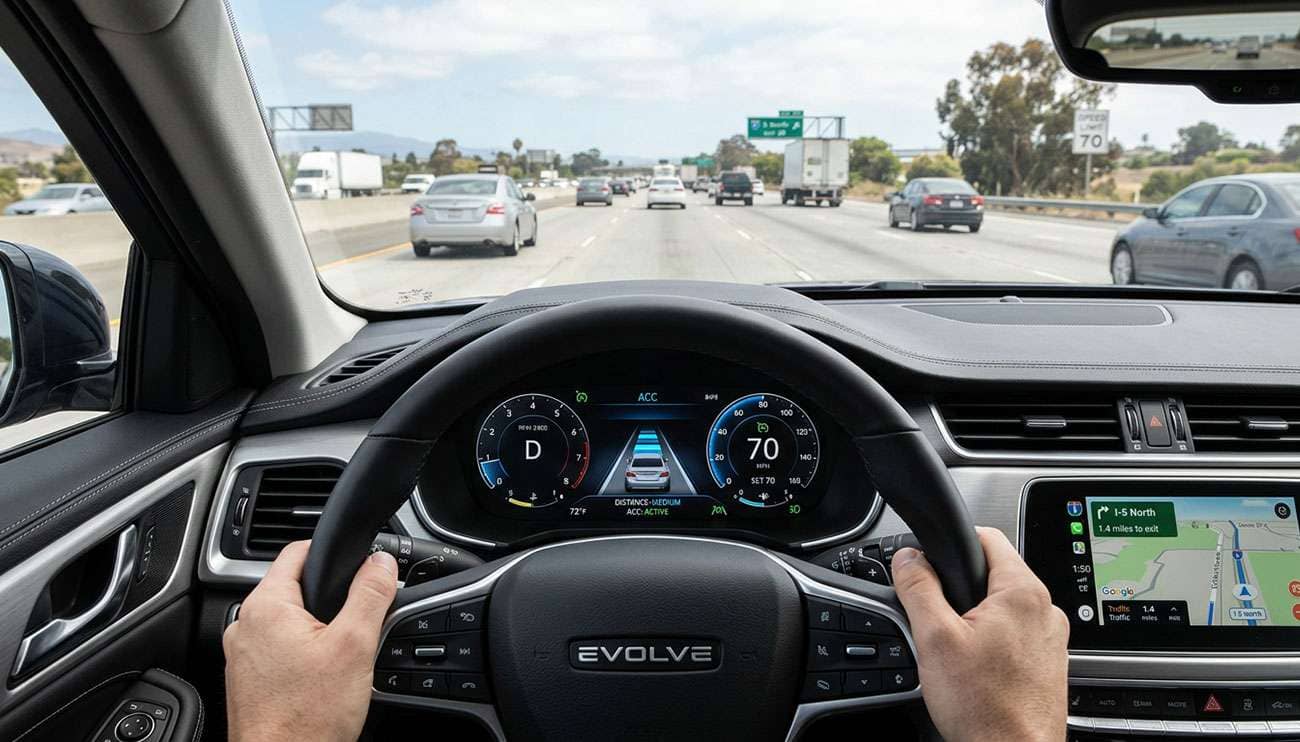
Cruise control turns marathon highway drives into relaxed cruises. You set your speed, and the system handles the throttle work while you focus on steering and traffic. Understanding the physics behind this technology helps you use it more effectively and choose the right features when shopping for your next vehicle.
Here's what cruise control actually does: it fights the forces trying to slow you down—air resistance and the friction between your tires and the road. Set your speed at 70 mph, and the system makes hundreds of tiny throttle adjustments every second to hold that exact velocity. Your foot can't match that precision. The result? Better fuel economy and less fatigue on long trips.
You'll find two main types in modern vehicles. Traditional cruise control maintains your set speed. Adaptive cruise control adds radar or cameras to keep safe distances from the car ahead. Both use the same fundamental physics, but adaptive systems layer on distance measurement, smart acceleration curves, and predictive braking. Know the difference, and you'll maximize the benefits of whatever system you're driving.
Newton's first law explains cruise control perfectly—objects in motion stay in motion unless something stops them. Your car wants to keep rolling at constant speed. Air resistance, tire friction, and gravity on hills work against that natural tendency. Cruise control wins this battle by monitoring your wheel speed through sensors and adjusting engine power to maintain your target velocity.
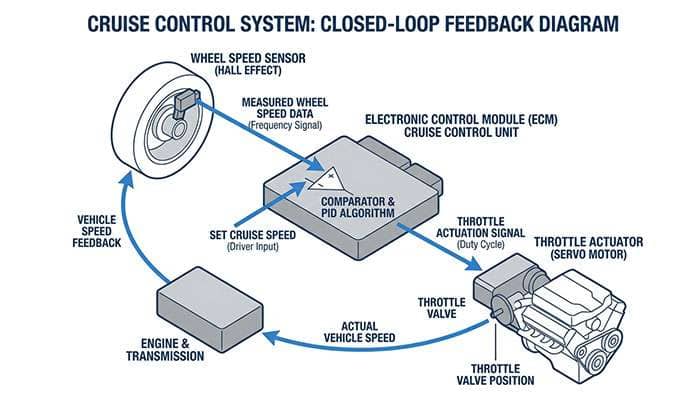
Traditional cruise control runs on a closed-loop feedback system. A speed sensor tracks your actual velocity by reading wheel rotation or transmission output speed. This sensor sends data to the cruise module 10 to 20 times per second. The module compares your actual speed to your set speed and calculates any deviation.
The system then adjusts your throttle—through a cable in older cars or electronically in modern vehicles. It uses proportional-integral-derivative (PID) control logic. The proportional part reacts to current speed errors. The integral part fixes persistent drift. The derivative part predicts future errors based on how fast speed is changing. This three-part algorithm prevents the annoying speed hunting that plagued early cruise systems.
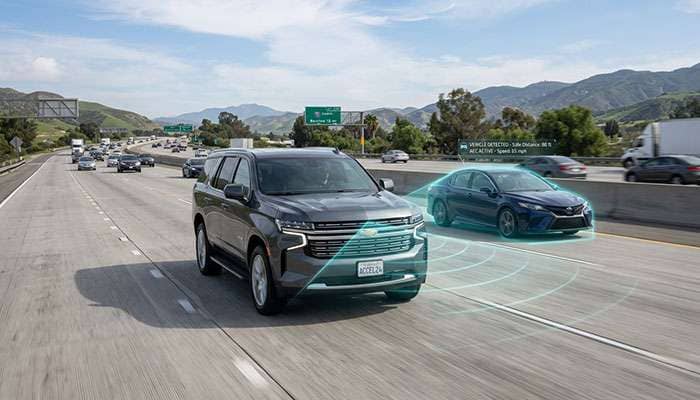
Adaptive cruise control adds distance sensors to this equation. Most systems use millimeter-wave radar operating at 76-77 GHz. These can spot vehicles up to 200 meters ahead. Some manufacturers use cameras instead, and premium systems combine both. The radar calculates distance by measuring how long radio waves take to bounce back—the same principle police radar uses. This happens 20 to 50 times per second, giving you real-time data on closing speeds and gap distances.
Maintaining following distance requires constant math. The system calculates relative velocity and time-to-collision continuously. When the car ahead slows, your adaptive cruise must reduce speed at exactly the right rate to maintain your set time gap—typically 1.0 to 2.5 seconds of following distance. This demands precise control over both throttle reduction and brake application, all coordinated with your anti-lock brakes and stability control.
Using cruise control on wet or icy roads tops the list of dangerous mistakes. When your tires lose traction, cruise control keeps trying to maintain speed by adding throttle. This causes wheel spin and loss of control. The system responds faster than you can hit cancel, making the problem worse.
Heavy traffic creates another common error. Traditional cruise control can't handle rapid speed changes. Traffic slows suddenly, and the system maintains your set speed until you brake manually. That increases your rear-end collision risk. Even adaptive cruise control has limits—most systems shut off below 20-25 mph and can't handle stopped traffic without you taking over.
Tire pressure matters more than most drivers realize. Underinflated tires increase rolling resistance significantly. Drop pressure by 20%, and resistance jumps 10-15%. Your cruise control compensates by opening the throttle wider, cutting fuel economy by 3-5%. Check your tire pressure regularly. When you need new tires, low rolling resistance options from brands like Michelin can boost your cruise control's fuel savings even more.
Cruise control specs help you compare systems when shopping for vehicles. Set speed range typically runs from 25-30 mph minimum to 110-120 mph maximum. Legal speed limits make the upper range academic. The minimum speed matters more—lower minimums let you use cruise control in more situations.
Response time shows how quickly the system reacts to speed changes. Quality systems hold your set speed within plus or minus 1 mph under steady conditions. For adaptive cruise, deceleration capability is critical. Most systems apply 30-40% of maximum braking force—enough for gradual slowdowns but not emergency stops. This translates to deceleration rates of 0.3g to 0.4g, compared to emergency braking at 0.7g to 1.0g.
Specification |
Traditional Cruise Control |
Adaptive Cruise Control |
|---|---|---|
Speed Accuracy |
±1-2 mph |
±1 mph |
Update Frequency |
10-20 times/second |
20-50 times/second |
Following Distance Options |
N/A |
3-4 settings (1.0-2.5 seconds) |
Maximum Deceleration |
Engine braking only |
0.3-0.4g (30-40% max braking) |
Detection Range |
N/A |
150-200 meters |
Minimum Operating Speed |
25-30 mph |
0-25 mph (varies by system) |
Following distance settings in adaptive cruise use time gaps, not fixed distances. A 2.0-second gap at 60 mph equals 176 feet. The same setting maintains only 88 feet at 30 mph. This time-based approach matches the physics of stopping distance, which increases exponentially with speed. Double your speed, and kinetic energy quadruples. A vehicle traveling 60 mph carries four times the energy of the same vehicle at 30 mph—requiring proportionally longer stopping distances.
Your driving patterns, vehicle type, and budget determine which cruise control features you actually need. The physics stays constant, but implementation varies dramatically between basic and advanced systems. Understanding these differences helps you identify real value versus marketing fluff.
Vehicle mass fundamentally affects cruise control performance, especially for adaptive systems. Heavier vehicles—trucks, SUVs, large sedans—carry more kinetic energy at highway speeds. They need more aggressive throttle and brake adjustments to maintain speed and following distance. Drive a full-size truck or SUV? Look for adaptive cruise with higher deceleration capabilities and faster response times.
The math is straightforward. A 5,500-pound SUV traveling at 70 mph carries roughly 1.9 million joules of kinetic energy. Slowing that vehicle by just 10 mph requires dissipating about 500,000 joules—equal to lifting 50,000 pounds one story high. Adaptive cruise systems in heavier vehicles must manage these massive energy changes while keeping deceleration smooth and comfortable.
Aerodynamics plays a huge role too. Vehicles with poor aerodynamic efficiency—high-clearance trucks, boxy SUVs—fight greater air resistance at highway speeds. Air resistance increases with the square of velocity. Double your speed, and you quadruple wind resistance. An aerodynamic sedan might face 50 pounds of drag at 70 mph. A lifted truck with off-road tires might fight 150 pounds or more. Cruise control in less aerodynamic vehicles works harder to hold speed, cycling throttle position more frequently.
Towing capability matters for truck and SUV owners. Adaptive cruise with trailer-aware algorithms adjusts following distances and deceleration rates based on trailer weight. The physics is simple—a 6,000-pound truck towing a 4,000-pound trailer has 67% more mass to control. That demands proportionally more braking force and longer stopping distances.
Your typical driving environment determines which features deliver actual value. Primarily drive rural highways with light traffic? Traditional cruise control provides most benefits at lower cost. You'll capture the fuel economy improvements—typically 7-14% compared to manual throttle control—that cruise delivers in steady highway cruising where you rarely adjust speed.
Urban and suburban drivers who hit traffic regularly benefit more from adaptive cruise with stop-and-go capability. Acceleration and deceleration in traffic creates real driver fatigue. Your brain makes constant distance judgments and speed adjustments. Systems that handle this automatically—maintaining safe following distances through speeds from 0 to 80 mph—reduce mental load substantially during commutes.
Performance-oriented drivers should evaluate cruise control responsiveness and set speed increments. Some systems allow 1-mph increments for precise speed setting. Others use 5-mph increments. Acceleration characteristics during speed-up vary too. Sportier systems apply throttle more aggressively, reaching new set speeds quickly but sometimes sacrificing smoothness. Premium adaptive cruise systems offer selectable response characteristics, letting you balance quick response against passenger comfort.
Traditional cruise control typically adds $300-$500 to vehicle cost when optioned separately, though it's standard on most modern vehicles. The fuel economy and fatigue reduction benefits usually offset this cost within the first year for drivers averaging 15,000+ highway miles annually.
Adaptive cruise control represents a bigger investment—usually $500-$2,500 depending on manufacturer and sophistication. Entry-level systems provide basic following distance maintenance but shut off at low speeds and offer limited deceleration. Mid-range systems add stop-and-go capability and stronger braking. Premium systems incorporate predictive elements using GPS data to anticipate curves and speed limit changes.
Fuel economy benefits from adaptive cruise vary by conditions. In steady highway traffic, adaptive systems provide minimal advantage over traditional cruise—both maintain constant speed equally well. The gains emerge in variable traffic where adaptive systems optimize acceleration and deceleration patterns better than most drivers. Studies show 5-10% fuel economy improvements in mixed highway driving compared to manual control. Benefits diminish in heavy stop-and-go traffic where cruise disengages frequently.
Factor in maintenance costs when evaluating systems. Traditional cruise requires minimal maintenance—occasional cleaning of speed sensors and verification of throttle operation. Adaptive cruise adds radar sensors or cameras requiring periodic calibration, especially after windshield replacement or front-end collision repair. Calibration costs range from $150-$400 depending on system complexity and dealer labor rates.
Different driving needs demand different cruise control approaches. These recommendations match cruise control physics and features to specific use cases, helping you identify which systems deliver the most value for your driving profile.
Mixed highway and suburban commuting calls for adaptive cruise with full-speed range capability. Systems that operate from 0 mph to highway speeds handle the variable traffic patterns typical of daily commutes. Look for models offering at least 0.35g deceleration capability—sufficient to maintain safe following distances without constant intervention on your part.
Commuter driving involves frequent acceleration and deceleration cycles. Quality adaptive systems smooth these transitions, eliminating the jerky driving patterns that waste fuel and annoy passengers. Systems with predictive capabilities—using GPS and mapping data to anticipate traffic patterns and speed limit changes—add another efficiency layer. They adjust speed proactively rather than reactively.
Manufacturers like Honda, Toyota, and Hyundai offer solid mid-range adaptive cruise standard on many models. These systems balance cost and capability well, providing reliable following distance maintenance without premium pricing. The radar sensors in these systems typically detect vehicles up to 180 meters ahead, updating 25-30 times per second—adequate for typical commuting scenarios.
Commuters prioritizing fuel economy should look for adaptive cruise integrated with eco-driving modes. These systems adjust acceleration curves and following distances to maximize efficiency, sometimes at the expense of aggressive response. The physics trade-off is simple—gradual acceleration conserves fuel but reduces responsiveness. If your commute involves less aggressive traffic, eco-optimized cruise can improve highway fuel economy by an additional 3-5% beyond standard cruise benefits.
Enthusiast drivers need cruise systems that respond quickly and provide precise speed control without intrusive intervention. Performance driving emphasizes rapid acceleration and firm braking. These capabilities translate to cruise control through adjustable response characteristics and strong deceleration rates.
Premium German manufacturers—BMW, Mercedes-Benz, Audi—offer adaptive cruise specifically tuned for performance applications. These systems feature sport modes that apply throttle more aggressively and allow shorter following distances than standard settings. The radar systems update at higher frequencies—40-50 times per second. Control algorithms prioritize responsive handling over maximum fuel economy.
Performance adaptive cruise also integrates with active suspension and transmission systems. When cruise initiates significant deceleration, the transmission downshifts to provide engine braking. This reduces brake wear and maintains readiness for rapid acceleration. The physics advantage is measurable—combining regenerative engine braking with friction braking allows smoother deceleration while keeping the powertrain in its optimal operating range.
For track-capable vehicles, some manufacturers offer performance cruise that works with performance tires and suspension tuning. These systems account for reduced ride height and stiffer suspension that can affect sensor aim and detection patterns. Proper tire selection becomes important—performance tires with optimal grip ensure adaptive cruise can execute its calculated braking forces without traction loss.
Budget-conscious drivers can still access cruise benefits through aftermarket systems or entry-level factory options. Traditional cruise provides 70-80% of the fuel economy benefits of adaptive systems at a fraction of the cost. For older vehicles lacking factory cruise, quality aftermarket systems from manufacturers like Rostra or Autosport Labs install for $200-$400 including labor.
Aftermarket cruise uses the same physics as factory systems—speed sensor input, electronic throttle control, and PID-based speed maintenance. The main differences lie in integration with other vehicle systems and refinement of control algorithms. Aftermarket systems may show more speed hunting on hills or during headwinds, requiring more frequent set-speed adjustments.
For new vehicle buyers, many manufacturers now include traditional cruise as standard equipment even on base trims. When cruise is optional, it typically bundles with other convenience features, making standalone cost evaluation difficult. Focus on total package value rather than cruise control alone when assessing these options.
Entry-level adaptive cruise from mainstream manufacturers offers good value despite limited feature sets. These systems typically operate down to 25 mph minimum speed and provide moderate deceleration capability (0.25-0.30g). They lack stop-and-go functionality and premium features like predictive operation, but they deliver the core benefit of automated following distance maintenance in highway traffic.
Consider certified pre-owned vehicles as a budget path to advanced cruise. Depreciation significantly reduces the cost of accessing premium adaptive systems, and manufacturer warranties often cover the electronic components. A three-year-old adaptive cruise system functions identically to new systems—the technology has matured enough that year-over-year improvements are incremental rather than revolutionary.
Understanding cruise control physics transforms it from a simple convenience into a sophisticated tool for optimizing your driving experience. Whether you're using basic speed maintenance or advanced adaptive systems with stop-and-go capability, the fundamentals remain constant: continuous speed monitoring, calculation of error between actual and target velocity, and precise throttle and brake adjustment to maintain your desired performance.
The choice between traditional and adaptive cruise ultimately depends on your driving patterns, budget, and vehicle type. Traditional systems excel in steady highway driving, delivering significant fuel economy improvements and reduced driver fatigue at minimal cost. Adaptive systems add value in mixed traffic conditions, automating the distance judgment and speed adjustment tasks that create mental load during typical commutes. Both technologies work better with properly maintained vehicles—particularly correct tire pressure and quality tire selection that minimize rolling resistance.
When you're ready to upgrade your vehicle or need replacement tires that complement your cruise control system for maximum efficiency, visit Performance Plus Tire. Our team can help you select tires optimized for low rolling resistance and fuel economy, ensuring your cruise control operates at peak performance whether you're commuting daily or embarking on cross-country road trips.
Here's what you need to remember about cruise control physics and selection:
• Cruise control maintains speed by continuously compensating for opposing forces: Air resistance and rolling resistance constantly slow your vehicle. Cruise systems make hundreds of micro-adjustments per second to counteract these forces, maintaining your set speed more consistently than manual throttle control.
• Adaptive systems use radar or cameras to measure following distance: These sensors detect vehicles up to 200 meters ahead and update 20-50 times per second. They calculate relative velocity and time-to-collision to maintain safe gaps while optimizing fuel economy through smooth acceleration and deceleration.
• Vehicle mass and aerodynamics significantly affect cruise control performance: Heavier vehicles and those with poor aerodynamic efficiency require more aggressive throttle adjustments to maintain speed. This makes system responsiveness and deceleration capability more important for trucks and SUVs than sedans.
• Never use cruise control on wet or icy roads: The system's rapid throttle response to maintain set speed can cause wheel spin when traction is compromised. Proper tire selection for conditions becomes critical to safe cruise control operation in variable weather.
• Fuel economy benefits range from 7-14% on highways with traditional systems: Adaptive cruise can add another 3-5% improvement in mixed traffic by optimizing acceleration and deceleration patterns. Benefits diminish in heavy stop-and-go conditions where systems frequently disengage.
Cruise control monitors wheel speed continuously and detects when gravity causes deceleration on uphill grades or acceleration on downhill sections. The system responds by increasing throttle on climbs to overcome gravitational force and reducing throttle or applying engine braking on descents. The speed sensor updates 10-20 times per second in traditional systems, allowing rapid detection of speed deviation and proportional throttle adjustment to maintain your set velocity within plus or minus 1-2 mph under most conditions.
Radar-based systems use millimeter-wave radio signals at 76-77 GHz to detect vehicles, measuring distance by calculating the time delay of reflected waves. Radar works in all weather conditions including fog, rain, and darkness, but may struggle with stationary objects. Camera-based systems use image recognition to identify vehicles and measure distance through object size calculations, offering better object classification but reduced performance in poor visibility. Many premium systems use sensor fusion combining both technologies for optimal performance across all driving conditions.
Traditional cruise control provides minimal fuel economy benefit in city driving because frequent stops, turns, and traffic signals require constant system disengagement. Adaptive cruise with stop-and-go capability can improve city fuel economy by 3-7% compared to manual driving by optimizing acceleration rates and maintaining consistent following distances in moderate traffic. However, in heavy stop-and-go conditions below 20-25 mph, most adaptive systems disengage frequently, reducing their effectiveness. The greatest fuel economy gains occur on highways and in suburban driving with moderate traffic flow.
Adaptive cruise systems prioritize safety over comfort, applying braking force based on calculated time-to-collision rather than perceived necessity. When a vehicle ahead slows suddenly or a vehicle merges into your lane, the system may brake more aggressively than you would manually to maintain the set following distance. This represents conservative programming—the control algorithms assume worst-case scenarios where the leading vehicle might brake harder or stop completely. You can often adjust this behavior by selecting longer following distance settings (2.0-2.5 seconds instead of 1.0-1.5 seconds), which allows more gradual deceleration while maintaining safety margins.
Tire condition directly impacts cruise control through rolling resistance and speed sensor accuracy. Underinflated tires increase rolling resistance by 10-15% with just 20% pressure loss, forcing cruise control to apply more throttle to maintain set speed and reducing fuel economy by 3-5%. Worn tires with reduced tread depth also increase rolling resistance slightly. For adaptive cruise, proper tire maintenance ensures consistent braking performance when the system applies brakes to maintain following distance. Additionally, speed sensors often read wheel rotation, so significant differences in tire circumference from wear or wrong-size replacements can cause speed accuracy errors of 2-3 mph.



